Black
Inventors
Inquiry
A Critical Inquiry Lesson developed
by Alexander Pittman, Dan Krutka, & Danetra King
Contact us at alexander.pittman@colostate.edu or dankrutka@gmail.com with questions or queries about professional development for educators.
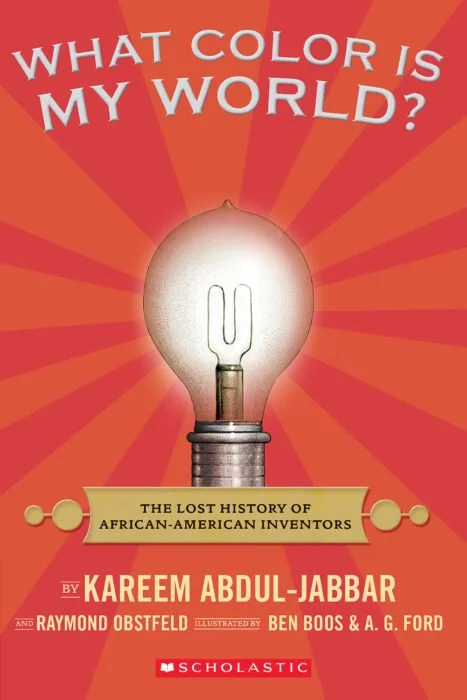
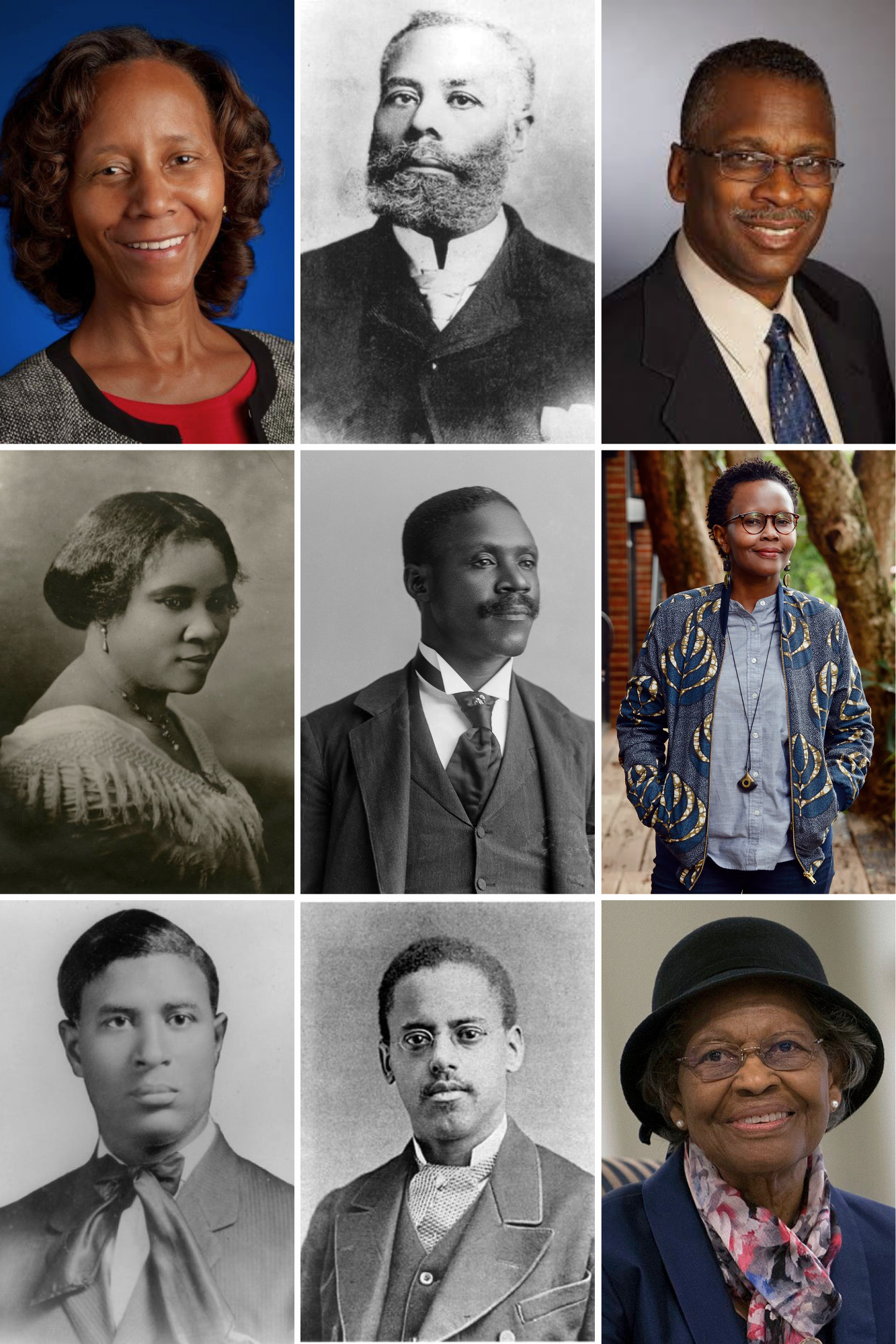
The Black Inventor’s Curriculum is an inquiry lesson where students seek to answer the compelling question, what lessons should we learn from the lives of Black inventors? Scroll below to find brief biographies of Black Inventors. Click on the “Learn More” button to review a page of primary and secondary sources for each inventor. These sources will help better understand their full lives, not just their inventions. Some pages will also include sources of related inventions or helpful information to better understand their historical context. This inquiry can be modified for students from elementary to higher education and is well suited for the integration of science activities.
* Please note that this website is best viewed in Desktop View. If using Mobile View, images and text may appear distorted.
Glossary
Invention (en-vin-shun)
The act of bringing ideas or objects together in a novel way to create something that did not exist before.
Note: In this inquiry, we define invention broadly to include not just technological objects, but also scientific discoveries and new techniques.
Source: Britannica.com
Enslaved People (In-SLAYV-d)
An enslaved person is someone whose is forced to work for and obey an enslaver and is considered to be their property. These words are preferred because they show that enslavement is imposed on people, not who they are; And enslavers actively uphold violent oppression of other human beings.
Patent (PAT-uhnt)
A legal document giving someone the sole rights to make or sell a product
Source: “Lewis Latimer: The Man Behind a Better Light Bulb” by Nancy Dickman
Segregation (Seg-ri-GAE-Shun)
Segregation is the practice of requiring separate housing, education and other services for people of color. Segregation was made law in many places in the 19th- and 20th-century U.S. as white people often believed racist ideas and sought to maintain their economic power.
Source: History.com
Black Joy
Black Joy is finding the positive nourishment within self and others that is a safe and healing place. It is a way of resting the body, mind, and spirit in response to the traumatic, devastating and life-altering racialized experiences that Black people continue to encounter.
Source: National Museum of African American History & Culture
Innovation (In-oh-vae-shun)
A new idea, method, or device; This can can refer to something new or to a change made to an existing product, idea, or field. Like invention, not all innovations leads to better conditions for people (e.g., machine gun).
Source: Merriam-Webster.com
Compelling Question
What lessons should we learn from
the lives of Black inventors?
Staging the Question
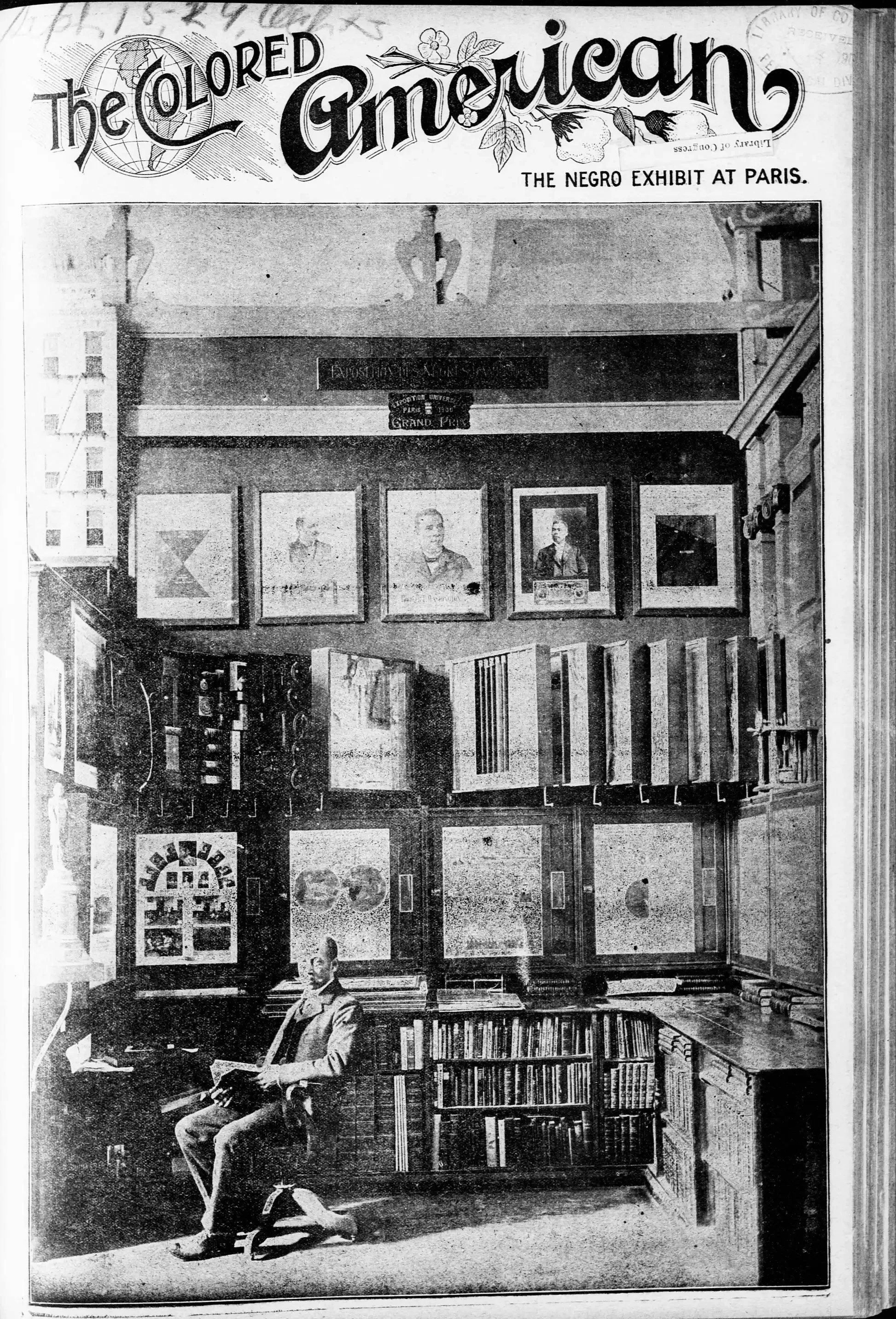
September 15, 1900 edition of The Colored American, a Black periodical, that features a photograph of the "Exhibit of American Negroes" at the 1900 Paris Exposition Universelle. The exhibit was organized by lawyer and fundraiser Thomas J. Calloway (pictured), W.E.B. Du Bois, and Daniel Murray.
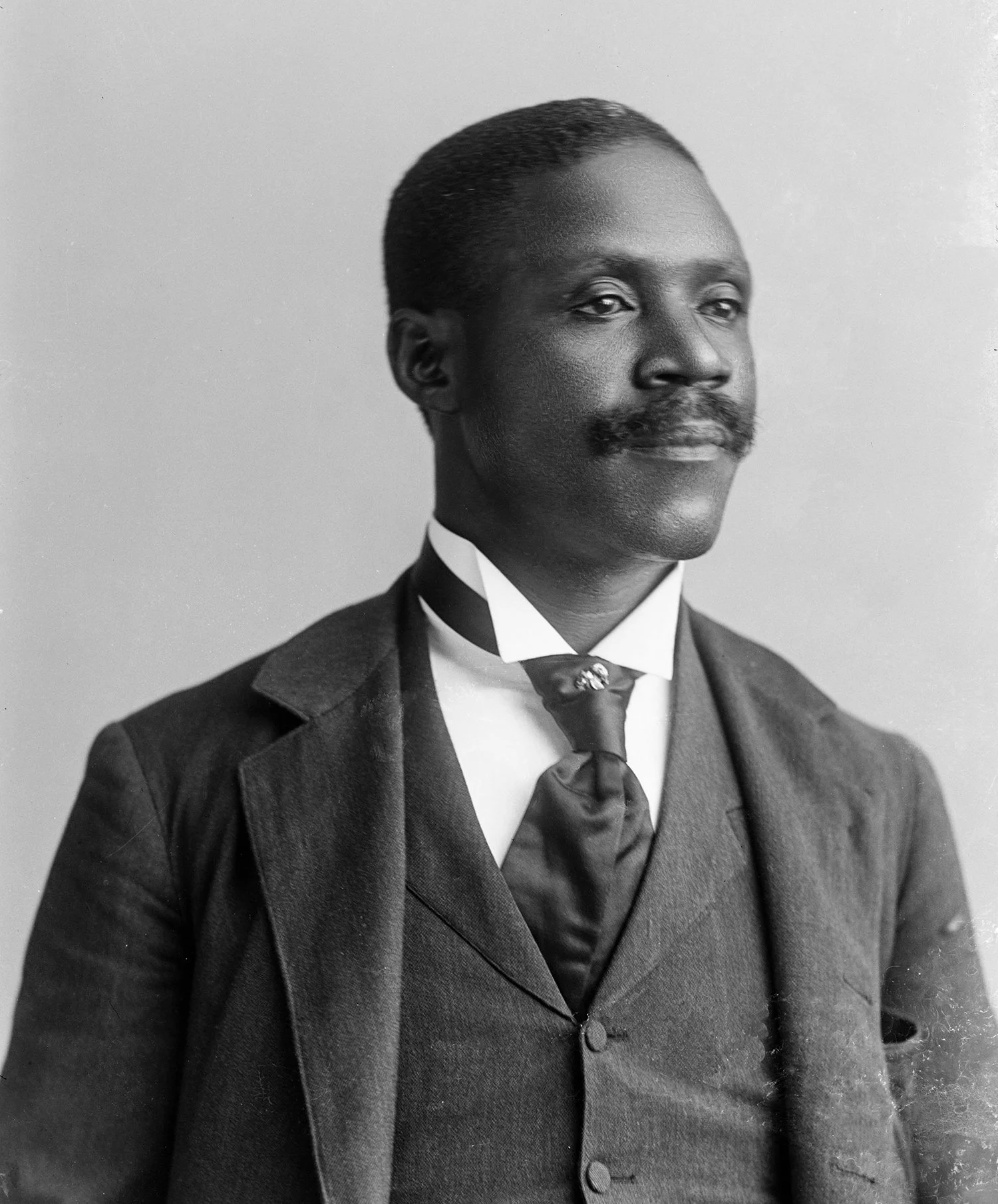
George Washington Murray (1853-1926)
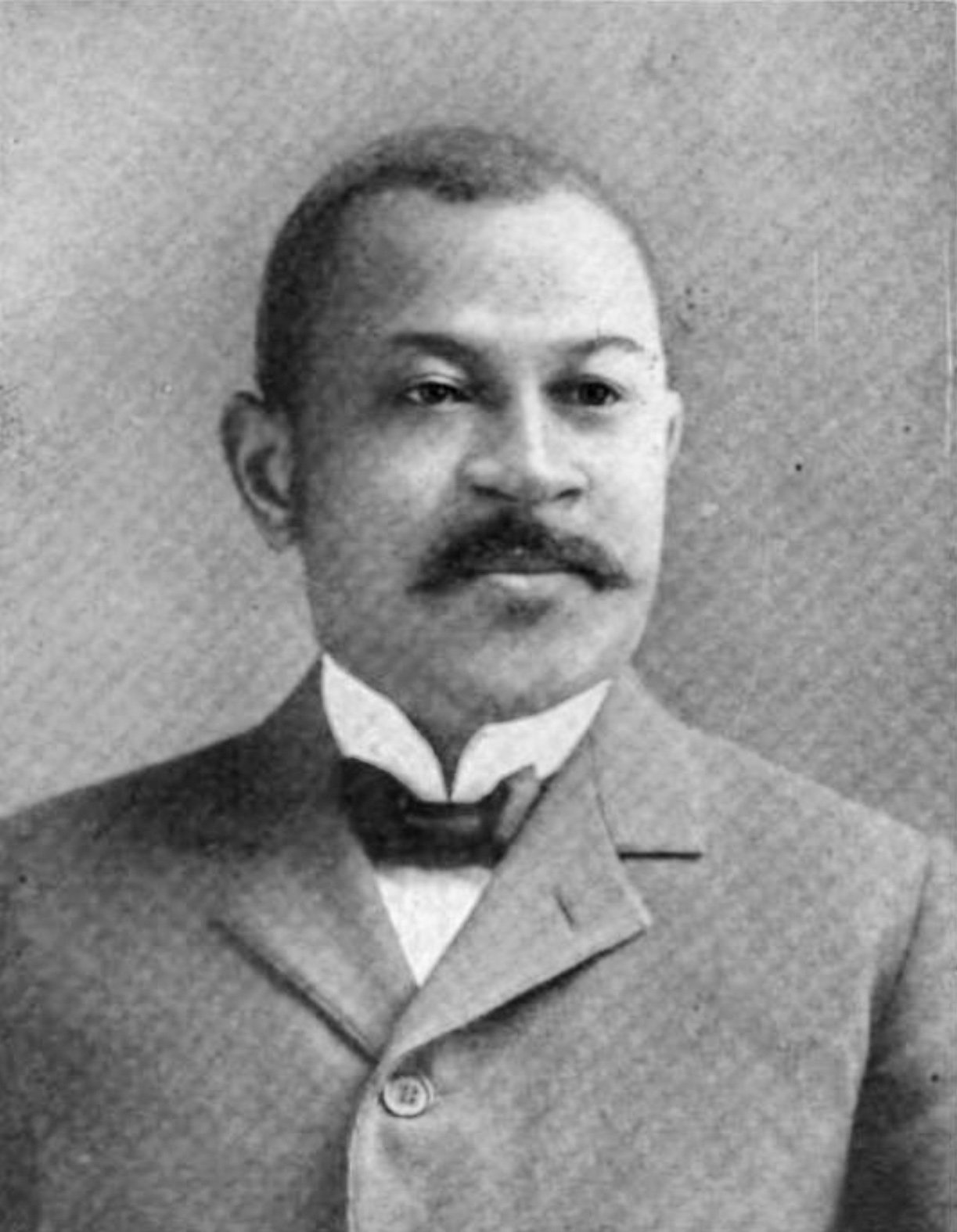
Henry E. Baker (1857-1928)
Alternative Staging the Question Text
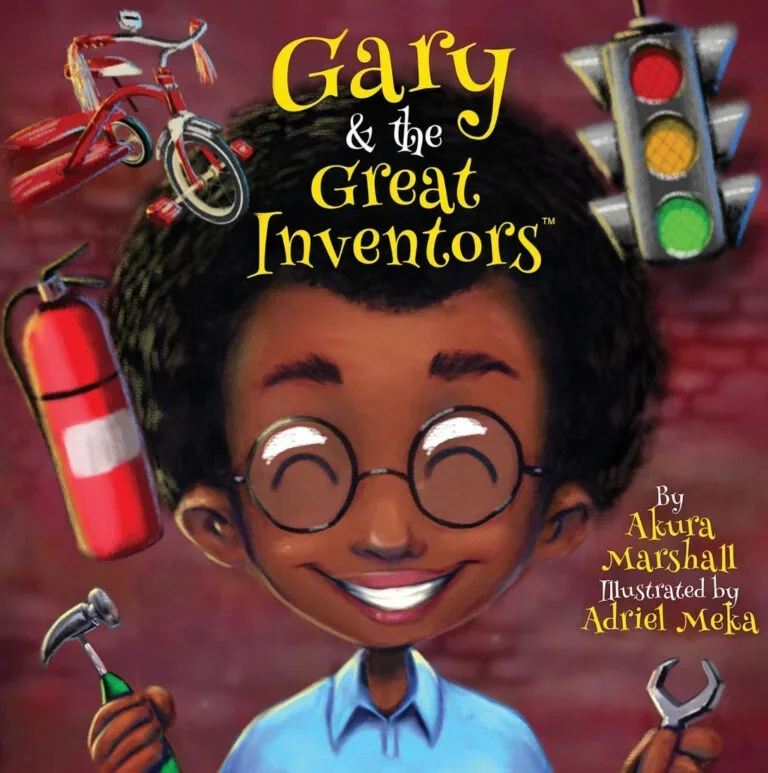
Gary & the Great Inventors, Akura Marshall (author) and Adriel Meka (illustrator), 2018
For a more scaffolded approach for younger learners, we recommend using this picture book as an alternative set the stage activity to help students start thinking about inventions and patents. Students might answer the following two question by the end of the book:
What do you think Gary might invent?
What would you like to invent?
Teachers can open the lesson by asking students, what inventors do you know of? After discussion the teacher could ask, what inventions do you know of that were invented by Black people? After a short discussion, the teacher then shares the stories of Henry E. Baker, George Washington Murray, and W.E.B. DuBois with students. To learn more about Murray and Baker, students can read the following article:
Or, students can read our shorter version:
In 1894, a man named George Washington Murray stood in the U.S. Congress and read aloud a list of inventions made by Black Americans. At the time, he was the only Black member in either body of the U.S. Congress. The list showed inventions like farm tools, machines, and everyday objects. Murray was once enslaved, but he became a farmer, teacher, inventor, and politician. He was on the list several times as he earned patents for farm tools to help small farmers work more easily.
The popular story in the 19th century was that Black people were not inventive. The list Murray read was created by Henry E. Baker, who worked at the U.S. Patent Office. Baker wanted to prove that Black inventors were creative, skilled, and important to the country, even though white people wrote in newspapers that they were not because of their race. No official records had catalogued that information before. Baker spent years conducting research and sending letters to record what became known as “Baker’s List.”
In 1900, W.E.B. Du Bois traveled to the 1900 Paris Exposition, a world’s fair featuring the innovations of the new century. Du Bois, along with his co-organizers created the “The Exhibit of American Negroes.” They challenged racist ideas by showcasing the progress and living conditions of Black Americans just 35 years after the end of slavery using photographs and data visualizations. Part of this story was to showcase Black invention that had been catalogued Baker and shared by Murray.
Recently, Dr. Lisa Cook (2014), a professor of economics and international relations at Michigan State University, used Baker’s work to understand the history of Black inventors and discuss how the hate-related violence (like lynchings) during the Jim Crow Era negatively impacted Black patent activity. As hate-related violence rose, Black people in America realized that they were not protected, especially not by the laws that were often created to cause them more harm. Teachers and students can read Dr. Cook’s full article here.
Drs. Thema Monroe-White and Ebony McGee (2026) also recently extended the discussion about the history of Black innovation. Their discussion advocates that invention can be a means of liberation and uplifting the Black community in the face of anti-black violence and perspectives. Teachers and students can read the full article here.
Together, Baker, Murray, and Du Bois helped protect Black inventors from being forgotten. One legacy of their work is that there is a long tradition of teaching Black inventors in schools. The further research of Black women professors has continued to ask important questions about equality, access, and justice for those who innovate and invent. We frame this inquiry with these stories as a way to start a deeper conversation about the attempts to erase the lives, progress, and determination of Black inventors and innovators.
Supporting Question
Why do African Inventors’ stories matter?

African Inventors of the Past and Present
Short Bio: African inventors and innovators have shaped human history for thousands of years, yet their contributions are often overlooked or minimized in traditional accounts of science and technology. Long before modern Europe, African societies developed complex systems of knowledge, craftsmanship, and problem-solving that responded to local environments, social needs, and cultural values. These inventions were not isolated achievements. They were part of rich technological traditions that included ceramic production for cooking and storage, advanced metalworking, large-scale architecture, medical knowledge, and artistic design.
In early African civilizations, invention and innovation emerged across generations. Pottery developed independently in multiple regions of Africa, including the Central Sahara, the Nile Valley, and West Africa. These ceramic technologies reshaped how communities prepared food, managed resources, and organized daily life. Metalworking traditions produced tools, weapons, and artworks that required advanced technical knowledge. Ironworking and the lost-wax bronze casting technique were used to create the famous Benin Bronzes and metal objects from the Niger River region. These technologies supported trade networks and cultural expression across the continent.
Examining African inventions helps reveal how power, racism, and culture influence what counts as “technology” and who is recognized as an inventor. From ancient ceramic and metal technologies to modern innovations like Arthur Zang’s Cardio-Pad, African inventors have continued to design creative solutions to real-world problems. Studying these stories challenges narrow narratives of technological progress and highlights how invention is deeply connected to community, context, and human need.
Supporting Question
Why does Benjamin Banneker’s story still matter?
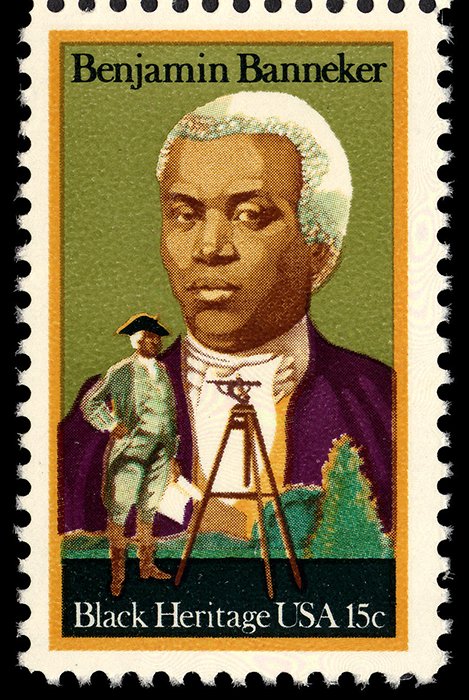
Benjamin Banneker (1731-1806)
Short Bio: Benjamin Banneker is best known for creating a series of almanacs, engineering a wooden clock from a model he’d seen, and assisting in establishing the boundaries for Washington, D.C. Born in Baltimore County, Maryland as a free Black man, Banneker grew up on his family's farm, where he and his family were alienated by the white farmers around them. He was taught to read at an early age, and he went to school with both white and Black children, most likely at a Quaker school. As Banneker grew older, he continued to learn new things. At the age of 22, he engineered a chime clock that kept almost perfect time by using a pocket watch as inspiration. His clock became an attraction in the region.
In 1771, his new neighbor, a Quaker from Pennsylvania, interested him in astronomy, and he mastered the discipline. Eighteen years later his neighbor's cousin recruited him as an assistant for a job surveying the land that is now Washington, D.C. Banneker was paid $2 a day for his work, and at night recorded astronomical observations. Reports are disputed as to the extent of Banneker’s involvement in setting the stones that would mark each corner of the district, but it’s believed he returned home in 1791. By 1792, Banneker published his almanac and correctly predicted eclipses and planetary conjunctions. Banneker printed his published until 1797. His almanacs were not only special because of his accuracy, but also because he used the space in their pages to speak out against slavery. He personally wrote letters to Secretary of State Thomas Jefferson to challenge his racist ideas about Black people. Jefferson’s reply did not address Banneker’s points and he enslaved people until his death. Jefferson did send Banneker's almanac to Paris where his work was held in high regard. In 1806, Banneker passed away, and on the day of his funeral, his house was set on fire and his work burned in the blaze.
Supporting Question
Why does John P. Parker’s story still matter?
John P. Parker (1827-1900)
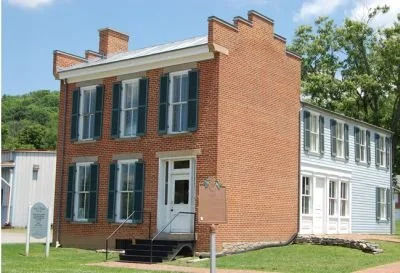
Short Bio: Born in Norfolk in 1827, John P. Parker was enslaved at birth. Around the age of eight, Parker was sold and eventually ended up in Mobile, Alabama, where he worked for a physician. Though it was against the law, the physician’s sons taught Parker how to read. After some time, Parker became an apprentice in a foundry. However, he was later purchased by one of the physician’s patients, who allowed him to buy his freedom for $1,800, which he paid in installments.
With his freedom secured, Parker moved to Cincinnati. It was there that he married Miranda Boulden in 1848; the two were reported to have several children. They later moved to Ripley, where he assisted with the Underground Railroad movement. Parker led hundreds of enslaved individuals to freedom, even though there was a $1,000 bounty on his head. In 1884, Parker received a patent for his Follower Screw for the tobacco press. Sources mention that Parker was one of the first Black Americans to receive a patent during his lifetime. Using his knowledge of welding, he created more inventions such as a soil pulverizer (1890). He later went on to buy and build his own foundry companies. Parker passed away in 1900.
Supporting Question
Why does Elijah McCoy’s story still matter?
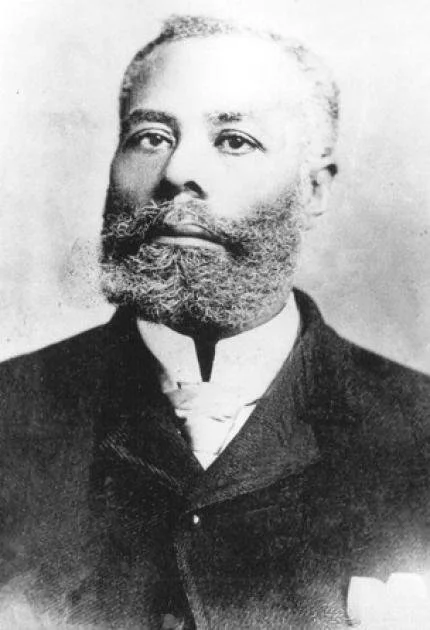
Elijah McCoy (1844-1929)
Short Bio: Elijah J. McCoy (1844 - 1929) is credited with inventing an automatic engine lubrication system for steam engines. This invention saved time and money as it lessened the number of times operators would have to stop. Prior to his invention, engines could only be lubricated while stopped, but his invention offered a way to lubricate the engines without stopping the train. As a child, McCoy showed interest in mechanics. After 15 years in Colchester, Ontario, where his mother and father had settled after fleeing enslavement in Kentucky, Because local segregation laws and professional guilds barred Black individuals from advanced technical pipelines in North America, McCoy’s family sent him to Scotland to secure a world-class apprenticeship and mechanical engineering education. Upon returning to the United States as a certified master mechanic and engineer, structural racism still prevented him from obtaining professional-level engineering roles, forcing him instead into manual labor as a railroad fireman.
Once in Michigan, despite his prior achievements, McCoy still faced racism when attempting to find a job. He was eventually able to find work as a fireman and oiler at the Michigan Central Railroad. It was in this position that McCoy spotted the issue of trains having to stop and start in order to lubricate the engine. He used his skills and education to create a solution. In 1872, McCoy patented his invention. His invention became popular among railroad engineers. Though many created their own versions, it is stated that the saying "the real McCoy" references engineers discussing his design of the oil-drip cup. At the time of his passing in 1929, McCoy held more than 50 U.S. patents, and in 2012, the Elijah J. McCoy Midwest Regional Patent Office (the first satellite office of the United States Patent and Trademark Office) was named in his honor. It is important to note that though McCoy held multiple patents, as a Black man with little capital, he often credited his employers of other inventors on his patents in order to be able to produce them. However, later in his career, he created the Elijah McCoy Manufacturing Company where he was able to produce his lubricators and more patented devices.
Supporting Question
Why does Lewis Latimer’s story still matter?
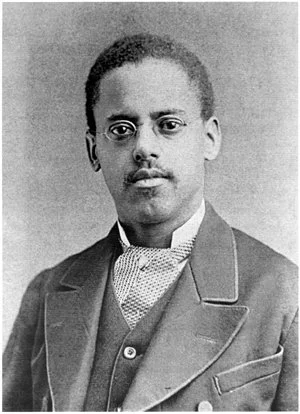
Lewis H. Latimer (1848-1928)
Short Bio: Lewis Howard Latimer (1848–1928) was an inventor and draftsman who is most known for helping to bring electric light to more people. He was born in Chelsea, Massachusetts. His parents escaped slavery and their enslaver sought to recapture his father, George. A movement that included abolitionists William Lloyd Garrison and Frederick Douglass helped to secure his freedom even though he feared that he could be forced back into slavery. As a teenager, Latimer joined the U.S. Navy during the Civil War. After the war, he worked at a patent law office for little pay. He learned drafting skills, which means making careful technical drawings. Despite the racism of the time that often limited job opportunities, Latimer’s skill eventually earned him a job as a draftsman. He kept going and used his skills to open doors that many people tried to keep closed.
Latimer became famous for invention and problem-solving. He helped draw the patent plans for Alexander Graham Bell’s telephone. He also improved parts of electric lighting by creating a better way to make carbon filaments, which helped light bulbs last longer and break less during manufacturing. Many people were working on electric lights at the time, including Thomas Edison and other companies that competed to make lighting safer and more reliable. Latimer worked for Edison’s electric company and later became the first person of color in the Edison Pioneers. Even though he did important work, he did not always receive the same recognition or opportunities as white inventors. Still, he earned respect as an expert and wrote a major book about electric lighting. He also cared about fairness and community. He taught immigrants, supported civil rights, and used his education to help others. Latimer’s life shows how creativity and persistence can challenge bias and help improve society.
Supporting Question
Why does George Washington Murray’s story still matter?
George W. Murray (1853-1926)
Short Bio: George Washington Murray was born enslaved in 1853 in Sumter County, South Carolina. While his parents’ names are unknown and they are reported to have died before the end of the Civil War in 1865, he did have at least two brothers. Reports state that Murray did not receive formal education as a child. However, he did attend the University of South Carolina in 1874. He was later expelled in 1877 when Democrats took over the state government and forced Black students out of the school. That same year, he married Ella Reynolds, with whom he had two children.
Murray began working as a teacher while farming his own land. He received eight patents related to his agricultural inventions. These inventions made his farming work more efficient. After previously running and losing, Murray was elected to the U.S. House of Representatives in 1893. He was the only Black representative in the 53rd and 54th Congresses. During his term, he read Henry Baker’s list of Black patent holders on the House floor, recognizing the brilliance and capabilities of Black people in the United States. Murray was not re-elected to the 55th Congress. However, he did not stop fighting for justice. He eventually returned to his farm, where he sold land to Black tenants. He was charged with and convicted of forgery — while some sources report this as true, others state that the charge was an act of retaliation for his actions in Congress and his attempts to gain voting rights for Black Americans. Murray relocated to Chicago in 1905 to avoid prison and claimed that he feared for his life. His wife stayed in South Carolina, and the two separated. He remarried in 1908. In Chicago, Murray remained politically active and began lecturing across the country. He wrote two self-published books, Race Ideals: Effects, Cause and Remedy for Afro-American Race Troubles and Light in Dark Places. Murray passed away from cancer in April 1926.
Note: Murray’s time in congress was before the political party switch in the U.S.
Supporting Question
Why does Sarah Goode’s story still matter?
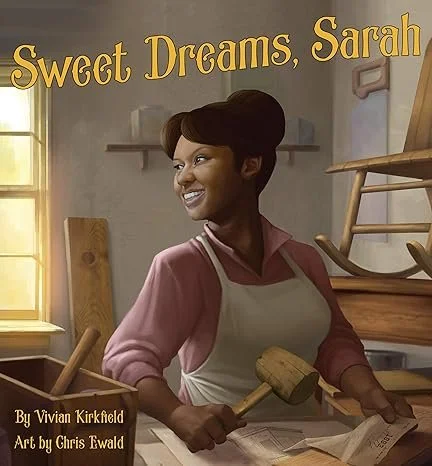
Sarah E. Goode (1855-1905)
Short Bio: Sarah Elisabeth Goode (1855 - 1950) is one of the first Black women granted a patent in the United States. She was born in Toledo, Ohio. Her mother kept the house and worked with the Ohio Anti-Slavery Society and her father is reported to have worked as a waiter. Around 1870, Goode's family moved to Chicago, where she later married and had children. In 1885, while working at her and her husband’s furniture store, she patented her design for the cabinet bed. This invention made Goode one of the first African American women to receive a U.S. patent. During a time when minoritized and impoverished people often signed over their patents to employers in order to fund the production of their product, Goode was able to maintain ownership of her patent and create and sell the cabinet bed out of her furniture store. She had noticed that with the limited space available in apartments, people needed a functional piece of furniture that could serve various purposes.
Though there is not much public information about Goode, it is recorded that in Thomas J. Calloway and W.E.B. Du Bois' The Exhibit of American Negroes, Goode was one of four women identified from the group of African American inventors featured. In a time where Black people had to fight to be recognized for their societal contributions and women were expected to shrink themselves, Sarah Goode created a needed item that became popular in many homes and secured her place in history while doing so.
Supporting Question
Why does Granville T. Woods' story still matter?
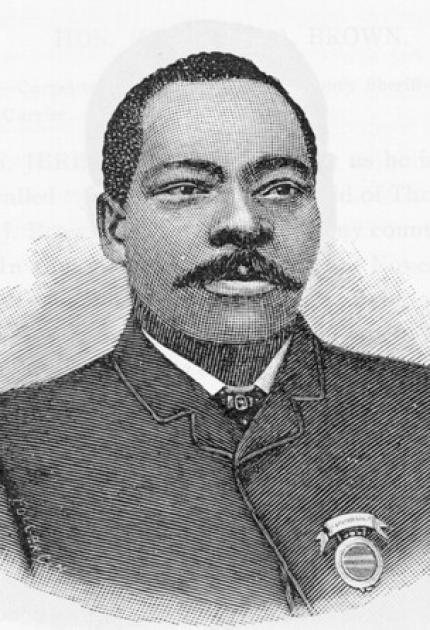
Granville T. Woods (1855-1905)
Short Bio: Granville T. Woods was born in 1856 in Columbus, Ohio. He became well known for his inventions that improved electric railway cars. He was so brilliant that people often called him the Black Edison. As a child,
Woods received a formal education only until the age of 10 in Columbus. He soon began working as an apprentice, learning the trades of machinist and blacksmith. In 1872, he found work as a fireman, a person responsible for keeping the fire going in a steam engine. By 1874, Woods had become an engineer and moved to Springfield, Illinois, where he studied mechanical and electrical engineering.
Although Woods received many patents, he is best known for inventions that made communication between trains and train stations possible. Before Woods could patent the his “telegraphony” — a system using electricity and morse code to understand it. Another man attempted to steal his designs and claim them as his own. Fortunately, Woods had sketches that proved the patented invention belonged to him. Similar patent disputes later occurred with Thomas Edison, but Woods prevailed and won the lawsuits. While living in Columbus, Woods opened his own company, “Woods Electric Co.” Alexander Graham Bell later bought the rights to Woods’s telegraphy invention, which allowed Woods to work as a full-time inventor. Some reports state the Woods was married. However, reports also state that she was granted a divorce. Woods died from a stroke in 1910. At the time of his death, he was penniless and was buried in an unmarked grave.
Supporting Question
Why does Madam C.J Walker’s story still matter?
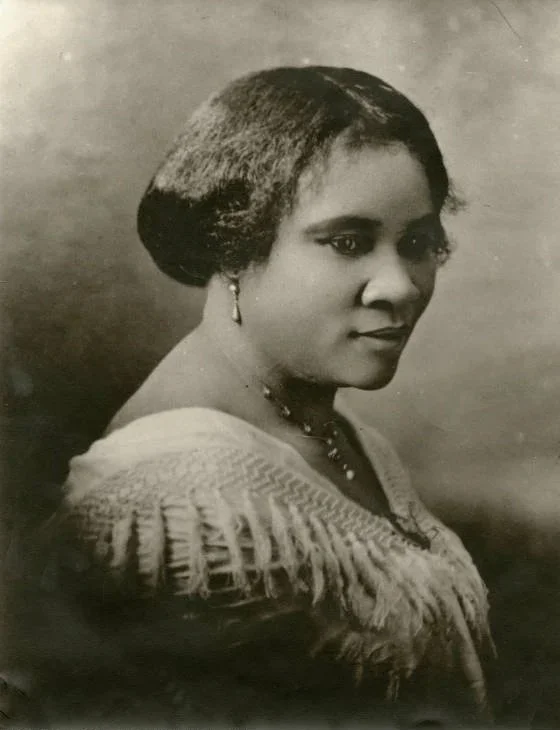
Madam C.J. Walker (1867-1919)
Short Bio: Madam C.J. Walker is known for revolutionizing the Black hair care industry. Born as Sarah Breedlove, Walker was born December 23rd, 1867. One of six children, Breedlove was born free to two formerly enslaved parents. After the passing of her parents, Walker was orphaned at the age of seven. She later moved in with her older sister, but experienced abuse from her brother in-law. At the age of 14, Walker married her first husband, who passed away in 1887. From that marriage, she had her daughter, A'Lelia. In 1888, she and “Leila” moved to St. Louis, where she worked as a laundress in order to provide her daughter with a formal education.
Around 1904, Walker became a hair product sales agent for Annie Turnbo Malone, who later became a competitor. However, in 1905, Walker moved to Denver, Colorado where she met Charles Walker and began using the name Madam C.J. Walker after their marriage in 1906. Walker began selling her own innovative and specialized hair products door to door as an independent hairdresser. Her products not only focused on hair growth, but scalp maintenance as well. With the growing popularity of her product, Walker then moved to Pittsburgh, Pennsylvania and opened a beauty parlor to train her agents (licensed stylists who earned commission) on the "Walker System.” Not only did this give her the ability the grow her business, but she also was able to hire Black women and help them gain economic independence. Walker was adamant about supporting the Black community. She spoke at conventions, raised money to establish a YMCA branch in Indianapolis, gave lectures alongside other Black leaders of her time, was active in the National Association for the Advancement of Colored People (NAACP), and much more. In 1910, Walker relocated her business to Indianapolis where she built a factory, hair salon, and beauty school. Her business continued to grow, and at the time of her death, she was believed to be the wealthiest self-made Black woman in America.
Supporting Question
Why does Garrett Morgan’s story still matter?
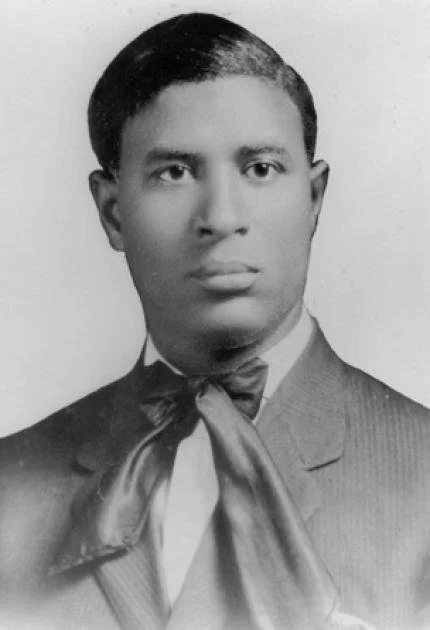
Garrett Morgan (1877-1963)
Short Bio: Garrett Morgan is known for developing the Morgan Safety Hood, an early breathing device for use in smoke-filled environments, and an improved three-position traffic signal. His safety hood proved to be life-saving equipment, and his version of the stop light brought more organization and safety to the road. Born in 1877, Morgan was the seventh of 11 children. His mother, Elizabeth, and father, Sydney, had both previously been enslaved, but had gained their freedom by the time Morgan was born. He grew up in Paris, Kentucky, working on his family farm. Around the age of 14, Morgan decided to move to Cincinnati for better educational and financial opportunities. Just four years after that, Morgan moved to Cleveland where he picked up a job at a manufacturing company, working around sewing machines.
He took his job seriously and learned all he could about the machines. With Morgan’s knowledge about sewing machines, in 1907, he opened his own sewing machine repair company. Later he and his wife opened a tailor shop where his wife (Mary) sewed clothing and Morgan kept the machines in good condition. This venture also led him to create a hair straightening cream and establish the G.A. Morgan Hair Refining Co. He used the profits from this company to invest in his own inventions. One of those inventions was the safety hood which he patented in 1914. Though Morgan's safety hood had already saved lives, he had a hard time getting white fire chiefs to buy his product because he was Black, so he hired a white actor to help promote his product. In 1923, he patented his three-position traffic signal and later sold the patent rights to General Electric for $40,000. Though Morgan’s inventions were obviously important, he still faced discrimination because of his race. However, despite his hardships, he still found ways to support his community and make a lasting impression on the world.
Supporting Question
Why does Gladys West’s story still matter?
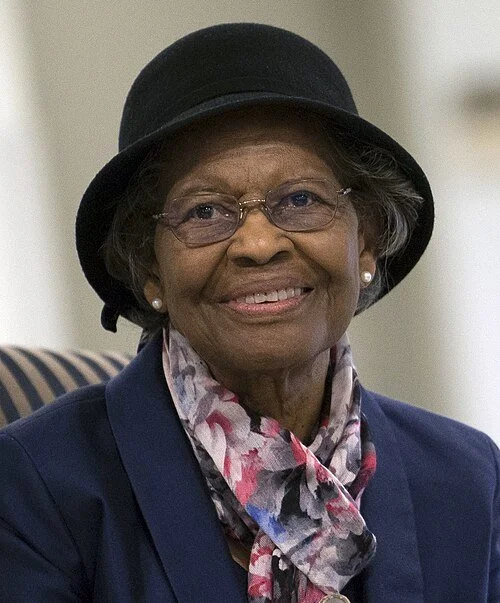
Gladys West (1930-2026)
Short Bio: Gladys Mae West, born as Gladys Mae Brown, is best known for her role in mathematical calculations that helped the Global Positioning System (GPS) come to be. Born in Sutherland, Virginia in 1930, West grew up in a community of sharecroppers on her family's small farm. She would work and help out, though she's on record admitting that farming was not her favorite activity. Growing up in the age of segregation, Gladys attended a school for Black children, where appropriate resources were hard to come by. However, despite setbacks, West worked as hard as she could, which earned her a spot as first in her class and a scholarship to Virginia State College (now Virginia State University). Her teachers had inspired her to study mathematics, so West pursued a Bachelor of Science in Mathematics and later furthered her education by getting a master's in mathematics as well. She used these degrees to work as a teacher of both science and math.
In 1956, West was hired at the Naval Proving Ground in Dahlgren, Virginia, as a computer programmer. During her time there, she met her husband, Ira West, and married him in 1957; they had three children. In the 1960s, West was involved with an award-winning study that revolved around the relationship between Pluto and Neptune. In the 1970s, West continued to provide accurate work and began to use her knowledge and computers to calculate the shape of the earth. She programmed a computer to assist her in this work and used complex algorithms to produce a report that helped improve important components of satellite geodesy -- a way of measuring Earth's shape using satellites. From this work, the GPS was born. West worked at Dahlgren for 42 years and retired in 1998. Though her work was important to her, West also continued to pursue her education. During her time at Dahlgren, West pursued a Masters in Public Administration from the University of Oklahoma and graduated in 1973, and in 2000, West completed her PhD in Public Administration at the age of 70. West lost her husband in 2024 and passed away in 2026 at the age of 95.
Supporting Question
Why does Lonnie Johnson’s story matter?
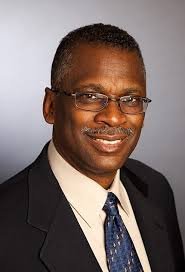
Lonnie Johnson (1949)
Short Bio: Lonnie Johnson is best known for inventing the Super Soaker. Later he created the N-Strike Nerf product line as well. These inventions have generated over a billion dollars in sales and can be found in the homes of children across America. Born October 6, 1949 in Mobile, Alabama, Johnson had an early liking to engineering. As a young boy, it is reported that he reverse engineered his sister's doll to understand how the eyes worked, almost burned down his house while making rocket fuel, and built a go-cart out of a lawnmower engine and scraps. This love followed him through high school as well. In 1968, Johnson represented his school at a science fair, in which he was the only Black student in attendance, where he presented a robot (Linex) and received first-place for his creation. He continued on to Tuskegee University where he earned a Bachelor of Science in mechanical engineering and a master's degree in nuclear engineering.
During his lifetime, Johnson has worked for both the U.S. Air Force and NASA. It was during his time with the Air Force that he created the Super Soaker. He's stated that the initial idea came when he was working on a heat pump. While hooking up a nozzle to a bathroom sink, Johnson discovered the type of pressure expressed would create a great water gun. In just a year, the toy generated $200 million in sales. In 2013, Johnson sued Hasbro Inc. when he found out that they had underpaid him royalties, resulting in Johnson winning close to $73 million. He has patented over 250 inventions. Johnson has received an honorary doctorate from Tuskegee University, been inducted into the National Inventors Hall of Fame, and has watched as the Super Soaker take its place in the National Toy Hall of Fame.
Supporting Question
Why does Marian Croak’s story matter?
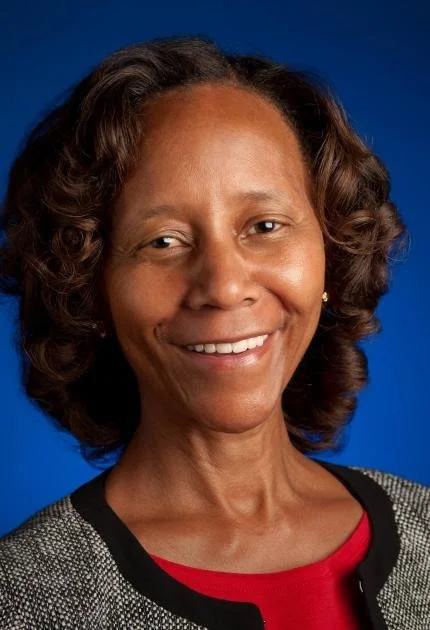
Marian Croak (1955)
Short Bio: Marian Croak is best known for advancing Voice over Internet Protocol (VoIP) technologies, which allow voice to be sent via the internet instead of the phone. Born and raised in New York, Croak had an early love for technology. She credits her father with encouraging her to pursue the STEM education. She also acknowledges that her teachers in public school served as inspiration. Croak attended Princeton University for her undergraduate degree and the University of Southern California for her doctorate in social psychology and statistical analysis.
In 1982, she started a career at Bell Labs (AT&T), working with the Human Factors division. In this position, she focused on telecommunications, mainly determining if message applications could communicate with each other. As she advanced her career in network engineering, Croak and her team began experimenting with treating voice like data. From these experiments, she began prioritizing VoIP technologies, which made it possible to send voice over the internet, not just over phone lines. VoIP technologies are what make it possible to have conference calls and are integral to companies like Zoom and Microsoft Teams. During the aftermath of Hurricane Katrina, she developed technology that allowed people to donate money to organizations using text messages. Not only did this technology ultimately help the victims of Hurricane Katrina, but it also supported the victims of the 2010 earthquake in Haiti by allowing organizations to collect $43 million in donations through text messages. Currently, Croak holds over 200 patents, and was recently (2022) the second Black woman, after Patricia Bath, to be inducted into the National Inventors Hall of Fame.
Supporting Question
Why does James West’s story matter?

James West (1931)
Short Bio: James West, known for his contributions to the electret microphone, was born on February 10, 1931. West was born in Prince Edward County, Virginia, at his grandfather’s house because the hospital in the nearest town, Farmville, would not accept non-white patients. Though his parents thought he’d be a doctor, James showed an early interest in engineering, taking items apart and studying their inner workings.
After high school, West majored in pre-med at Hampton University, but was drafted into the army during the Korean War. When he returned, he started school at Temple University. Though his parents felt that it would be easier for West to find a sustainable position in the medical field, he decided to pursue a degree in solid-state physics — despite his parents’ concerns. During his time at Temple, West began interning at Bell Labs, where he appreciated being able to see people in the workforce who looked like him. He later began working full-time at Bell Labs after graduating in 1957. While working there, he met Gerhard Sessler, with whom he invented the electret microphone with. The two patented the invention in 1962. Since then, West has done substantial work toward advocating for STEM education and diversity in innovation. During his time at Bell Labs, he coordinated programs designed to improve diversity for minoritized groups within AT&T’s operating companies. In the late 1990s, he served as president of the Acoustical Society of America. Today, he holds more than 70 U.S. patents and more than 200 foreign patents. He currently holds the title of Professor Emeritus in the Department of Electrical and Computer Engineering at Johns Hopkins University.
Supporting Question
Why does Patricia Bath’s story matter?
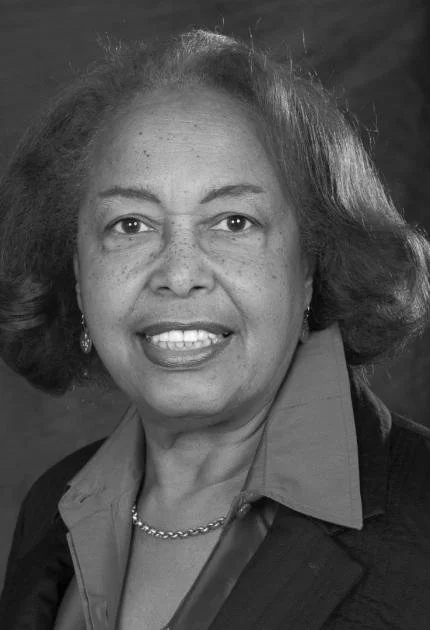
Patricia Bath (1942-2019)
Short Bio: Born November 4, 1942 in New York City, Patricia Bath is best known for her innovative work in cataract surgery. Bath grew up in Harlem, New York, with her mother, father, and brother. From a young age, she showed a true interest in math and science, earning a National Science Foundation Scholarship by the time she reached high school. In her teens, she also attended a cancer research program in which she made discoveries that led to her receiving a Merit Award from Mademoiselle magazine in 1960.
Bath graduated from Hunter College in 1964 and earned her medical degree from Howard University in 1968. She completed her residency at NYU and was the first Black woman to do so. In 1986, Bath’s research led her to study cataract surgery. She coined the term “Laserphaco” and developed the Lasephaco Probe that uses lasers to remove cataracts. Throughout her career, she was passionate about blindness prevention and worked to provide digital accessibility to blind children. She also took time to discuss the disparities that women face STEM. Bath made history several times throughout her life. Not only was she one of the first two Black women to be inducted into the National Inventors Hall of Fame, but she was also the first African American woman to receive a patent for a medical purpose. Bath received many more accolades throughout her lifetime. To view a list of honors, view a timeline on her website here.
Compelling Question: What lessons should we learn from the lives of Black inventors?
-
Summative Performance Task Argument
Students should participate in a gallery walk of the class Black Inventor’s Museum where they view the exhibits and take notes on what they learn to answer the compelling question, what lessons should we learn from the lives of Black inventors?
See advise for creating your Black Inventor’s Museum Exhibit Below.
-
Summative Performance Task Extension
Students should write an answer and participate in a whole class discussion of the compelling question, what lessons should we learn from the lives of Black inventors?
-
Taking Informed Action
Students can identify ways that Black inventors are still making change in the present (see Timnit Gebru, etc.) and identify what supports they need to thrive.
Students could investigate whether students from all races are equally represented in advanced STEM classes in their district, and whether the curriculum is culturally responsive and pursues a more just world. They can advocate for change as is necessary.
Creating your Black Inventor’s Museum Exhibit
5
Before You Start
1
Write one sentence that answers: What is the most important thing I want someone to know about my inventor? This is your central message. Everything on your poster should connect back to it.
Exhibit Layout
2
Viewers' eyes go to the top center first — put your most important information there
Arrange your content so it tells a story with a beginning, middle, and end
Keep related information grouped together so it's easy to follow
Exhibit Text
3
Final Check
Use short sentences or bullet points — avoid long paragraphs
Use headers so viewers know what each section is about
Make your font big enough to read from a few feet away
Exhibit Images
4
Every image should add meaning, not just fill space
Add a short caption to each image explaining why it's included
Step back a few feet and look at your poster, then ask yourself:
Is my central message easy to spot right away?
Does my poster tell a clear story about my inventor?
Is anything too crowded or hard to read?
Would someone who knows nothing about my inventor understand and care about them after reading this?