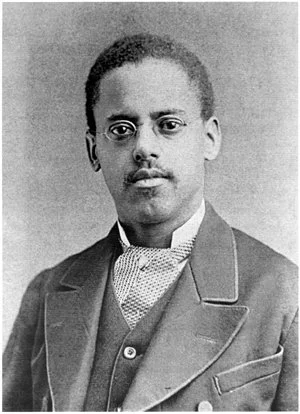
For the formative performance task, use the sources to answer the following questions:
What are the important events in this person’s life? What emotions did this person experience throughout their life?
What did this person invent? What other inventions have been done in this area?
What do we know about the biases this person faced and how they responded? How did their responses compare to other people of their time?
How much—if it all—did the person’s life change after their inventions? Did they receive credit for their invention? Did they profit from it?
In what ways did this person address social issues of their day?
Featured Sources

Source A
U.S. Patent 223,898, “Application for the Incandescent Light Bulb,”
1880

Source B
U.S. Patent 247,097, "Electric lamp,"
1881
Source C
Who Really Invented the Light Bulb?
History.com, 2013

Alternative Source D & E options
Source D
“Lewis Latimer,” in What Color Is My World?: The Lost History of African-American Inventors by Kareem Abdul-Jabbar, 2012
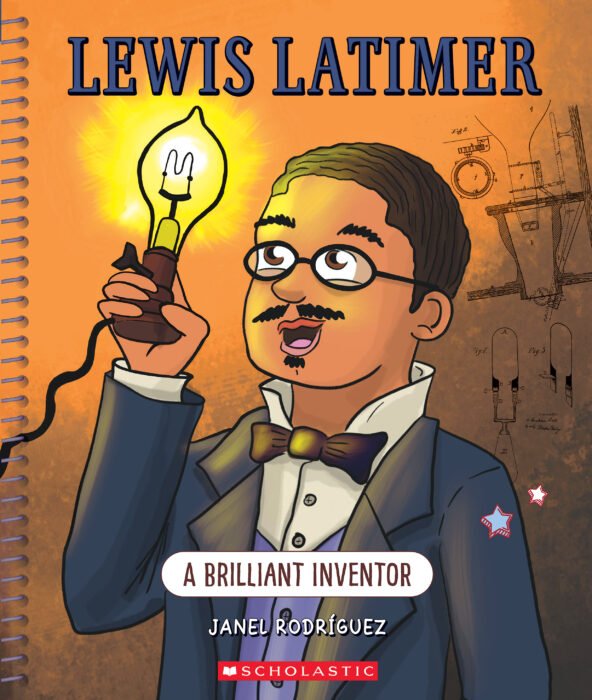


Janel Rodríguez’ 2023 picture book “Lewis Latimer” explains Lewis’ patent with J. V. Nichols (Source B) on page 19 that their “Electric Lamp” “improved the connection between the carbon filament and the lead wires. He did this by flattening the ends of the wires and covering them in copper. Even if it was never put into commercial use, this patent was meant to make light bulbs more durable and energy efficient.” However, Latimer did patent a “Process of Manufacturing Carbons” (patent #252,386) "that created a faster and easier way to make carbonized filaments. This patent was put to use by Maxim between 1882 and 1884. It made light bulbs more affordable and longer-lasting” (p. 19) Source E
Lewis H. Latimer, Electrical Pioneer and Inventor, a Seldom-Told History, IEEE Reach, 2020
Alternative Source E:
Lewis Latimer, Deeper than Read [video], 2023
Educator Note: Use this source for students who would benefit from a more engaging, more concise biography about Latimer.
Historical Note: From our sources, Latimer learned technical drawings at his job at the Crosby and Gould patent law firm, not while serving in the Navy.

Source F
General Electric Legal Department, Expert’s Office, 1894
Lewis Latimer is second from right in back row.

Lewis Latimer is closest to the camera on the right side of the table
Source G
Edison Pioneers, 1918

Source H
Edison Pioneers, 1920
Lewis Latimer is second from left on the front row; Thomas Edison is center second row

Source I
Latimer family, November 10, 1923
Lewis Latimer is in the front row at the left and his wife, Mary is next to him.
Source J
Blackout by John Rocco, 2011
Note: All inventions both bring benefits and drawbacks, even an invention as celebrated as electric lights. This book is intended to help students think about the role of electric lights in their daily lives. What do we give up for the benefits of electric lighting?
STEM Extension Activity
Make a Light Bulb with Batteries, IEEE, 2020
Materials
Safety Glasses
Glass Jar
Cardboard paper towel tube, or toilet paper tube
Either 2 long wires with alligator clips, or 4 short ones clipped together to make two long wires. (Available on Amazon, Home Depot, Loews, Walmart, and Auto supply stores, etc.)
8 D Batteries (the large ones) (Each D battery is 1.5V, connecting them all will provide 12V)
Pencil lead (use 0.5 mm) (these break easily, so you might want to have more than one handy)
Electrical Tape
Scissors
Safety Gloves