Supporting Question
Why do African inventors’ stories matter?

For the formative performance task, use the sources to answer the following questions:
What did invention, innovation, and technology look like in early African civilizations? What are some significant examples?
In what ways did early African inventions and technological systems lay the foundation for subsequent Black innovation and scientific advancement? How did this shape later Black innovation and creativity?
What do European doubts or denials regarding Africans’ capacity for sophisticated technological innovation and invention reveal about the prevailing intellectual, cultural, and racial ideologies of the period?
* Alternative sources for students below Grade 5 in yellow boxes.
Featured Sources
Source A
African ceramic inventions section from “Africa's Independent Inventions & Lost Technologies,” HomeTeam History, 2025
Watch video from 4:20 to 7:00 minutes.
Source B
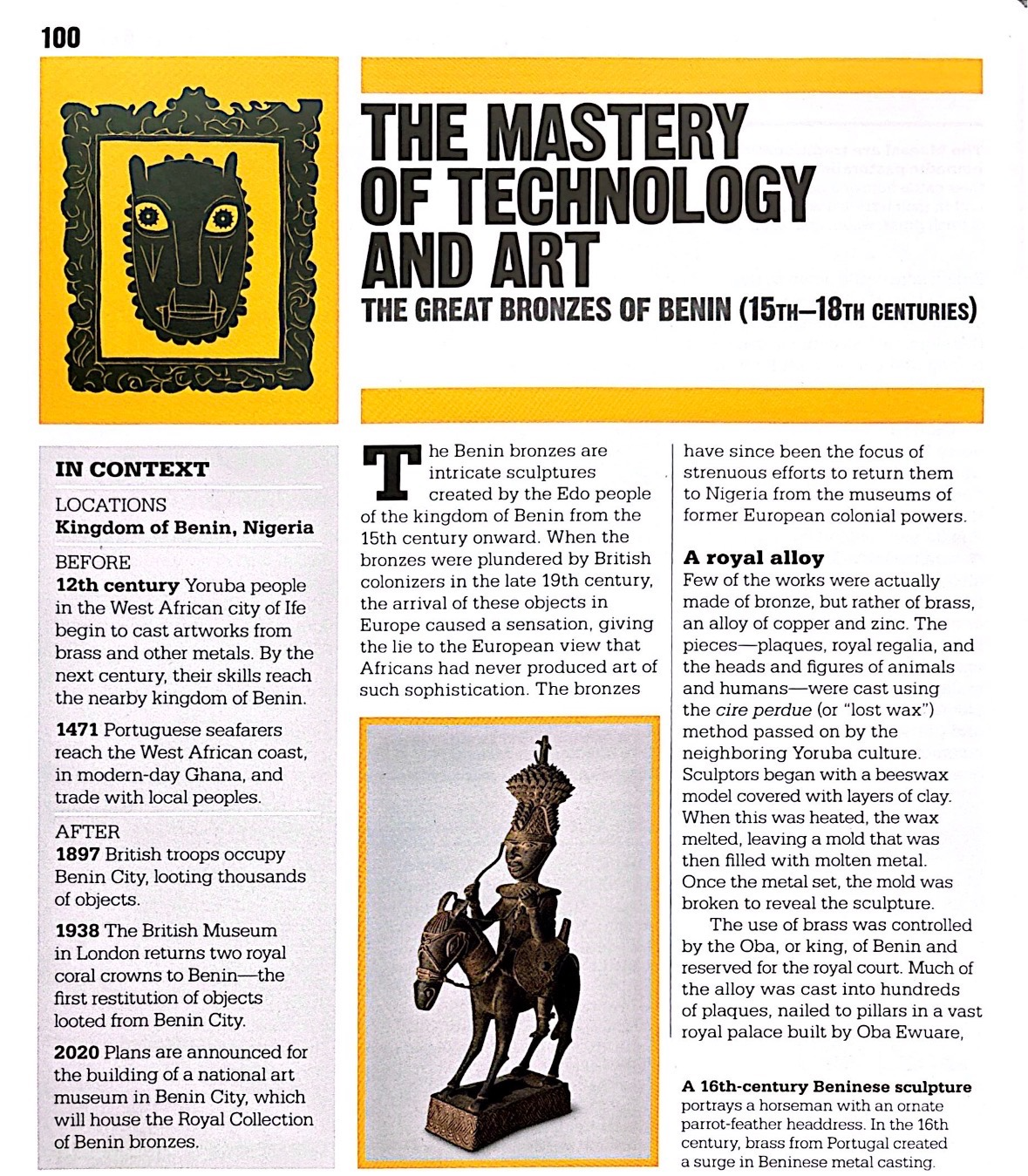
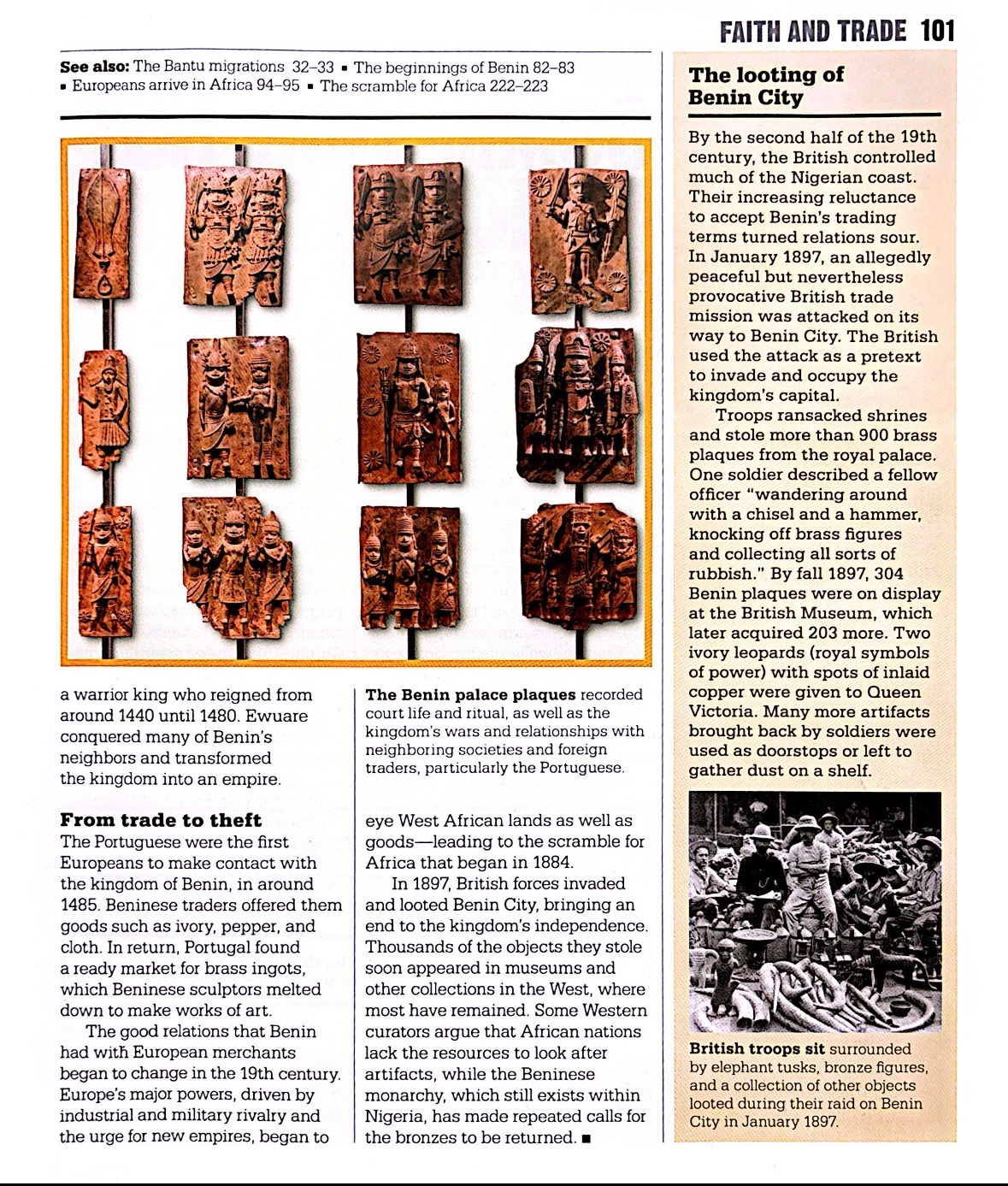
“The Mastery of Technology and Art: The Great Bronzes of Benin (15th—18th centuries),”
The Black History Book, 2024
Alternative Source
Key Vocabulary
Alloy - a "super metal" made by melting and mixing two or more metals (or a metal and another element) together to make it stronger, lighter, or harder than before.
Brass - a shiny, yellow-gold metal made by mixing two other metals together: copper and zinc.
Bronze - a super-strong, shiny, brownish-orange metal made by mixing two other metals together: copper and tin.
Colonizers - people from one country who move to a new land, take control of it, and settle there, often against the wishes of the native people already living there.
Curators - experts who choose special items, keep them safe, and arrange them to tell a story that everyone can enjoy.
Ivory - a hard, white material that comes from the long teeth (tusks) of animals like elephants, walruses, and narwhals.
The Great Bronzes of Benin
The Benin bronzes are sculptures created by the Edo people, people who live in Nigeria’s Edo State. The bronzes were stolen by British colonizers in the 1800s. Recently in 2025, different pieces were returned.
A Royal Alloy
Most of the bronzes in Benin were made from brass. In order to make plaques and different sculptures, Beeswax models were covered in clay. The clay was heated, which created a mold, and metal was poured into the mold to create the sculpture. Brass and the things made from it were seen as special and valuable. Therefore, the use of brass was controlled by the Oba (king) of Benin and reserved for the royal court.
From Trade to Theft
The Portuguese were the first Europeans to make contact with Benin. The Beninese traders offered ivory, pepper, and cloth, and in return, the Portuguese would offer blocks of brass. In 1897, British forces invaded Benin City and stole the an extensive amount of bronzes. Western curators have argued that African nations lack the resources to look after artifacts despite the Beninese monarchy’s calls to return the pieces.
Source C
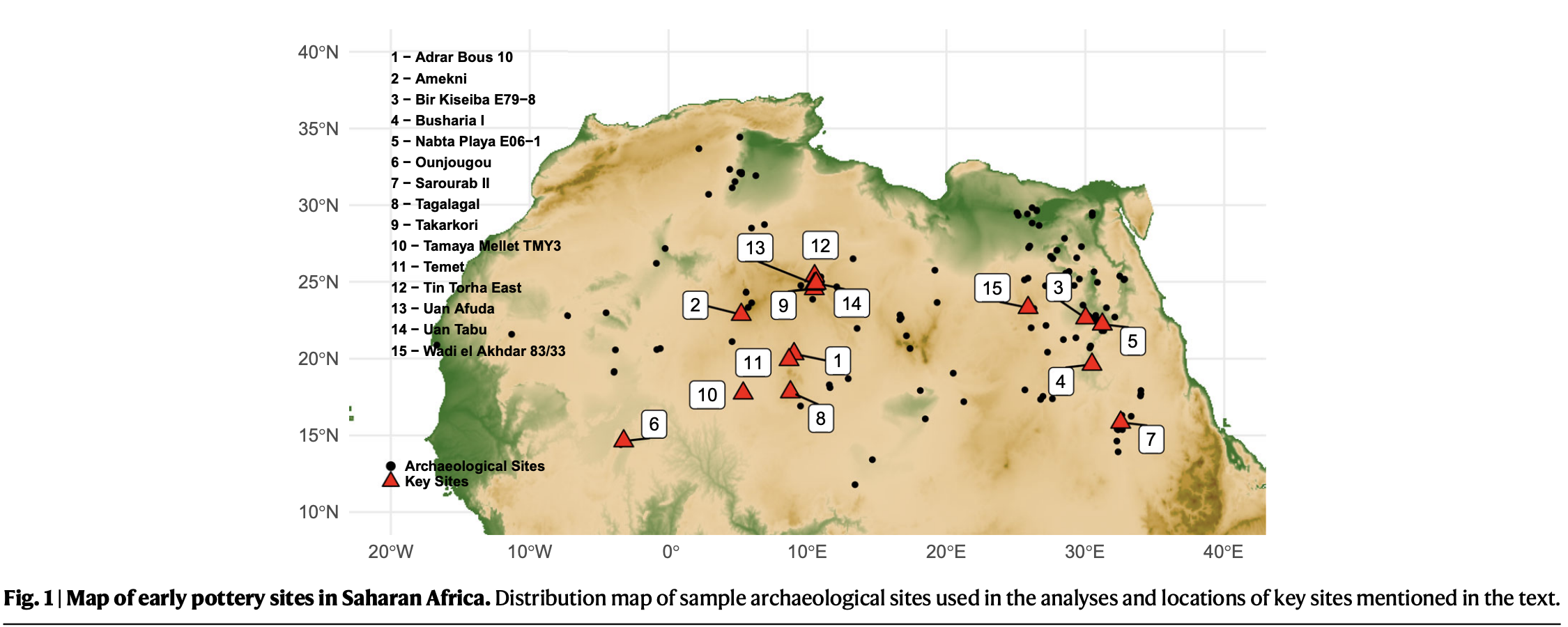
“Statistical models suggest multiple origins of ceramic technology in Africa,” Rocco Rotunno & Enrico Crema (archeologists), 2025
Pottery is one of the earliest transformative technologies in human history, marking new ways of storing, cooking, and processing food. In Africa, ceramics first appeared in the Sahara during the African Humid Period, around 11,000–10,000 years ago, when hunter-gatherer-fisher groups were adapting to environments of growing ecological productivity.
While several regions have been proposed as the birthplace of this innovation, researchers have long debated whether pottery in Africa emerged once or through multiple independent developments. The small sample sizes and high levels of chronological uncertainty associated with these finds have, so far, made this problem a particularly challenging one to tackle.
In a new study in Nature Communications, Rocco Rotunno and Enrico Crema from the University of Cambridge, compiled radiocarbon evidence from across Early Holocene Africa, including both sites with and without pottery.
Using novel statistical models of spatio-temporal diffusion, they compared different scenarios for the spread of ceramic technology. The analysis found the strongest support for models with dual or triple origins, suggesting independent centres of innovation in the Central Sahara, Nile Valley, and West Africa.
These findings challenge the idea of a single-point origin and emphasise the importance of localised technological choices, regional ecological conditions, and intergroup interaction. By refining the chronology and modelling the spread of ceramics, the study provides new insights into the role of innovation and connectivity in shaping the cultural trajectories of early African societies.
Alternative Source
Pottery is one of the first impactful inventions people ever made. It helped them store food, cook meals, and prepare things to eat. In Africa, pottery was created in the Sahara Desert about 11,000 years ago, when the land was greener and had more plants, animals, and water.
For a long time, scientists wondered how pottery started in Africa. Did it begin in just one place and spread, or did different groups of people invent it on their own? This has been hard to figure out because there are not many old pottery pieces, and it’s tricky to know their exact ages.
Two scientists from the University of Cambridge studied this question by looking at many old sites from Africa, both places with pottery and places without it. They used special math tools to see how pottery might have spread over time and across land.
Their study showed that pottery probably started in more than one place. Different groups of people in the Sahara, near the Nile River, and in West Africa likely invented pottery on their own.
This means pottery was not invented just once. Instead, people in different places came up with the idea because of their local environments and how they lived. The study helps us understand how early African communities shared ideas, made choices, and created new tools.
Source D
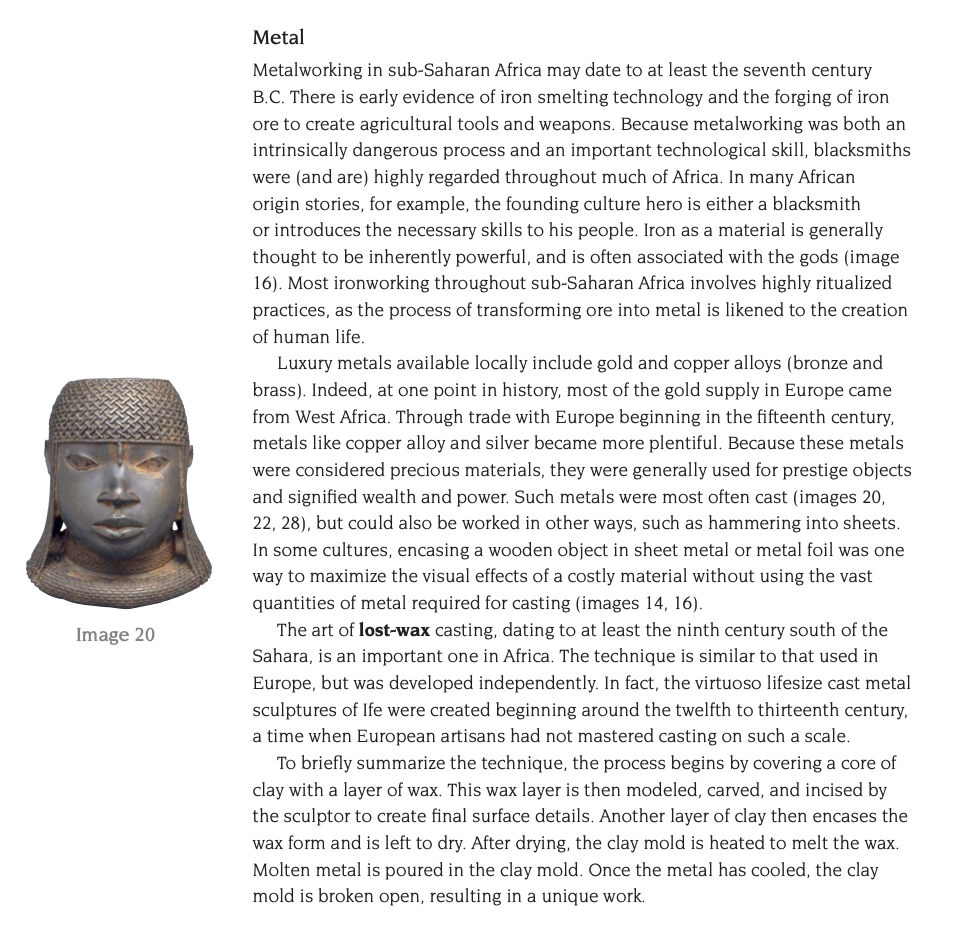
“Metal,” in The Art of AFRICA: A Resource for Educators, p.36, 2006
Alternative Source
Metal work in sub-Saharan Africa may date at least to the 1600. This is known because there is evidence of smelting ( a process of applying heat and chemicals to an ore to extract metal) technology used by blacksmiths (workers who create, repair, and shape objects by heating and hammering metal). Blacksmiths were well respected because metalwork was both dangerous and an important technological skill. At one point in history, most of the gold supply in Europe came from West Africa. In the 1400s copper alloy and silver became plentiful due to trade with Europe. Metal could be used in many ways, including being cast (melted and shaped with a mold) or hammered into sheets. Lost-wax casting, which is special to sub-Saharan Africa and dates to at least the ninth century, was used to create many pieces. In lost-wax casting, clay is covered with a layer of wax — which is then modeled and carved into the desired final product. Then, more clay is added and left to dry. The mold is then heated to melt the wax so that liquid metal can be poured into the mold.
Source E
“Met Art in Publication,” The Art of AFRICA: A Resource for Educators, 2006
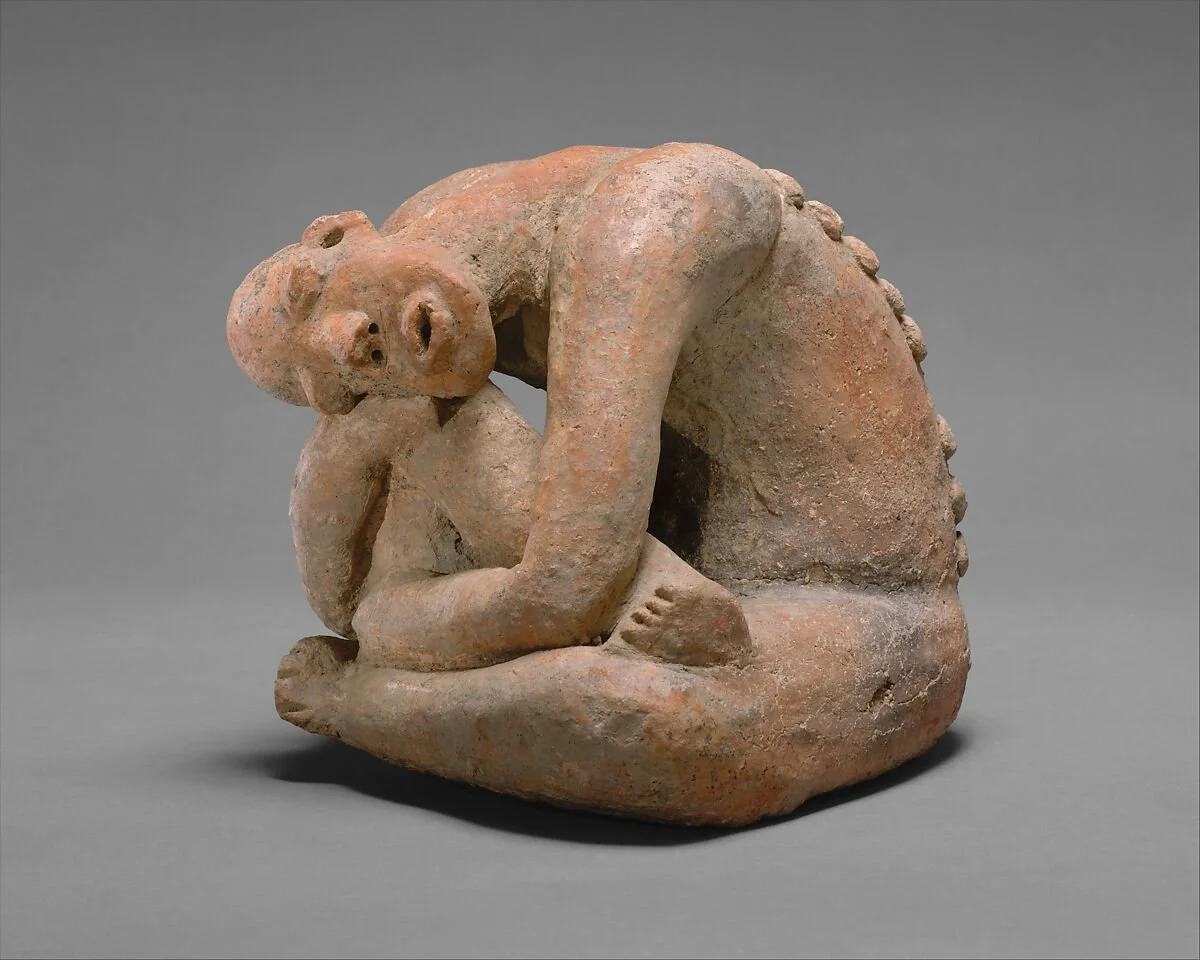
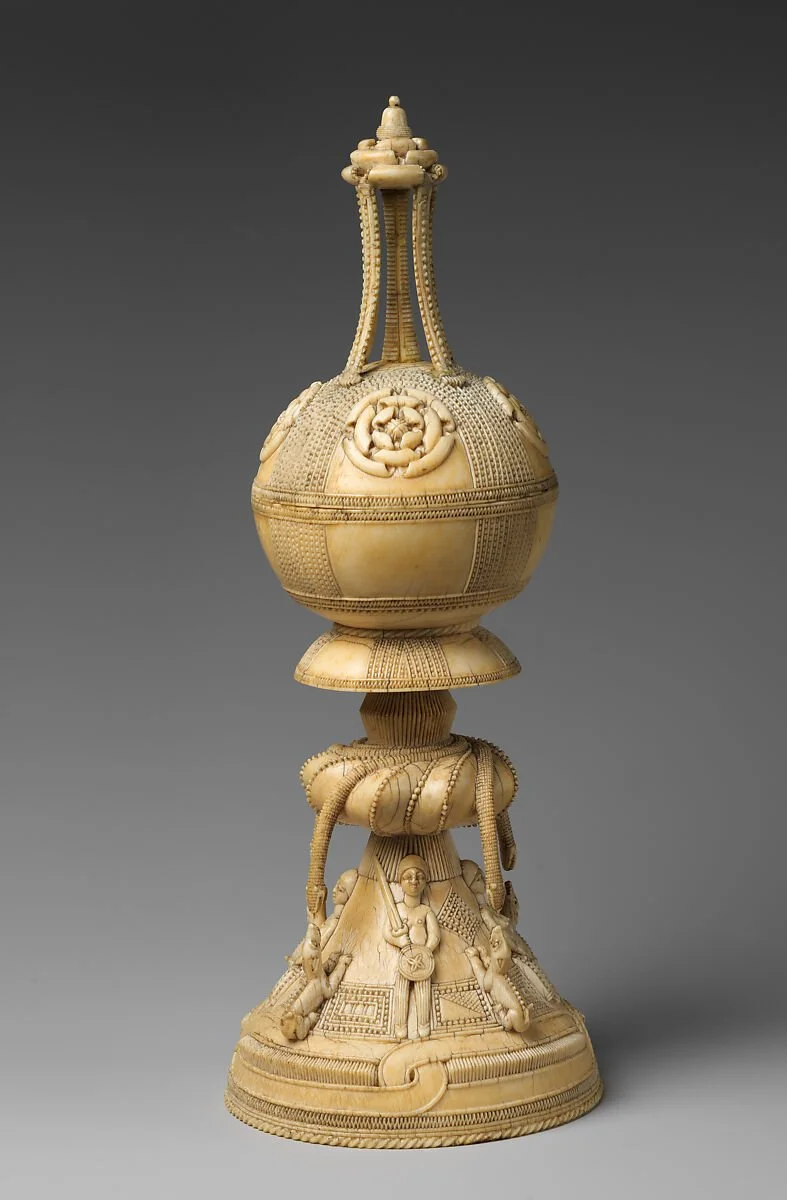
Students can click on the Source E button to review the “Met Art in Publication” section that includes art such as the “Seated figure” from a Middle Niger artist in the 13th century (left) and the “Lidded saltcellar” from a Temne or Bullom artist(s) from ca. 1490–1530 (right). Learn more on these artworks and others on the Met site.
Source F
“Transforming Rural Heahlthcare: Arthur Zang, Cameroon,” Time, 2018
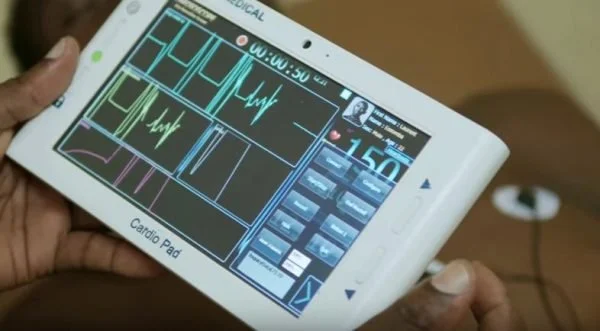
Click the Source E link to watch a 2-minute video and read a short story on Arthur Zang’s invention of the Cardio-Pad, a touch-screen medical tablet that allows heart examinations (like ECGs) to be performed in remote villages and sent to specialists in cities via the mobile network.
Alternative Source
Key Vocabulary
Cardiologist - a doctor who studies, diagnoses, and treats issues found in the heart blood vessels.
Transforming Rural Healthcare
In a country called Cameroon in Africa, there are millions of people, but only a few cardiologists. Because of this, many people get very sick and even die from heart problems.
A man named Arthur Zang grew up in a small village and dreamed of becoming a doctor, but he didn’t get into medical school, so he studied computers instead. Later, he met a cardiologist who told him that people in villages had to travel very far, spend a lot of money, and sometimes even risk their lives to find out what was wrong with their hearts.
After this conversation, Arthur invented a special tablet — the Cardio-Pad. This device lets doctors in small villages check a person’s heart and send the information to cardiologists in big cities. His invention helped people get medical care closer to home.
While Arthur was working on his invention, his uncle died from a heart attack, motivating Arthur to finish his device.
The Cardio-Pad started being used in 2016 and is now helping people in several countries. It costs around $3,000, but Arthur realized it was still too expensive for some hospitals. So he created a program in which he could give devices away for free and patients only pay a small yearly fee to use them.
Arthur hopes his invention will help people, especially those who need affordable care, get better healthcare no matter where they live.
Source G
“Juliana Rotich,” Britannica Kids, Retrieved 2026

In 2013 Rotich cofounded the tech company BRCK to provide Internet connections in underdeveloped areas. The company developed a battery-operated modem that can run for eight hours during electricity outages. Rotich was the executive director of BRCK from 2016 to 2017. She also cofounded iHub, a collective workspace in Nairobi, to accelerate the growth of the tech community in Kenya.