Supporting Question
Why does Madam C.J. Walker’s story matter?
For the formative performance task, use the sources to answer the following questions:
What are the important events in this person’s life? What emotions did this person experience throughout their life?
What did this person invent? What other inventions have been done in this area?
What do we know about the biases this person faced and how they responded? How did their responses compare to other people of their time?
How much—if it all—did the person’s life change after their inventions? Did they receive credit for their invention? Did they profit from it?
In what ways did this person address social issues of their day?
Featured Sources
Source A
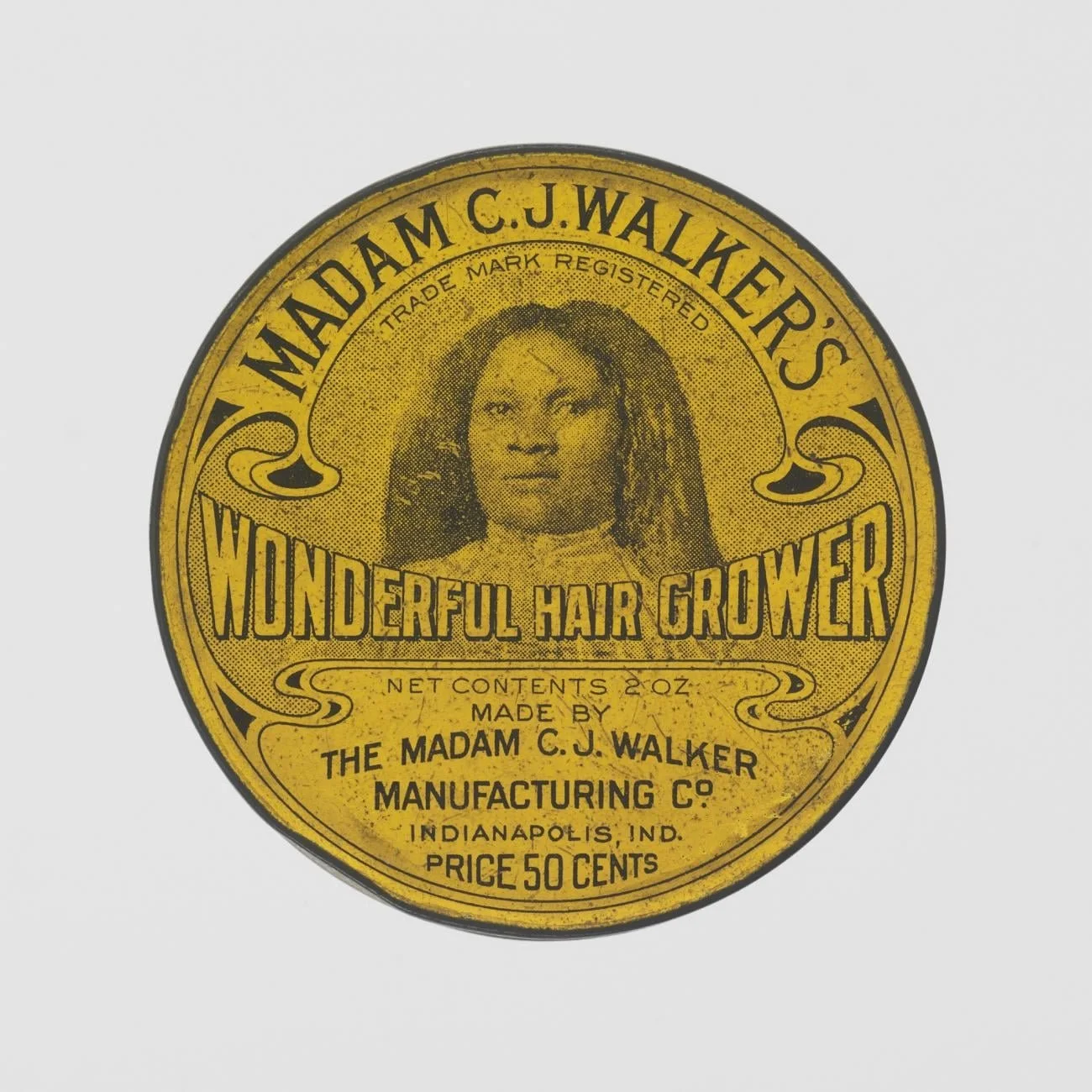
Image of Madam C.J. Walker’s Hair Tin, 1925
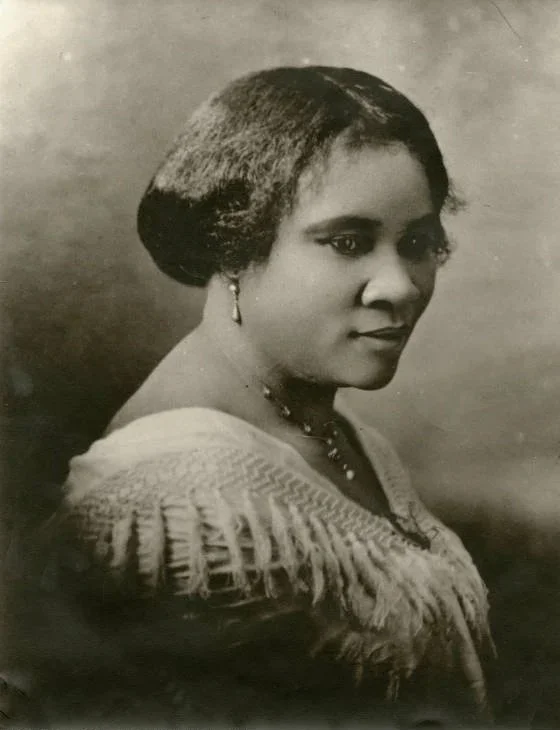
Sarah Breedlove, better known as Madam C.J. Walker, was one of two women (Annie Malone being the other) who revolutionized the hair care and cosmetics industry for African American women in the early 20th century. The daughter of former enslaved people, Walker transformed herself from an uneducated farm laborer and washerwoman into one of the 20th century’s most successful, self-made women entrepreneurs.
During the 1890s, Walker began to suffer from a scalp ailment that caused her to lose some of her hair. She experimented with many homemade remedies and store-bought products before she founded her own business in the early 1900s and began selling “Madam Walker’s Wonderful Hair Grower,” a scalp conditioning and healing formula, which she claimed had been revealed to her in a dream. Walker took her Wonderful Hair Grower across the country, selling it, setting up shops and training women in her hair-care methods.
Source B
Madam C.J. Walker’s Great-Great-Granddaughter Shares Little Told Story of Activism, The Root, 2020
In 2020, Netflix released a 4-episode miniseries about the life of Madam C.J. Walker titled “Self Made,” starring Octavia Spencer. In this video, Walker’s great-great-granddaughter promotes the show by telling more about Walker’s life.
Source C
“Madam C.J. Walker’s Philanthropy,” Tyrone McKinley Freeman (biographer), 2018
What sort of causes and institutions did Madam C. J. Walker support and why?
Before she became famous, Sarah Breedlove, aka Madam C. J. Walker, was an orphan, child laborer, teenaged wife and mother, young widow, and homeless migrant. She knew firsthand the struggles of being poor, Black, and female in the emerging Jim Crow South. Her philanthropic giving was focused on racial uplift, which meant helping African Americans overcome Jim Crow and achieve full citizenship. She gave money to local, regional, national, and international organizations that were typically founded by or focused on serving African Americans.
Her racial-uplift giving was primarily directed toward Black education and social services. She gave to Black colleges and secondary schools like Booker T. Washington's Tuskegee Institute, the Palmer Memorial Institute in North Carolina, and the Daytona Normal and Industrial Institute in Florida, because Jim Crow laws denied her an education during her childhood in Louisiana and Mississippi.
For social services, she gave to organizations such as the Flanner Settlement House in Indianapolis, the Alpha Home elder-care facility in Indianapolis, the St. Louis Colored Orphans' Home, the St. Paul's AME Mite Missionary Society in St. Louis, and to the international and colored branches of the YMCA. These organizations were on the ground responding to the basic needs of African Americans related to discrimination, food, healthcare, housing, daycare, and community development.
Some of these organizations, and others she supported, were run by women leaders, like Mary McLeod Bethune and Charlotte Hawkins Brown—which was important to Walker, too, as they were fellow race women and friends. To help the NAACP fight lynching, Walker also made important direct and estate gifts, which the organization later credited with helping it to survive the Great Depression.
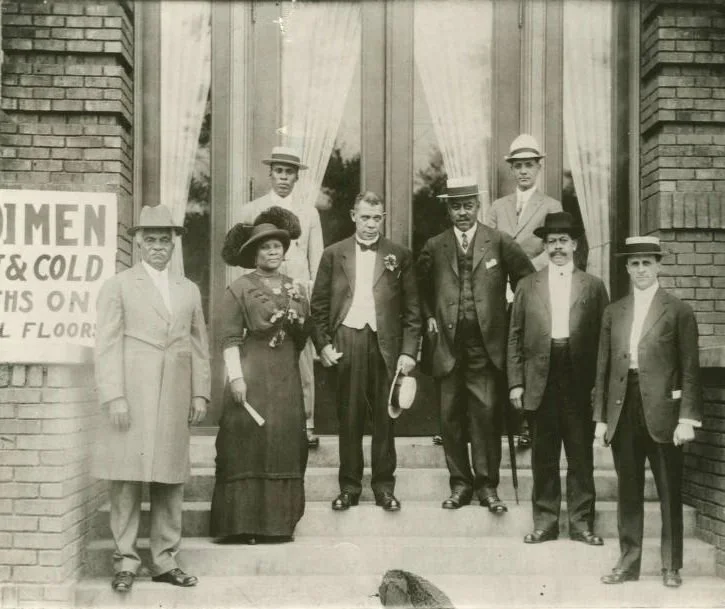
Madam C.J. Walker stands with Booker T. Washington (to her left) at the dedication of the Senate Avenue YMCA. Madam Walker donated $1,000 to the project and worked tirelessly to bring in more donations for the project. While she is known for her business ambitions, she was also devoted to helping those less fortunate. The other gentlemen in the picture, from left to right, are Indianapolis Freeman publisher George Knox, Walker Company attorney F.B. Ransom, Indianapolis World publisher A.E. Manning, Dr. Joseph H. Ward, Louisville YMCA secretary R.W. Bullock and Senate Avenue YMCA secretary Thomas Taylor.
Source D
Madam C.J. Walker and Booker T. Washington at YMCA Opening, 1913
Source E
Madam C.J. Walker: The First Black Millionaires, Black History in Two Minutes or So, 2019.
Source F
The Past and Present of Black Salons, PBS, 2022.
This video shows how Madam Walker’s philanthropy can be seen in the work of her daughter as well.
Source G
Madam C.J. Walker’s Great-Great-Granddaughter Attends Honorary Ceremony, Lynn Saville, 2019.
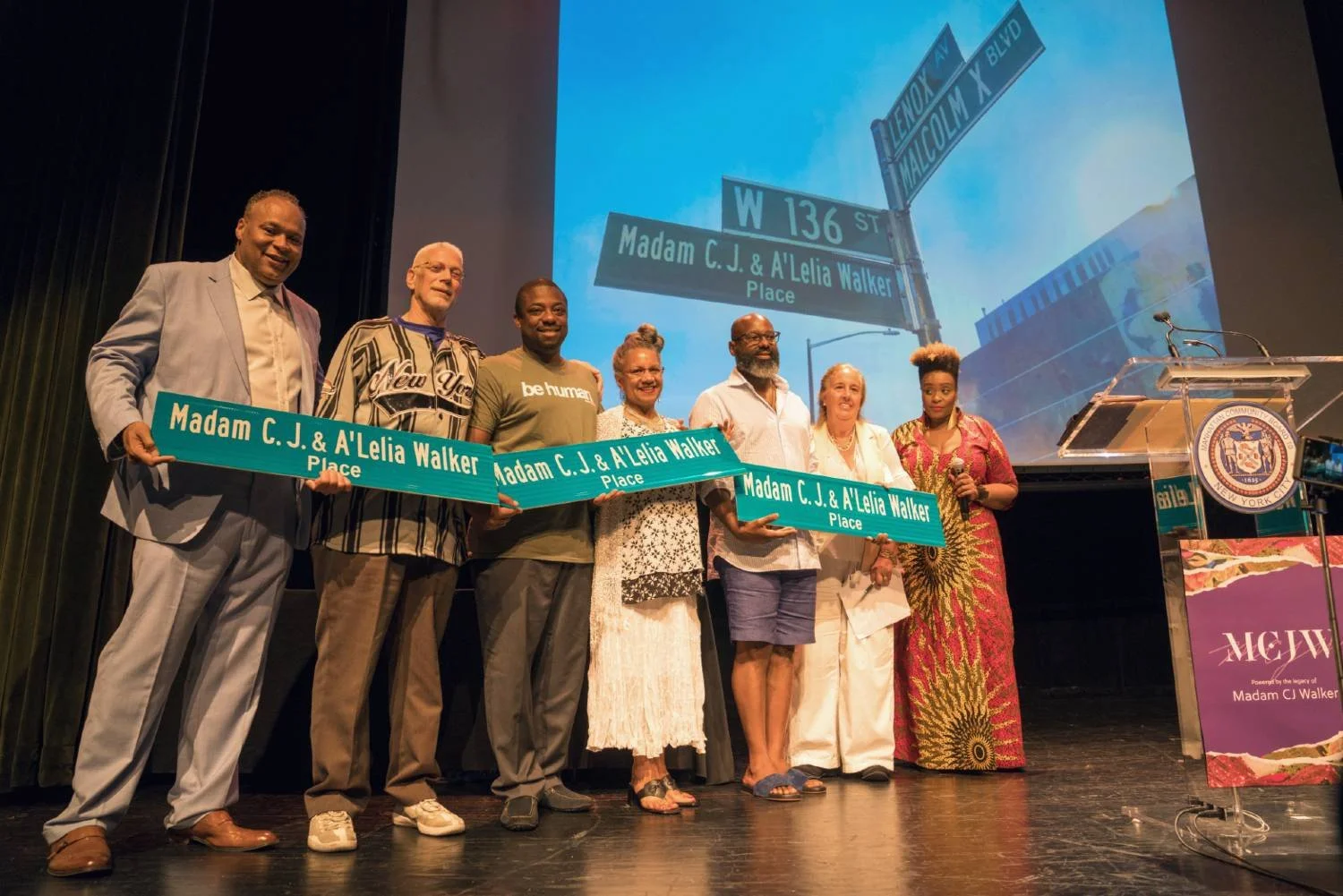
Madam C.J. Walker and daughter were honored by having a street in Harlem, New York, named after them. Walker’s Great-great-granddaughter attends.
Source H
“100 Years After Breaking Barriers, Madam C.J. Walker Launches a New Hair-Care Line,” Glamour, 2022.
Created for the next generation of beauty obsessives, Madam by Madam C.J. Walker features 11 new products, ranging from curl cremes and leave-in conditioners to shampoos and scalp serums, all inspired by the beauty legend herself. Walker’s great-great-granddaughter, journalist and historian A’Lelia Bundles, teamed up with Walmart to make an accessible line that reflects the quality and values of the original Madam C.J. Walker products. Each product retails for under $10 and upholds Madam Walker’s philosophy that a healthy scalp is key for strong hair. But Bundles insists her great-great-grandmother’s influence goes beyond beauty.

In 2022, Walker’s great-great-granddaughter partnered with Walmart to release a line of hair care products that captured Walker’s spirit.