Civics of Technology Announcements
Conference Page: A big thank you to everyone who attended and supported our conference last week! For presenters who opted in, you can find recordings of sessions on the 2026 conference page.
September Book Club: We will be reading the new book, “Coding Kids: Big Tech's Battle to Remake Public Schools” by our conference keynote speaker Natasha Singer on September 29th at 8:00 PM EST. Register here and pre-order the book here so you have it when it releases on September 8th! We will discuss the book for 45 minutes and then be joined by Natasha for a 30-minute Q&A.
October Book Club: On Thursday, October 22 at 8:00 PM Eastern, we’ll be discussing Technofeudalism: What Killed Capitalism by Yanis Varoufakis. Read Kelsey Stoke’s recent blog post about the concept and register here.
New Book Review: Find Jacob Pleasant’s new book review on Cory Doctorow’s 2026 book, The Reverse Centaur’s Guide to Life After AI: How to Think About Artificial Intelligence - Before It’s Too Latehere.
Limited Merch Remaining: We completed our pre-order for Civics of Technology last Wednesday and orders are now being prepared. We do have two shirts and some hats still available. Purchasing merch supports our operations and programming! Order here.
From the Library of Babel Group: On Tuesday, August 18 at 9AM PT, the Library of Babel Group's AI Resisters series hosts Common Knowledge of the Second Kind, a Conversation with Dave Bella, exploring his and Jonathan King's 1989 thought experiment on how supercomputers might reshape trustworthy knowledge in education, now our reality. Facilitated by Tim Reierson. Read the paper in advance and bring questions. Register here.
by Dan Krutka, Danetra King, and Alexander Pittman
Black Inventors Inquiry Spotlight: Garrett Morgan
Too often, Black inventors are taught as a list: a name, an invention, and perhaps a patent number. Our Black Inventors Inquiry curriculum takes a different approach. Rather than simply asking students to remember what someone invented, we want students to investigate the fuller lives of Black inventors and consider what those lives can teach us today.
The curriculum centers on the compelling question: What lessons should we learn from the lives of Black inventors? Students investigate primary and secondary sources that help them understand not only inventions, but also the historical conditions in which inventors lived, including anti-Black racism, sexism, and other barriers they faced, and how they responded to these conditions.
The curriculum is designed as an inquiry rather than a collection of biographies. For each inventor, students consider a supporting question: Why does this inventor’s story still matter? They then use evidence from a curated collection of sources to develop their own answers. The inquiry can be adapted from elementary school through higher education and can also be integrated with science and STEM activities.
In this series, we will highlight one of those inventors and the resources we have assembled for investigating their life. This week: Garrett Morgan.
Why does Garrett Morgan’s story still matter?
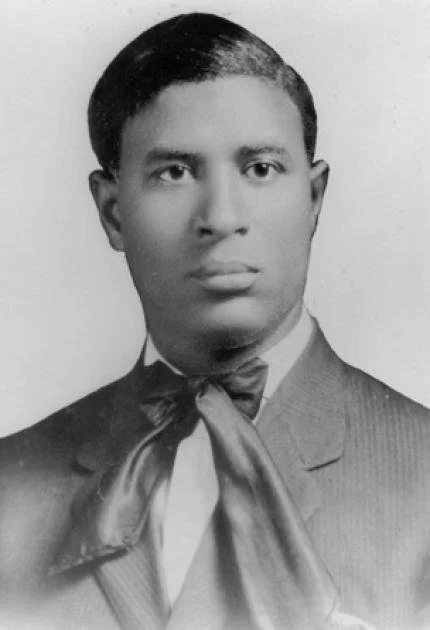
Portrait of a young Garrett Augustus Morgan.
Garrett Morgan (1877–1963) was an inventor, entrepreneur, and community leader whose work included hair-care products, a safety hood and smoke protector, and an improved three-position traffic signal.
Morgan grew up near Paris, Kentucky, one of several children in a farming family. His parents had both experienced enslavement before his birth. With only about six years of formal schooling, Morgan left Kentucky for Cincinnati at age 14, where he worked while paying a tutor to continue his education. He later moved to Cleveland and found work in the garment industry, where his ability to understand, repair, and improve sewing machines eventually helped him establish his own business.
That work also contributed to another successful business. Morgan developed and marketed hair-care products through the G. A. Morgan Hair Refining Company. He and his wife, Mary Hasek, also operated a clothing business that eventually employed more than 30 workers.
Morgan later turned his attention to public safety. In 1914, he received patents for a breathing device commonly known as the Morgan Safety Hood. When an explosion struck a waterworks tunnel beneath Lake Erie in 1916, Morgan, his brother, and other rescuers entered the dangerous tunnel wearing the safety hoods. Morgan and the rescue party helped retrieve trapped workers, but anti-Black racism meant newspapers minimized or ignored his role, and he did not receive the same recognition given to some white rescuers.
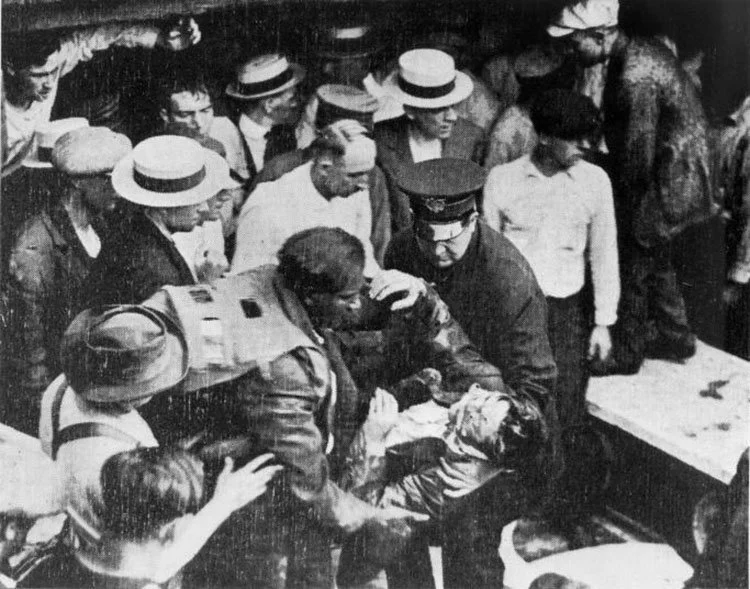
A newspaper photograph of Morgan's rescue in 1916
White supremacy also affected how Morgan had to sold his invention. Because many prospective white customers would not purchase a product they knew had been invented by a Black man, Morgan hired a white salesman and sometimes presented himself as the salesman’s Native American assistant, “George Mason,” while personally demonstrating the safety hood. The strategy allowed prospective customers to see the invention work while concealing the identity of its Black inventor.
Morgan continued inventing throughout his life. His 1923 traffic signal added an important intermediate position in which traffic in all directions stopped before another direction was allowed to proceed. He later sold the patent rights to General Electric for $40,000. Yet Morgan’s life cannot be reduced to these inventions. He helped establish the Cleveland Association of Colored Men, founded the Cleveland Call newspaper, supported Black colleges, established a country club where Black families could enjoy recreational opportunities denied to them elsewhere, and remained active in the Black civic life in Cleveland.
Explore Garrett Morgan’s story
Our Garrett Morgan inquiry page brings together sources that allow students to examine different parts of this story rather than simply reading another short inventor biography.
Students can begin with Morgan’s own inventions. Source A presents his 1914 U.S. patent for his “Breathing Device,” including the drawings and description of what became known as the Morgan Safety Hood. Source B provides his 1923 patent for a traffic signal, allowing students to examine Morgan’s design and consider what was innovative about it.
The collection also helps students place those inventions within Morgan’s life. Source C is a photograph connected to Morgan’s role in the 1916 Waterworks Tunnel Disaster. Source D, a PBS biography, explores his life as an inventor and entrepreneur and the racial discrimination he experienced while attempting to sell the safety hood. Source F, a 1935 photograph of newsboys outside the Call & Post building, offers an entry point into Morgan’s involvement in Cleveland’s Black press and civic life.
Other resources provide accessible ways for younger learners to enter the inquiry. The page includes a video about Morgan’s traffic signal, the children’s book The Unstoppable Garrett Morgan by Joan DiCicco and Ebony Glenn, and an excerpt about Morgan from Kareem Abdul-Jabbar’s What Color Is My World?: The Lost History of African-American Inventors.
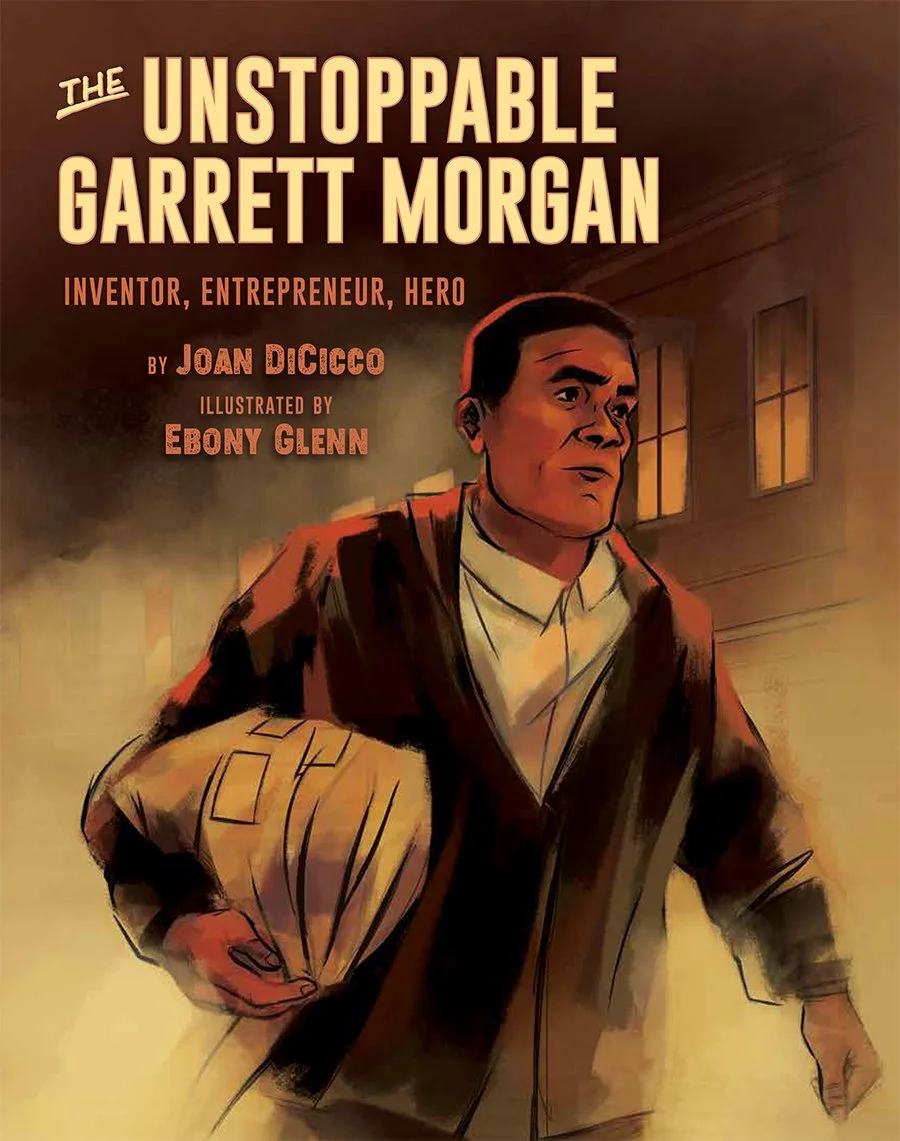
Book cover for "The Unstoppable Garrett Morgan: Inventor, Entrepreneur, Hero."
Finally, students can put Morgan’s traffic signal into a larger history of traffic technology. This context can help students understand that most technologies require innovations and patents from many people. Dispelling the myth of the sole inventor can help students better understand both the nature of invention and how the larger industry can for and against people. A short WOSU audio story examines Morgan’s path toward developing his traffic signal, while another video considers the broader history of the traffic light. These sources can help students ask an important question that extends beyond Morgan: How does invention actually happen, and what does it mean to “invent” something when technologies are usually developed through many people making changes and improvements over time?
Taken together, these sources offer a much richer Garrett Morgan than the familiar formula of “inventor + invention.” Students encounter a businessman, husband and father, civic leader, newspaper founder, problem solver, and Black man navigating the racism of early twentieth-century America.
And that brings us back to the question at the center of the Black Inventors Inquiry:
What lessons should we learn from the life of Garrett Morgan?
Explore the Black Inventors Inquiry and the complete Garrett Morgan inquiry and source collection hosted by Civics of Technology.