Community, Care, and Joy in Remaking, Resisting, and Reimagining EdTech
Civics of Technology Announcements
Annual Conference: We are holding our 5th Annual Conference on August 6th-7th, 2026! Our keynotes this year are Dr. Meredith Broussard (data journalist & author of More than a Glitch among other books) and Natasha Singer (NYT edtech reporter & author of the forthcoming book, "Coding Kids: Big Tech's Battle to Remake Public Schools”). Learn more here and register here. We sent out proposal decisions last week, so keep an eye on your email, and perhaps your spam folder if you don’t see it in your regular inbox.
News from our Partner Organizations:
Library of Babel: On October 6-7, 2026, The Privacy Center at Georgetown Law will host Life After Data: the Conference on De-datafication. The event will bring together researchers, activists, writers, artists, students, and technologists for a conversation around the following prompt: Imagine a future in which digital data is no longer the currency mediating all of our social, economic and political systems, structures and practices. How might we get there from here? The program will consist of a combination of shorter lightning talks and longer papers by invited speakers, interspersed with workshop sessions during which all participants will discuss the conference presentations. Travel and accommodation costs for invited speakers will be covered by the Privacy Center. Details available on the website. Submit your proposal by June 30! See flyer here.
By Marie Heath, Miriam Reynoldson, and Dan Krutka
One of our goals at Civics of Technology is not simply to cultivate a community of critical friends. We also partner with organizations whose aims align with ours to build networks of support. This support can include sharing the work, events, and resources of partner organizations; collaborating on projects or initiatives; and opening lines of communication. We seek to amplify their work through our newsletter, website, and conference, and by sending a Civics of Technology representative to invited partner events. Partner organizations are invited to attend Civics of Technology quarterly board meetings to ensure regular communication and support. As of now, we have three partner organizations:
We often find that even when we know about the work of these groups online, they are strengthened by in-person connection. We most recently added the Young Data Scientists League as a partner organization when Dan spent time with Evan Shieh, the Executive Director, in New York City. Marie and Dan had met Evan and Christy Crawford of New York City Public Schools through support of Shana White at Kapor Foundation who supported our attendance at an AI K-12 Conference in Anaheim. Christy Crawdford and her team invited Evan, Marie, and Dan to offer professional development during the 2025-2026 school year to empower students and educators to develop critical orientations to artificial intelligence (AI). I know that’s a lot to follow, but the point is that communing with other people doing critical work is necessary to sustain the work. There is so much hype around GenAI in education, and it can be easy to throw up our hands and concede ground. However, we are inspired by our partners and critical friends to continue pushing in whatever areas of influence we have. Please reach out if your organization would like to join us.
In this week’s post we share stories of recent connection, community, and care from Marie and Miriam. Miriam’s writing is excerpted here and cross posted from her blog, The Mind File.
Marie
In early June I attended the Irish Learning Technology Association’s EdTech 2026 conference hosted at Dublin City University (DCU). Eamon Costello is the current President of the association, and Kate Malloy and Rob Lowney were this year’s co-chairs, so I knew the conference would be full of good learning and also clever fun (Have you ever interacted with Eamon on social media or read his blog on Civics of Tech, co-authored with Michał Wieczorek? If yes, you will know just what I mean about his tendency toward the smart and the absurd.) But what took me by sweet surprise was the joy I felt being in-person with like-minded folks whom I had only ever met over internet posts or email, in particular a serendipitous meetup with several of the organizers behind the work of the Library of Babel.
Katie Conrad, Melanie Dusseau, Miriam Reynoldson, Emily Tucker, and Rose Willis (all from the Library of Babel) hosted a zine making workshop, Building Creative Communities of Resistance, the collective fruits of which you can explore here. I signed up for the workshop because I enjoy a good, chatty, collective, creative opportunity to resist and remake. But when I turned and saw Miriam at the front of the room, I lost all my chill and started gesticulating in what I presumed were the universal gesticulations for “Hey! We know each other but we’ve never met in person and I’m so glad to see you! I can’t wait to learn from you and what are you doing here in Ireland?”
I learned that what Miriam and the rest of the workshop organizers were there to do was to help return us, the participants, to a sense of community, to collective creation, and to our own bodies. The organizers all brought bits and bobs of their lives across the 1000s of miles from their homes across the world –– old children’s books, magazines, stickers, scissors and glue and tape, Katie Conrad’s homemade black walnut ink, fountain pens and sharpies–which we then cut apart, underlined, scribbled upon, glued down, and ultimately repurposed as pages in a collective zine on AI and education. While we created, the organizers shared a brief history of zines, how niche communities use them for truth telling and counternarrative, and what the organizers are currently doing through zines and AI resistance.
As a person who spends much of my day typing my ideas and work onto screens of various sizes, digitally sending zeros and ones across space-time to communicate with my friends and colleagues, some part of my body was able to be called back to itself in this workshop. Chatting with the participants, passing the ink and glue while listening to the organizers, and putting my whole hands into a different form of creation than the usual clickety clack of just my fingertips at work, reminded me how much I relish when there is embodiment to learning and community.
*If you, like me, had not experienced the Irish version of lighting talks known as the Gasta, you can read about them here. They are amazing.
Miriam
(excerpted from Joy, care and community at ILTA EdTech 2026)
I am wary of making “I’m happy to share” posts on LinkedIn, but some things are truly worth celebrating.
I spent the past week in Dublin at the DCU-hostedILTA EdTech conference, and it was an utter joy. I presented my PhD research-in-progress, as well as co-facilitating a crafty zine workshop with four remarkable women. I also met some of my academic heroes, and not only do I still like them, but I feel connected and empowered (and in some cases, literally fed) by them.
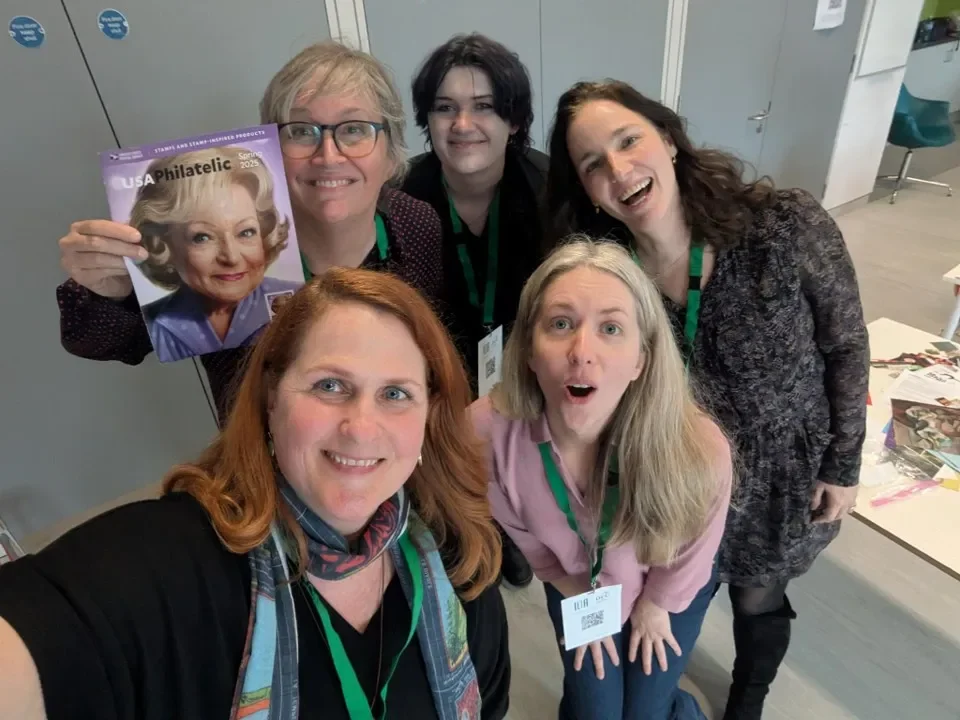
The Library of Babel zine crew
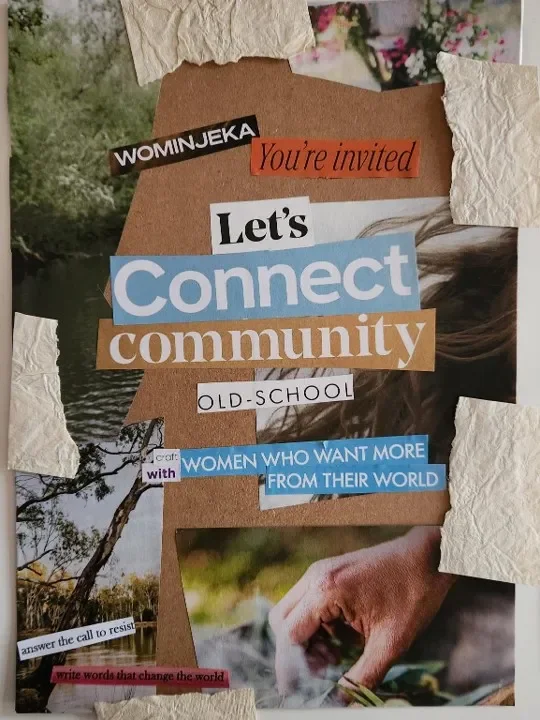
An invitation to joyful resistance
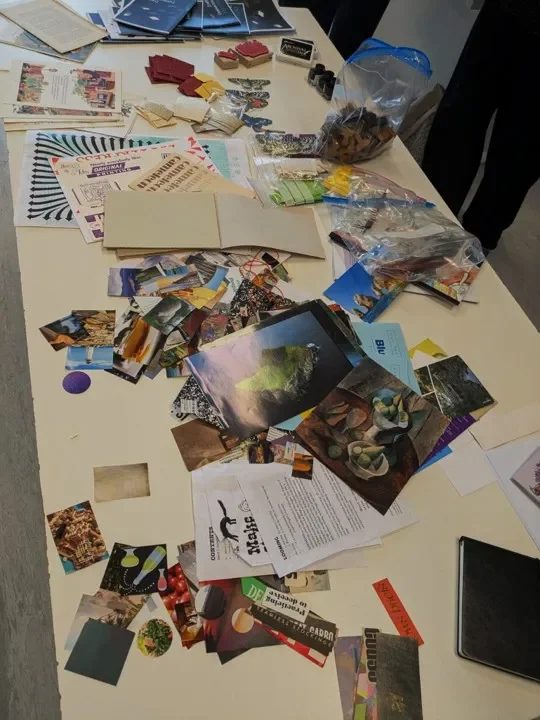
Some of the junk we brought in our suitcases
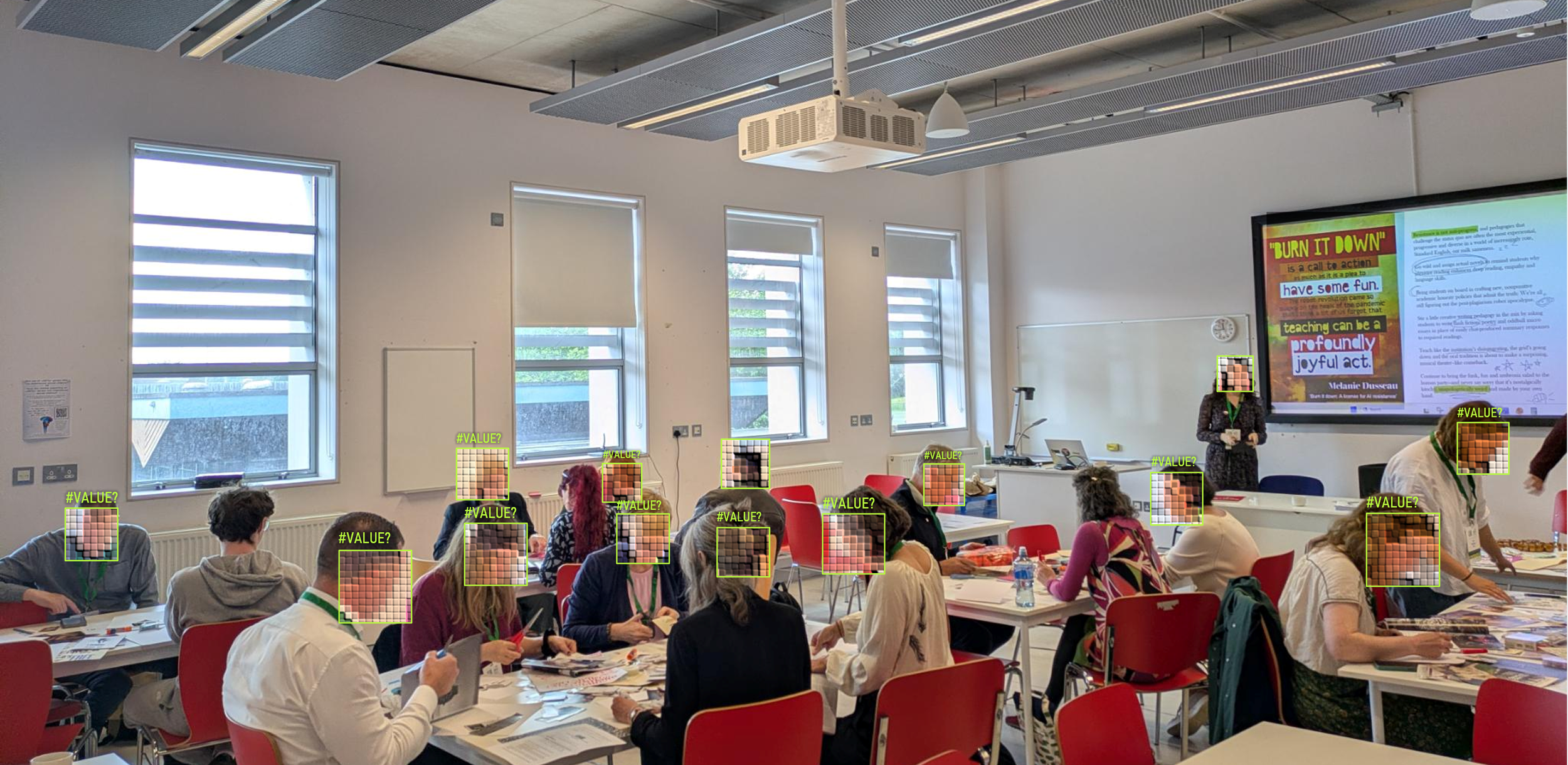
In focus – some of the workshop attendees getting ink on their hands. I’ve tagged the image so each face can be readily identified.
Before I get gushing, I really just need to thank Eamon Costello, the president of the Irish Learning Technology Association (ILTA) and lead organiser of the conference. There were so many of us who had traveled internationally to be there, and I said jokingly to someone last week that we were really all just there to see Eamon. It wasn’t really a joke, though. Eamon – we treasure you. Thank you so much for bringing us together.
What was most powerfully striking about the event was the atmosphere of solidarity in the face of encroaching technosolutionism in universities. This was a particular surprise given that EdTech is, well, an edtech conference. It’s run now for 25 years, providing a platform for conversations about tech innovation, digital transformation and skills development. And yet, this year, we saw three edtech critical keynotes from Abeba Birhane, Ben Williamson and Felicitas Macgilchrist. (The abstracts are here, but not recordings… I wish!) We saw astanding ovation for Ian Linkletter’s gasta, recounting his experience of being penalised by his university and sued by Proctorio for speaking out about consentless surveillance. My team from the Library of Babel Group were granted an hour to make a collaborative zine about resisting institutional pushes to adopt AI. The rep from Instructure (Canvas) came on stage to apologise to everyone. And throughout the week, people approached me to express support, hope, appreciation and a spirit of union. I was overwhelmed, in the best way.
I also got to spend sustained, nourishing time with my beautiful friend and co-author Kaitlin Lucas from Central European University, reflecting on life, scholarship and constructive critique as we explored the campuses and city streets of Dublin. Hashtag blessed, I think they say?
I am energised and excited to connect and hopefully to collaborate with kindred collectives like theCivics of Technology project and theClimate Justice Universities Union – groups whose work I had admired and cited before, and whose members I’ve now had the privilege to hug and dine and drink with.
We’ll be compiling the workshop zine in the coming days, but for now, a little freebie: this is a zine we shared at the conference, one output of a cross-continental collaboration I’ve been involved in with several of my beloved comrades from Babel. We’ll present more on the project at the upcomingPostdigital Backlash conference in Zagreb later this month – I won’t be there in person, but if you are, please say hello to my wonderful collaborators Kaitlin Lucas and Elisa Bone, who will!