Citizens Without the Digital: A Call for Resistance in a Collective Way
Civics of Technology Announcements
Next Tech Talk: Please join us for our next Tech Talk where we meet to discuss whatever critical tech issues are on people’s minds. It’s a great way to connect, learn from colleagues, and get energized about the work. Our next Tech Talk will be held on Thursday, January 8th at 12:00 PM Eastern Time. Register here or visit our Events page.
Privacy Week Webinars: On January 28 and 29 - see our Privacy page to learn more!
Latest Book Reviews: Enshittification: Why Everything Suddenly Got Worse and What to Do About It, by Cory Doctorow, 2025.
And Mood Machine: The Rise of Spotify and the Costs of the Perfect Playlist, by Liz Pelly, 20205.
Celebrating Ian: As a Civics of Tech community, we'd like to congratulate Ian Linkletter for the end of Proctorio's lawsuit against him! You can read Ian's update here, where he states, "There are no other restrictions on my freedom of expression. I am free to continue criticizing Proctorio’s harmful product... I fought for this right, and have given many talks over the years to assert it. One I am especially proud of is “Centering Student Voices in Resisting Surveillance”, about the harms of Proctorio and the thousands of brave students who dared to resist, at the Civics of Technology conference in August." It was a great presentation worth re-sharing!
By Marta Estellés and Andrew Doyle
We have been wanting to write a post for Civics of Technology for a long time. Not because we are usual blog writers (we are not!), but because we would like to contribute to this community that has engaged us with so many critical readings, ideas and resources. In this post, we would like to share with you where our techno-skeptical thinking is leading us –hopefully, to spark some dialogue.
At the beginning of the year, we published a paper in Review of Education presenting a framework to analyze educational responses to the digital. This framework distinguishes between four responses based on different notions of citizenship (personally responsible vs. participatory/justice-oriented citizens by Westheimer & Kahne, 2004) and narratives of digital technology (techno-optimist vs. techno-skeptical, see Pleasants et al., 2023). These four educational responses are safeguarding, equipping, empowering, and resisting. See Figure 1 below.
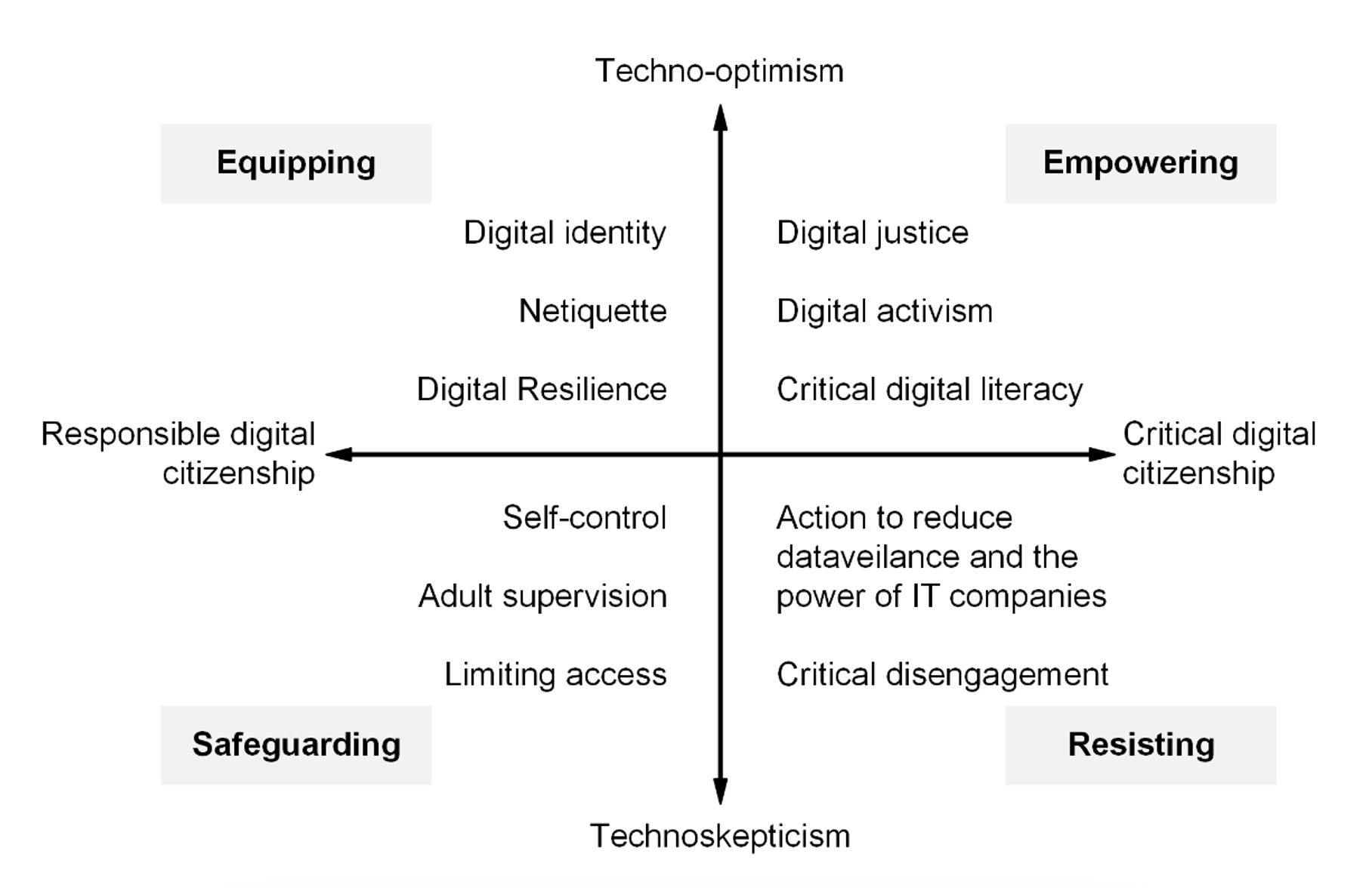
Figure 1. Educational responses to the digital. Source: Estellés & Doyle (2025).
In a nutshell, safeguarding responses are those focused on the close supervision and restriction of online activity; equipping responses focus on preparing young people to succeed in the online world; empowering responses engage students in digital praxis aimed at reducing social inequalities; and resisting responses advocate for a critical disengagement from the digital world. Of course, these are only analytical categories. In reality, most of these responses (if not all) come together in complex –and often contradictory– ways. The framework also has some obvious limitations –for example, the reduction of digital citizenship to a unidimensional category.
Yet, we still consider this framework valuable to highlight, first, the existence of critical educational responses (right-hand side of the model) and, second, the distinction between empowering and resisting approaches to the digital. We believe that the latter distinction is important because, under current ‘politics of inevitability’ (Snyder, 2017), any resistance project is constantly discredited as impractical, disregarding its educational possibility. It seems that the most critical educators can aspire to is to help students use the digital to create a fairer world –a narrative increasingly embraced by non-profit organizations supported by Big Tech (we have recently analyzed this ‘progressive neoliberal’ (Fraser, 2019) move in the case of Netsafe in New Zealand).
Without the digital
Since developing this framework, we have had multiple conversations with critical colleagues as to where we ought to locate ourselves in the framework. While a comprehensive approach to the digital would adopt certain amount of safeguarding, equipping and empowering, we are increasingly interested in exploring what a resisting approach to the digital would look like. We have been convinced by the arguments of Nicholas Carr, Sherry Turkle, Shoshana Zuboff, Neil Postman, Byung-Chul Han, and many others, who have clearly dismantled the myth of the liberatory power of digital technologies. In short, we agree with Audrey Lorde that ‘the master's tool will never dismantle the master's house’. In our discussions, however, we have struggled to more clearly articulate the pedagogical project of resistance, partly because we still struggle to understand –perhaps imagine– the forms of such resistance.
When reading the works of the scholars mentioned above, one can infer some clear ideas: from the refusal to share our private data (Shoshana Zuboff) through to the fostering of face-to-face conversations (Sherry Turkle) and the cultivation of our –exclusively human– ability to do nothing (Byung-Chul Han). However, while these ideas are valuable, they are all confined to the realm of ethics (i.e., they are concerned with how individuals should act) but provide little political guidance on how societies and collectives should act. We were –we must admit– somehow disappointed when our admired Nicholas Carr refused to engage with this political question at the end of his latest book Superbloom!
Collective resistance
If we look at the history of citizenship, from 19th century labor movements through to the Civil Rights and Women’s Liberation Movements in the 1960s and 70s, the importance of a collective sense of oppression is plainly clear in the ability of these groups to secure fairer social, economic, cultural and political conditions. This –we believe– is an important lesson for a resisting approach that goes beyond ethics and ventures into the political. We want to make it clear that this is not a call for hatred against Tech billionaires (we suppose they are humans too!), but a clear awareness that their power and wealth increase at the expense of that of others –the majority of the world population. Books such as The Survival of the Richest by Douglas Rushkoff and Technofeudalism by Yanis Varoufakis can be a good start to develop a form of collective consciousness in this matter.
Another lesson we can also learn from the above-mentioned social movements to articulate a clearer resisting approach is by looking at the particular social, economic, cultural, political and psychological circumstances that enabled such movements. Axel Honneth’s (2024) analyses of the 19th century working conditions in emerging industrial societies provide some interesting insights as to why particular groups (e.g., craftsmen, factory workers) were able to effectively organize and gain bargaining power, while others (e.g., domestic servants, propertyless farmers), despite being the majority of laborers at the time, had conditions that considerably hindered the articulation of a unified voice (remote location, enormous physical strain, lack of professional pride, etc.). Nowadays, the gig economy and its conditions of social isolation and precariousness are considerably weakening citizens’ participation in public affairs. Nurturing social bonds and offline networks of solidarity within existing social institutions (schools, universities, unions, community groups, etc.) could, therefore, be an important scope for a resisting approach.
Last, but not least, an important lesson we can learn from citizenship movements for a more politically informed notion of tech resistance relates to the strategic organization of collective action. This collective action can adopt several forms, from activism through to formal political participation, and cover multiple areas, from pursuing further regulations of the online world through to increasing taxation of Big Tech corporations. The historical case of the Luddites explored by colleagues in this community can provide us with inspiration for collective protest. There are many others, including Carr’s (2025) recent history of regulations of communication technologies over time. Using these examples, we can engage our students in the examination of current legal arrangements to guarantee the rights of citizens online and the exploration of possible ways to promote more democratic policies.
These are only some tentative ideas. They need refinement and, perhaps, redefinition, but we believe this is a path worth exploring. Quoting Paolo Freire (2021) in his Pedagogy of hope: “One of the tasks of the progressive educator, through serious, correct political analysis, is to unveil opportunities for hope, no matter what the obstacles might be” (p. 17). We would like to encourage the critical educational scholars and teachers in this community to engage with this crucial question –what does it mean to resist the digital collectively?
Dr. Marta Estellés is a Senior Lecturer in Social Sciences Education at the University of Waikato, New Zealand. Her research analyses education policies, discourses, and curricula and their implications for critical education and democracy.
Dr. Andrew Doyle is a Senior Lecturer in Technology Education at the University of Waikato, where he teaches across a range of initial teacher education programs. His research focuses on critically understanding the nature of technology (in) education.
References
Carr, N. (2025). Superbloom: how technologies of connection tear us apart. WW Norton & Company.
Estellés, M, & Doyle, A. (2025). From safeguarding to critical digital citizenship? A systematic review of approaches to online safety education. Review of Education, 13(1), e70056. https://doi.org/10.1002/rev3.70056
Fraser, N. (2019). The old is dying and the new cannot be born: From progressive neoliberalism to Trump and beyond. Verso Books.
Freire, P. (2021) Pedagogy of Hope: Reliving Pedagogy of the Oppressed. Bloomsbury.
Han, B. C. (2017). In the swarm: Digital prospects (Vol. 3). MIT press.
Honneth, A. (2024). The working sovereign: Labour and democratic citizenship. John Wiley & Sons.
Pleasants, J., Krutka, D. G., & Nichols, T. P. (2023). What relationships do we want with technology? Toward technoskepticism in schools. Harvard Educational Review, 93(4), 486–515. https://doi.org/10.17763/1943-5045-93.4.486
Rushkoff, D. (2022). Survival of the richest: Escape fantasies of the tech billionaires. WW Norton & Company.
Snyder, T. (2021). On tyranny graphic edition: Twenty lessons from the twentieth century. Ten Speed Graphic.
Turkle, S. (2015). Reclaiming conversation: The power of talk in a digital age. Penguin.
Varoufakis, Y. (2024). Technofeudalism: What killed capitalism. Melville House.
Westheimer, J., & Kahne, J. (2004). What kind of citizen? The politics of educating for democracy. American Educational Research Journal, 41(2), 237–269. https://doi.org/10.3102/00028312041002237
Zuboff, S. (2023). The age of surveillance capitalism. In Longhofer, W., & Winchester, D. (Eds.) Social theory re-wired: New Connections to Classical and Contemporary Perspectives. (pp. 203-213). Routledge.