Supporting Question
Why does Patricia Bath’s story matter?
For the formative performance task, use the sources to answer the following questions:
What are the important events in this person’s life? What emotions did this person experience throughout their life?
What did this person invent? What other inventions have been done in this area?
What do we know about the biases this person faced and how they responded? How did their responses compare to other people of their time?
How much—if it all—did the person’s life change after their inventions? Did they receive credit for their invention? Did they profit from it?
In what ways did this person address social issues of their day?
Featured Sources
Source A
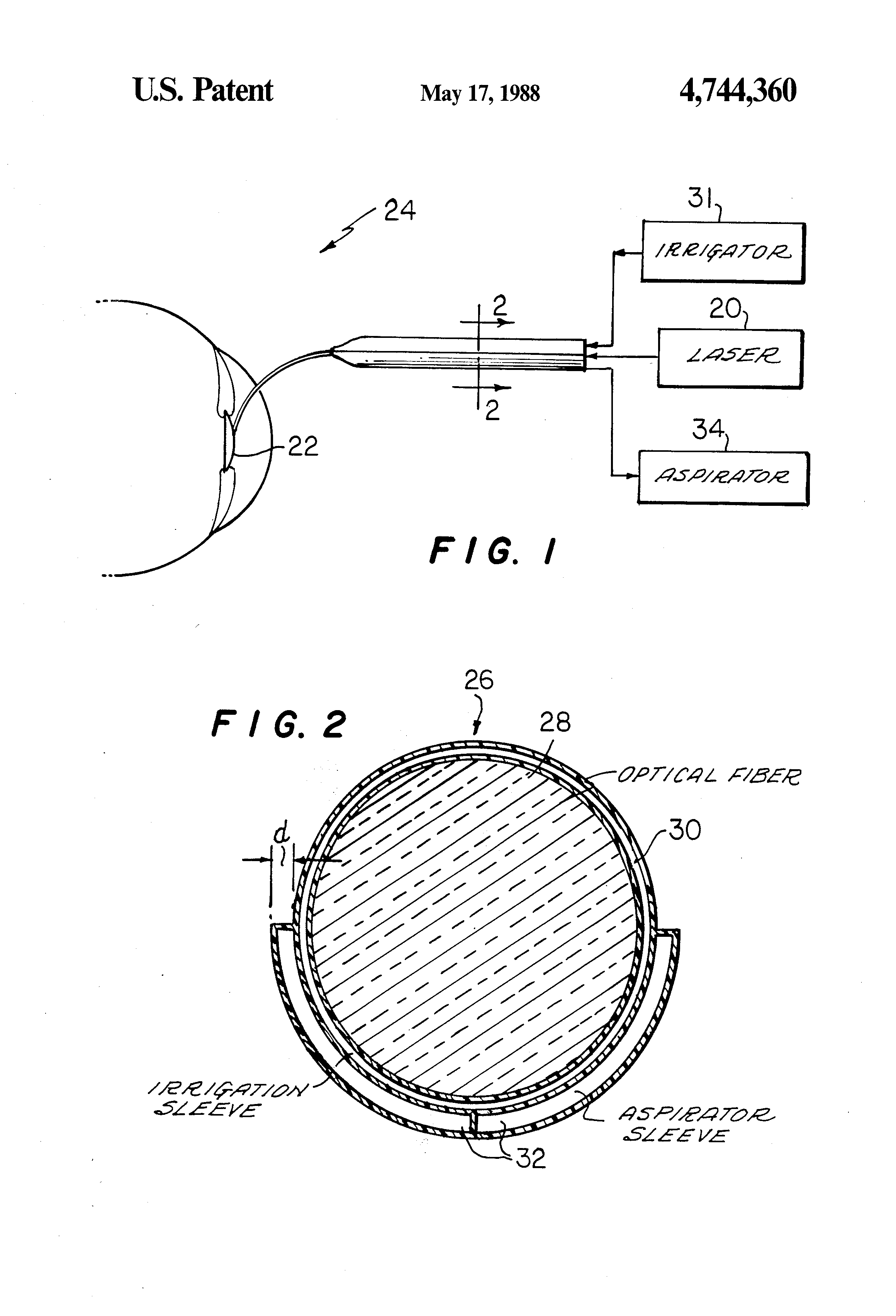
U.S. Patent 4,744,360, “Apparatus for Ablating and Removing Cataract Lenses,”
1986
Source B
Patents, Dr. Patricia Bath, 2020
In 1986, Bath did research in the laboratory of Danièle Aron-Rosa, a pioneer researcher in lasers and ophthalmology at Rothschilde Eye Institute of Paris, and then at the Laser Medical Center in Berlin, where she was able to begin early studies in laser cataract surgery, including her first experiment with excimer laser photoablation using human eye bank eyes.
Bath coined the term “Laser phaco” for the process, short for laser PHotoAblative Cataract surgery, and developed the laserphaco probe, a medical device that improves on the use of lasers to remove cataracts, and “for ablating and removing cataract lenses”. The device was completed in 1986 after Bath conducted research on lasers in Berlin and patented in 1988, making her the first African-American woman to receive a patent for a medical purpose. The device — which quickly and nearly painlessly dissolves the cataract with a laser, irrigates and cleans the eye and permits the easy insertion of a new lens — is used internationally to treat the disease. Bath has continued to improve the device and has successfully restored vision to people who have been unable to see for decades.
Bath holds five patents in the United States. Three of Bath’s five patents relate to the Laserphaco Probe. In 2000, she was granted a patent for a method for using pulsed ultrasound to remove cataracts, and in 2003 a patent for combining laser and ultrasound to remove cataracts.
Note: View all of Dr. Bath’s patents by clicking the link to Source H.
Source C
“Patricia Bath,” National Inventors Hall of Fame, 2022
Dr. Patricia Bath invented Laserphaco, a new device and technique to remove cataracts. It performed all steps of cataract removal: making the incision, destroying the lens and vacuuming out the fractured pieces. Bath is recognized as the first Black woman physician to receive a medical patent.
After completing an ophthalmology residency at New York University, Bath completed a corneal transplant surgery fellowship at Columbia University. While a fellow, she was recruited by UCLA Medical Center and Charles R. Drew University to co-found an ophthalmology residency program at Martin Luther King Jr. Hospital. She then began her career at UCLA, becoming the first woman ophthalmologist on the faculty of its prestigious Jules Stein Eye Institute. She was appointed assistant chief of the King-Drew-UCLA Ophthalmology Residency Program in 1974 and chief in 1983. Bath conceived her laserphaco device in 1981, published her first paper in 1987 and had her first U.S. patent issued in 1988. Her minimally invasive device was used in Europe and Asia by 2000.
Source D
Biography: Patricia Bath, Changing the Face of Medicine: National Library of Medicine, 2024
What was my biggest obstacle?
Sexism, racism, and relative poverty were the obstacles which I faced as a young girl growing up in Harlem. There were no women physicians I knew of and surgery was a male-dominated profession; no high schools existed in Harlem, a predominantly black community; additionally, blacks were excluded from numerous medical schools and medical societies; and, my family did not possess the funds to send me to medical school. [Dr. Bath says her mother scrubbed floors so she could go to medical school.]
Despite official university policies extolling equality and condemning discrimination, Bath experienced both sexism and racism during her tenure at both UCLA and Drew. Determined that her research not be obstructed by the "glass ceilings," she took her research abroad to Europe, where her research was accepted on its merits at the Laser Medical Center of Berlin, West Germany, the Rothschild Eye Institute of Paris, France, and the Loughborough (England) Institute of Technology. At those institutions she excelled in research and laser science, the fruits of which are evidenced by her patents for laser eye surgery.
How do I make a difference?
I am most proud of my invention of a new technique and concept for cataract surgery, known as laserphaco, which is defined by my publications as well as patents.
Who was my mentor?
Newspaper accounts of the humanitarian work of Dr. Albert Schweitzer (who treated lepers in Africa) and my personal relationship with my family physician, Dr. Cecil Marquez, inspired me with the ambition to become a physician. Both my parents shared my admiration for these two role models and encouraged me to pursue my ambition.
Source E
The Doctor with an Eye for Eyes: The Story of Dr. Patricia Bath, Julia Finley Mosca and Daniel Rieley, 2017
Note: We suggest watching the following sections: What is a cataract? and What can I expect during cataract surgery?
Source F
Cataracts: Symptoms & Treatments - as a Nurse, Level Up RN, 2023
Source G
Meet a Woman Who Changed the Face of Medicine, Good Morning America, 2018
Source H
Sights on the Prize, U.S. Patent & Trademark Office, 2026
Bath was equally passionate and committed to her students, mentees, family, and friends. According to Eraka, “She was incredibly giving” and was deeply involved in the lives of her friends and family. In fact, Eraka and her friends affectionately called her “EOE” – the Expert on Everything – because of her curiosity and her tenacious desire to learn. Bath would routinely email them whenever she learned of a safety recall or health-related issue to ensure they were informed and safe.
Retirement provided even more opportunities to serve as a mentor and STEM education advocate. Bath developed an educational STEM app for the iPad and volunteered to speak to students in their classrooms. On April 3, 2019, less than two months before she passed away, she was invited to testify before the Senate Subcommittee on Intellectual Property on “Trailblazers and Lost Einsteins: Women Inventors and the Future of American Innovation.” Sharing her personal experiences, Bath told the Committee, “Of the many titles associated with my name and work, I choose to speak to you from the viewpoint, lens, and focus of a woman inventor. It is my hope that my sharing my views, experiences, and recommendations that other women inventors will keep the faith, not give up, and pursue their intellectual property goals with renewed vigor.”