Supporting Question
Why does James West’s story matter?

For the formative performance task, use the sources to answer the following questions:
What are the important events in this person’s life? What emotions did this person experience throughout their life?
What did this person invent? What other inventions have been done in this area?
What do we know about the biases this person faced and how they responded? How did their responses compare to other people of their time?
How much—if it all—did the person’s life change after their inventions? Did they receive credit for their invention? Did they profit from it?
In what ways did this person address social issues of their day?
Featured Sources
Source A
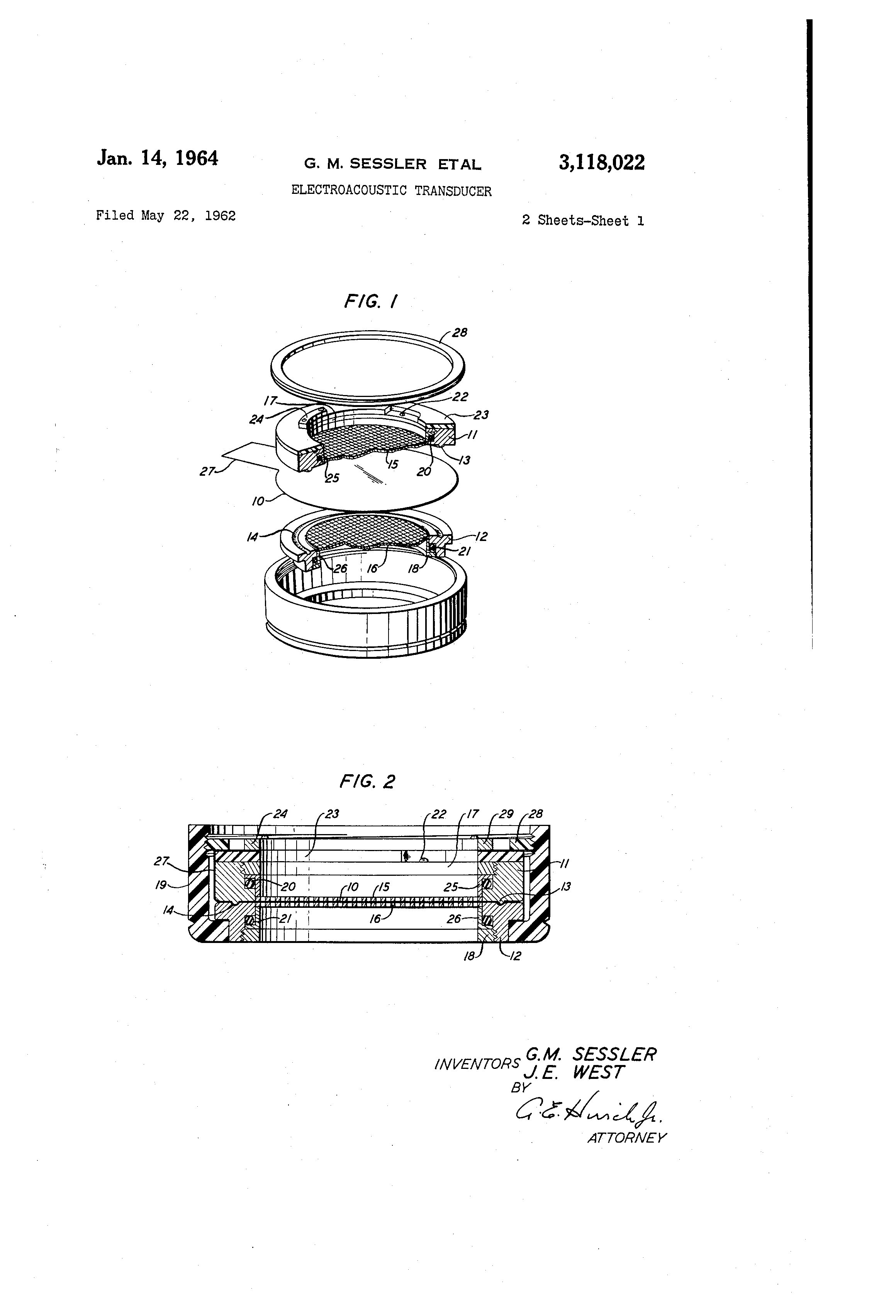
U.S. Patent 3,118,022, “Electroacoustic Transducer,”
1964
Source B
James West, National Inventors Hall of Fame, 1999
James West and Gerhard Sessler invented the electret microphone, which has advanced the sound industry and become the standard microphone used in products from music recording equipment to hearing aid devices.
West was born in Prince Edward County, Virginia. His mother Matilda gave birth at their family’s home, built by her father, because the nearby hospital in the town of Farmville would only admit white patients. West grew up wanting to understand how things work, often taking apart items like his grandfather’s pocket watch to explore the inner mechanics. He also developed a desire to change how some things work.
His curiosity was encouraged by his parents, who initially expected him to pursue a career as a doctor. His mother was one of the human computers who became known as the “Hidden Figures.” “She went from teaching at a school to working at Langley Research Center and was also an active officer in the National Association for the Advancement of Colored People,” said West.
When Langley ultimately fired West’s mother in reaction to her work with the NAACP, this was one of many experiences that fueled his determination to advocate for greater diversity in STEM fields. “The topics of systemic racism and the increase in and acceptance of diversity have always been at the forefront of my mind,” he said.
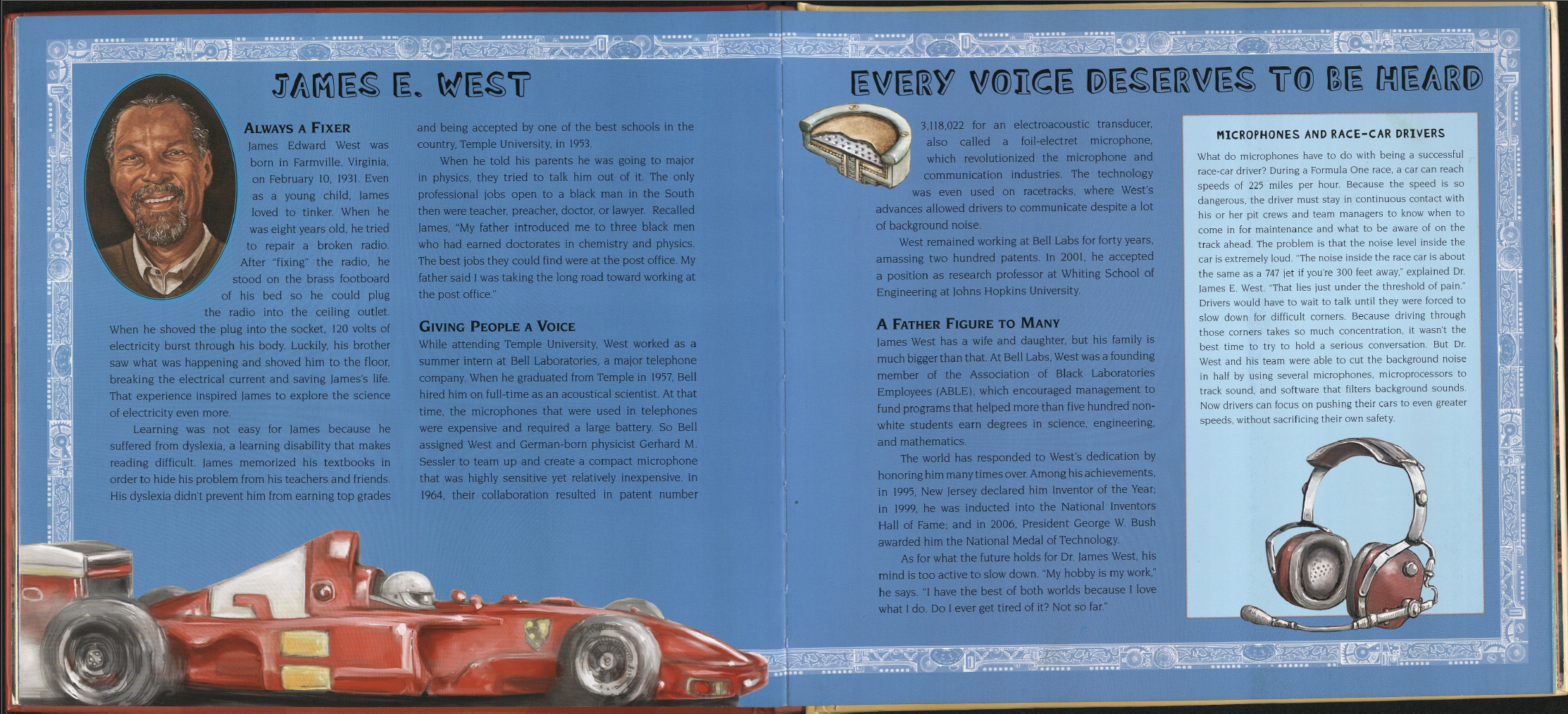
While attending Temple University, during his summer breaks, West interned at Bell Labs. Here, the workforce was more diverse than that of most other companies at the time. “I met [people] who looked like me, who I wanted to be like when I grew up,” West explained. Upon earning his degree in 1957, he joined the company and began working in electroacoustics, physical acoustics and architectural acoustics.
West and Sessler, a fellow scientist at Bell Labs, worked together to develop a compact and inexpensive yet highly sensitive microphone. In their electret microphone, thin sheets of polymer electret film are metal-coated on one side to form the membrane of the movable plate capacitor that converts sound to electrical signals with high fidelity.
The pair patented their invention in 1962. It soon became widely used because of its high performance, accuracy and reliability, as well as its low cost, small size and light weight. Today, 90% of the 2 billion microphones manufactured yearly are electret microphones, and they are used in items from recording equipment and professional sound measurement instruments to phones, hearing aids, baby monitors and toys.
During his time at Bell Labs, West was also instrumental in coordinating a summer research program designed to improve diversity for women and underrepresented minorities throughout the operating companies of AT&T.
West brought his dedication to advocating for STEM education and diversity in innovation to his involvement in National Inventors Hall of Fame® education programs and competitions. He has collaborated in the development of curricula for the K-6 Camp Invention® program, made personal visits to Camp Invention program sites and served as a Collegiate Inventors Competition® Judge, encouraging innovators of all ages and backgrounds to pursue their ambitions.
A fellow of IEEE, West served as president of the Acoustical Society of America in 1997 and 1998 and is the recipient of the 2006 National Medal of Technology. He holds more than 70 U.S. patents and is currently a professor of electrical and computer engineering and mechanical engineering at Johns Hopkins University.
Source C
Going Beyond the Horizon, United States Patent and Trademark Offices, 2022
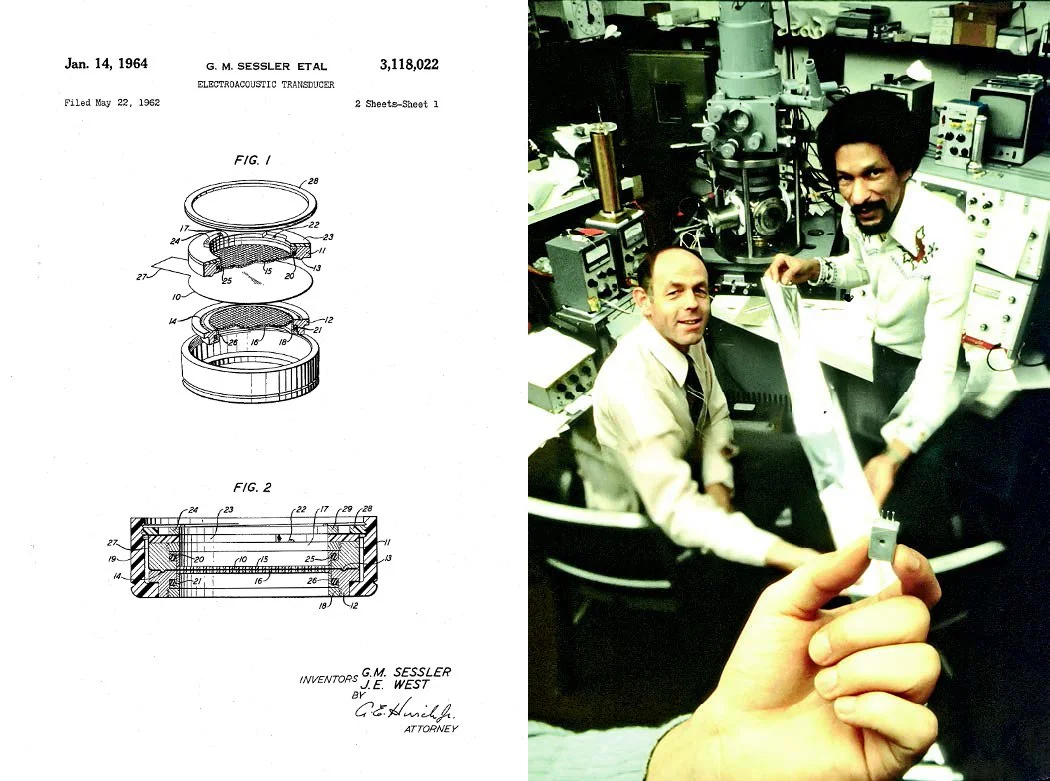
At left: A drawing from the patent for the electroacoustic transducer/electret microphone, granted in 1964. At right: Gerhard Sessler and Jim West holding Teflon foil in their lab, with a production Western Electric EL2 electret microphone in the foreground, 1976. Image courtesy Nokia Bell Laboratories.
Source D
James West, John Hopkins Whiting School of Engineering, 2026
James West is a professor of electrical and computer engineering and mechanical engineering.
He is known worldwide as the co-inventor of the foil electret microphone. This is a type of condenser microphone upon which 90% of all microphones used today are based (such as telephones, sound and music recording equipment, and hearing aids). West developed the invention with his research partner Gerhard Sessler in 1962 while both were scientists at Bell Laboratories in Murray Hills, NJ.
West holds more than 60 U.S. patents and more than 200 foreign patents using polymer foil electrets in transducers during his 40-year career with Bell Laboratories, where he had worked as an acoustical scientist. He has also authored or contributed to more than 150 technical papers and several books on acoustics, solid-state physics, and materials science.
Upon retiring from Bell in 2001, he joined Johns Hopkins University as a research professor, and the transition to academia has been much to his liking. “I discovered that Johns Hopkins is a lot like Bell Labs, where the doors are always open and we are free to collaborate with researchers in other disciplines,” James says. “I like the fact that I’m not locked into one small niche here. I wanted to be in an environment that allowed 360 degrees of vision.”
His research at Johns Hopkins includes efforts to improve teleconferencing technology by transmitting stereophonic sound over the Internet and new transducers. In addition, James has long been known for being a mentor to students, and for being active in initiating and participating in programs aimed at encouraging more minorities and women to enter the fields of science, technology, mathematics, and engineering (STEM).
West graduated from Temple University in 1957 with a degree in physics.
Source E
“James West,” in What Color Is My World?: The Lost History of African-American Inventors by Kareem Abdul-Jabbar, 2012
Source F
Interview with Inventor James Edward West, PhysicsAIP, 2019
Source G
Prof. Emeritus James West, John Hopkins University, Black Inventors Hall of Fame, 2026
Source H
Going Beyond the Horizon, United States Patent and Trademark Offices, 2022
West also works with students at Baltimore Polytechnic Institute, a STEM-focused public high school in north Baltimore a few miles from his Johns Hopkins office.
West became involved in mentoring students at the school six years ago through the Ingenuity Project, an accelerated math, science, and research program for Baltimore's high-achieving public middle and high school students. West's impact has been twofold. On the one hand, he works with the students on science projects, but on the other, he focuses heavily on access to the program and its overall diversity.
Jim West meets with Dr. Nicole Rosen’s senior research class at Baltimore Polytechnic Institute. The students are participants in the Ingenuity Project, which is designed to help them excel in STEM fields. During the Research Practicum experience, students work with mentors at Baltimore area colleges, universities, and other research institutions to develop independent research projects.
When asked to join the Ingenuity board, he agreed on one condition: "I said only if the board is willing to commit to making this program look more like the city of Baltimore." Indeed, over the past three years students from underrepresented minorities have increased from 38 to 56% of the Ingenuity Project's enrollment, with approximately half being female.
On one particular visit to Baltimore Polytechnic Institute, West calls on students, inviting them to give a short elevator speech on their research. They casually toss terms like "HIV-1 mutant transfer," "liquid crystals," "neuroactivity," and "toxic waste superfund sites" back at him in their pitches. West asks each student follow-up questions and offers a few witticisms to put them at ease.
At one point, West asks how many of the students have submitted their work to a prestigious nationwide math and science competition for high school seniors. Nearly all raise their hands.
West spurs the students on with words of encouragement and just enough practical advice to get them thinking about the direction of their next move, but not the ultimate destination. Although he doesn't use these exact words, his advice channels the same spirit as a quote by Alexander Graham Bell that West encountered every day above the foyer at Bell Labs: "Leave the beaten track behind occasionally and dive into the woods."
"From the standpoint of technology," West explains, "You never know what exists beyond the horizon if you don't go to the horizon, right? And so, that's one of the mantras that I live by. And it frequently doesn't lead anywhere, but when it does, it's a eureka moment, and those are what we all work for."
Source I
Turning Childhood Fascination with Electricity into a Career with Dr. James West,USA Science Festival, 2014
Note: This video is 15 minutes long. For information specifically pertaining to West’s advocacy, begin the video at 9:15.
STEM Extension Activity
Science +3 Age Levels Primary (5 to 8 years old), Elementary (9 to 12 years old), Middle School (13 to 15 years old)
What is sound and how do we detect it? How does sound travel from its source to our ears? Using hands-on activities and easy to find materials, students will use the story of Dr. James West to discover how an object produces sound and how sound waves travel.