How much control should we have over our social media feeds?
A media literacy lesson by Dan Krutka and Edward Henry
This lesson helps students examine how much influence they have over what appears in their social media feeds and encourages them to connect their personal experiences to broader changes in media systems shaped by algorithms and AI. Teachers can learn more by reading the article linked below.
Opening Activity
Journal & Discussion
Students respond individually in journals:
How much control do we have over our social media feeds?
How much control should we have?
Prepare to discuss in small groups and then with the whole class.
Background Information
Three Roles of Media
Media theorist Nicholas Carr authored a 2025 blog post where he argued that there are three roles that media plays in distributing speech, and historically, two of the three have been controlled by humans. First, people create messages through speech and other forms of expression. Second, people serve as editors who select which messages are worth sharing. Third, people create technological systems to transport messages whether through a postal system, telephone lines, television, or e-mail. Humans were thus in charge of the first two functions and machines the last one.
Activity: Discuss each example in a small group and as a class. Once you have an understanding, develop your own example and share with the class.
Message Creation (the speech function)
First, people create messages through speech and other forms of expression. Example:
Sending letters via a postal system
Message creation: A person writes a letter to share their thoughts.
Message selection: The writer decides which letter to send and to whom.
Message transmission: The postal service delivers the letter from one city to another.
2. Message selection (the editorial function)
Second, people serve as editors who select which messages are worth sharing. Example:
Communicating via telegraph or telephone
Message creation: Someone speaks into a phone or sends a telegraph message.
Message selection: They choose who to call or message.
Message transmission: The telegraph or telephone lines carry the signal across long distances.
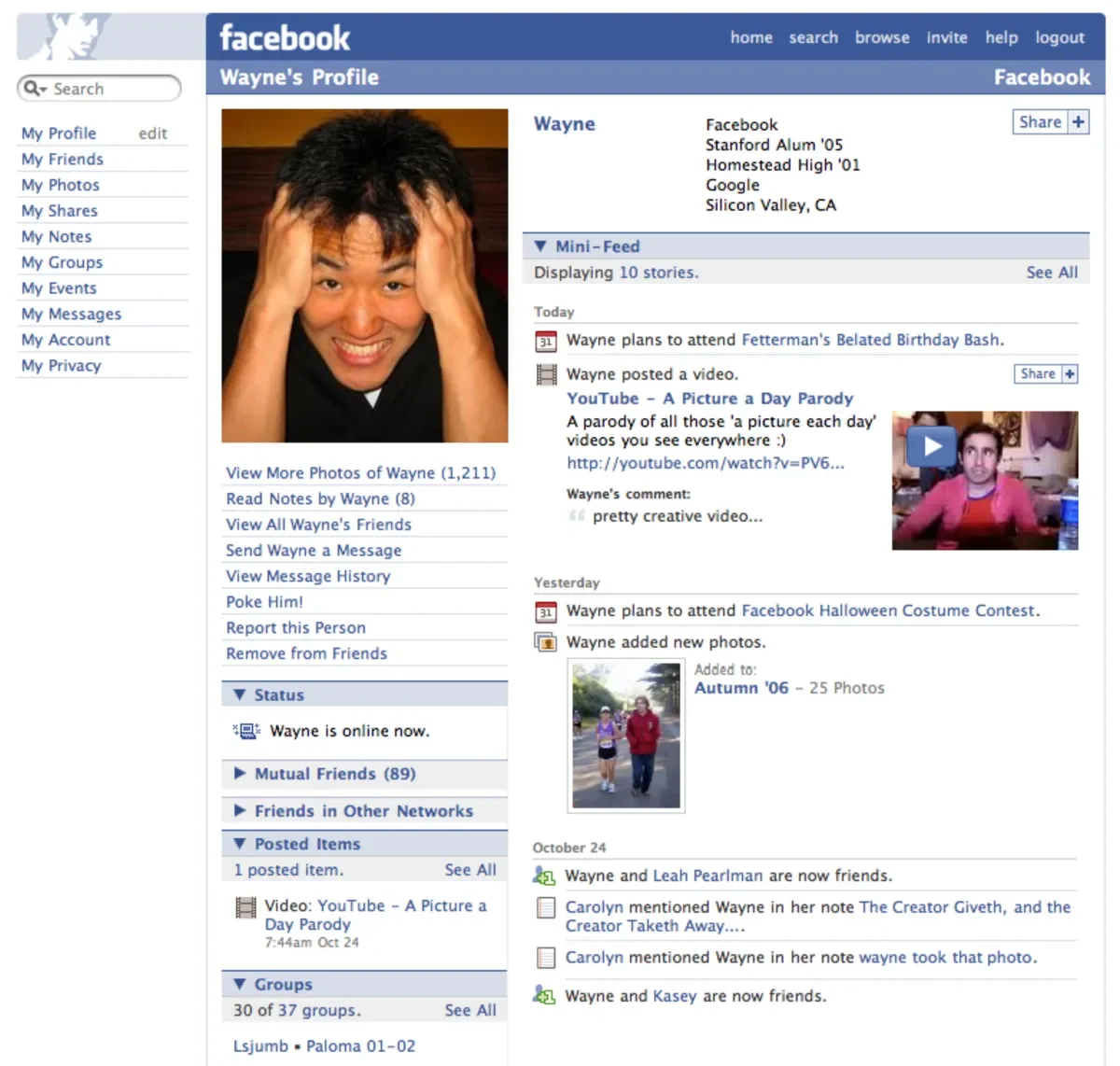
This image is what a Facebook profile page looked like prior in 2005 before the introduction of the New Feed. At this time, users had to navigate to a person’s profile page to see updates. There was no one place, or News Feed, to see updates from everyone (Van Grove, 2014).
3. Message transmission(the transport function)
Third, technological systems help to transport messages whether through a postal system, telephone lines, television, or e-mail.
Broadcasting shows on radio or TV
Message creation: Broadcasters create a show or news report.
Message selection: Producers decide which stories, songs, or shows to air.
Message transmission: Radio waves or TV signals send the broadcast to homes across the country.
Update: Recent technological changes have upended this relationship between humans, technologies, and communication. With Facebook’s 2006 introduction of its News Feed, humans ceded the editorial function to algorithms. Then, with the 2022 release of ChatGPT, machines made a claim on generating speech too. Much of human communication was suddenly taken out of our hands.
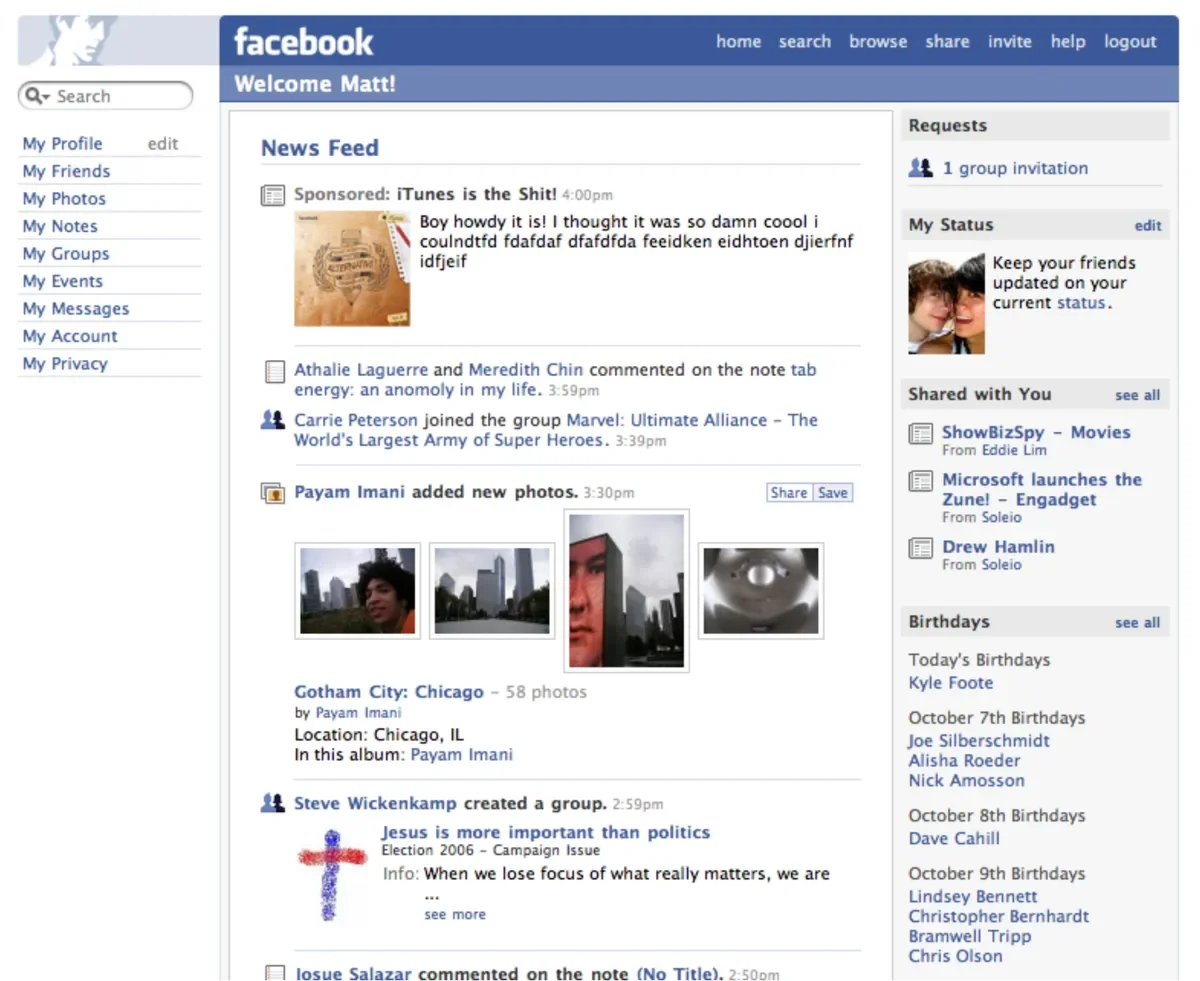
“On September 5, 2006, Facebook rolled out News Feed and Mini-Feed to its audience. It was a big and controversial addition to the then profile-centric social network. The Mini-Feed section on each member's profile showed what content he or she had recently added and recent activity elsewhere on the network” (Van Grove, 2014).
Many users protested the sudden change to a News Feed as it felt like an intrusive loss of control over who saw their activity and posts. This was the first time on a large scale that algorithms (machines) took over the message selection function from humans. As it turns out, the News Feed, especially once combined with the personalized data produced by the “like” button, turned out to be commercially profitable and replicated on almost all subsequent social media platforms. Generative AI is now threatening the human role of message creation, which may make it even harder for their own messages to gain traction amongst the glut of posts.
This is a challenge we all face daily when we react to our social media feeds or ask Generative AI for help with homework. What does it mean to be media literate in a media ecosystem where machines decide what we see?
Activity #2
Read article in preparation to analyze your social media feed
Utilize the chart below to analyze and evaluate different social media feeds and then share your findings with the class.
Social Media Diaries
Note: If you don’t have a social media profile then you may track, for example, a Google news page, music service algorithm, or a class account created for this project.
There are two worksheets that can help you observe and reflect on your social media feeds. First, download the social media diary worksheet to track your social media feeds for five days and think about the following three questions:
Are you seeing what you want to see?
Did you see any surprises?
And, were you able to exert influence over their various feeds?