Supporting Question
Why does John P. Parker’s story matter?
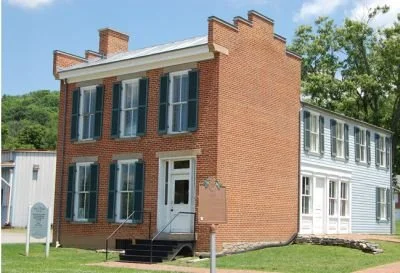
For the formative performance task, use the sources to answer the following questions:
What are the important events in this person’s life? What emotions did this person experience throughout their life?
What did this person invent? What other inventions have been done in this area?
What do we know about the biases this person faced and how they responded? How did their responses compare to other people of their time?
How much—if it all—did the person’s life change after their inventions? Did they receive credit for their invention? Did they profit from it?
In what ways did this person address social issues of their day?
Featured Sources
Source A
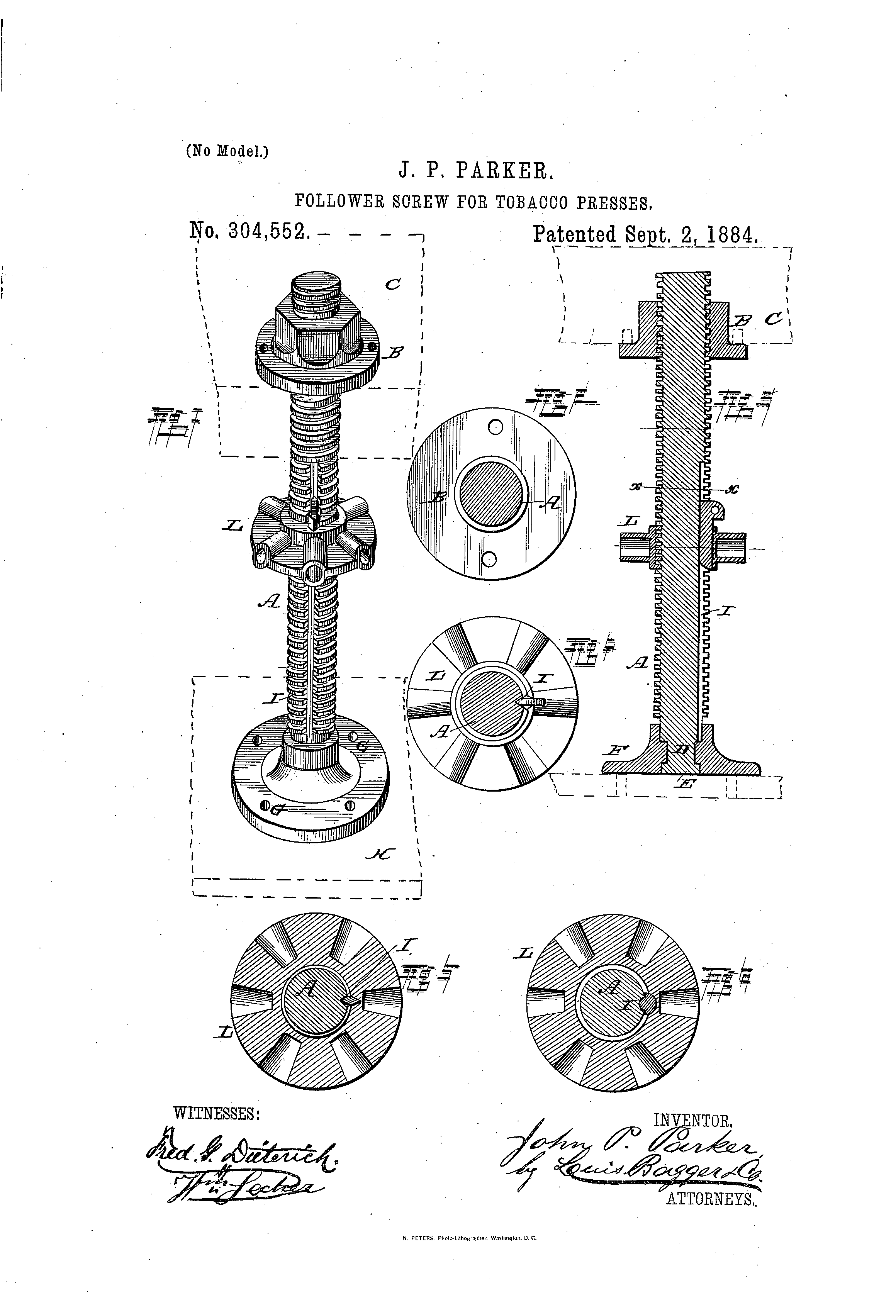
U.S. Patent 304,552, Application for Follower Screw for Tobacco Presses, 1884
Source B
Tobacco Press: Revolutionizing Famers’ Gold, Untold History, 2012
The video recaps the history of the Tobacco Press in the U.S. While Parker did not invent the Tobacco Press, this video offers a visual for how his follower screw would have functioned.
Source C
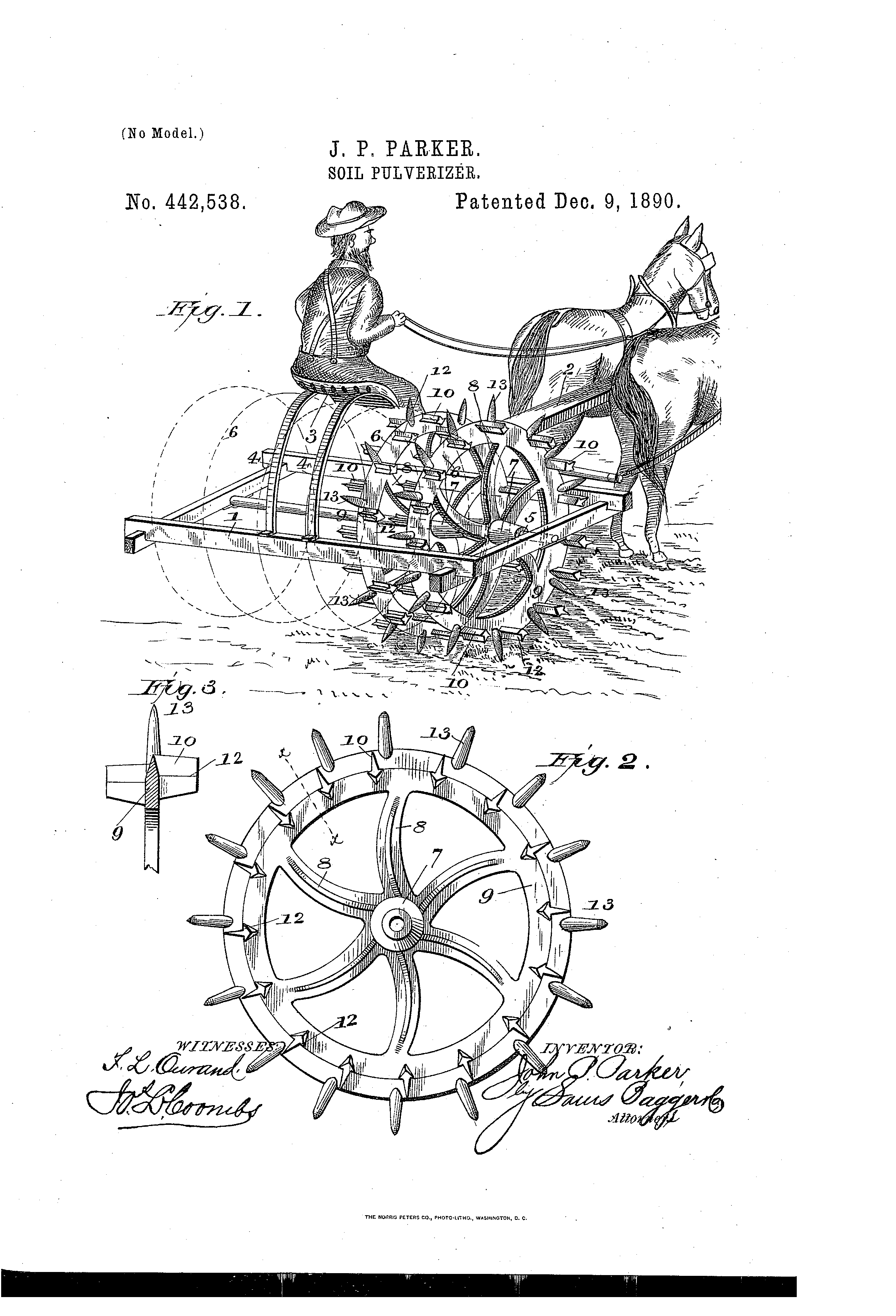
U.S. Patent 442,538, Application for Soil Pulverizer, 1890
Source D
His Promised Land: The Autobiography of John P. Parker, Former Slave and Conductor on the Underground Railroad, edited by S. Sprague. The John P. Parker Historical Society, 1996.
“...I [John Parker] now went to asking her [Mrs. Ryder] to buy my freedom, letting me pay her back from my
earnings.
She was frank enough to tell me that the proposition did not appeal to her, because I was always in trouble, and
could not keep a job...
...I went to make a final plea to Mrs. Ryer, she refused to see me. I was desperate, so I held on, until she finally
agreed to see me...I finally made her the proposition that while I was sure I could pay her back in two years, I
would stay another year if only she would buy my freedom...
It was my persistency that finally won her consent...for she agreed to release me as soon as I had paid her in full.
My contract all signed and agreed to called for the payment of $1,800, with interest, to be paid at the rate of $10
per week...
...In exactly 18 months after I entered into the contract with Mrs. Ryder, I made my last payment to her, starting
forth as a free man.”
Source E
John P. Parker Elementary School
Cincinnati, Ohio
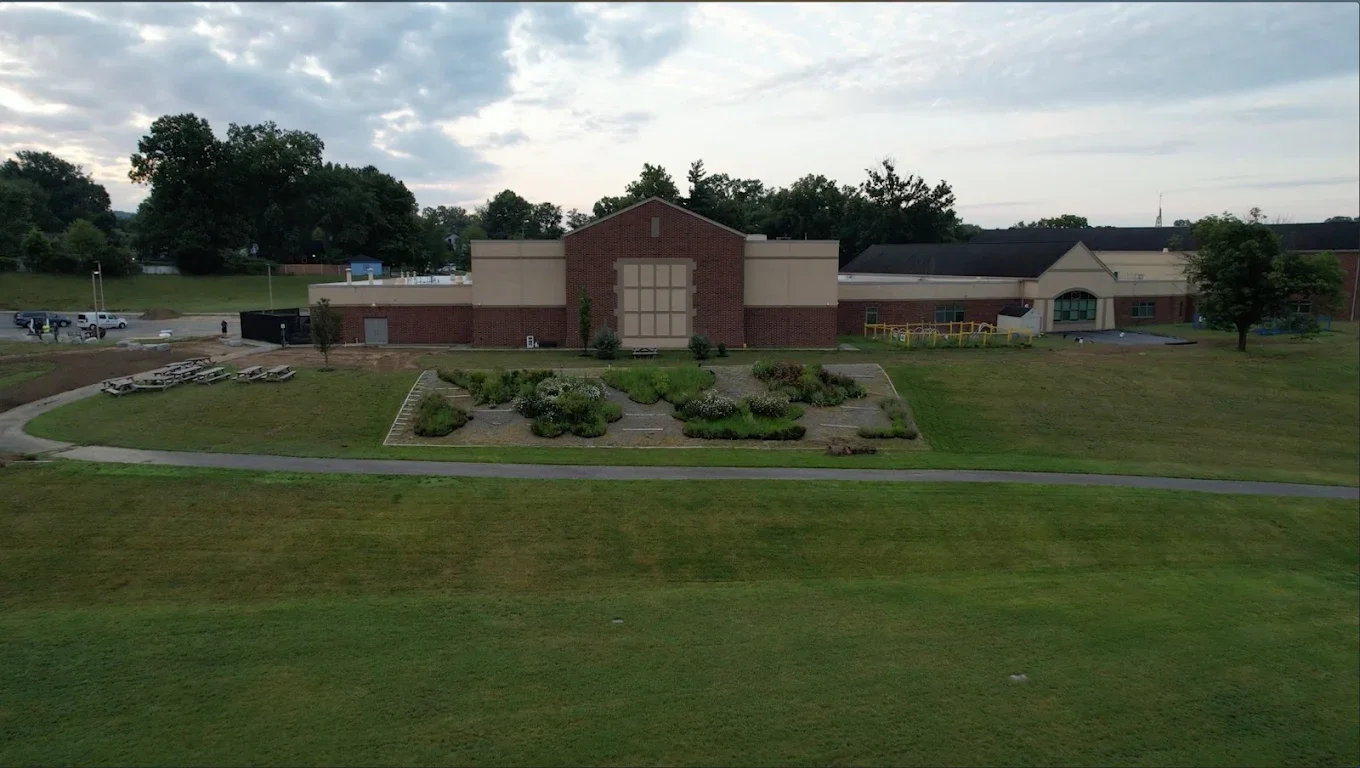
“The school is named for John P. Parker, who was a conductor in the Underground Railroad. This African-American gentleman was a lover of books. Consequently, in the spirit of his legacy, John P. Parker is a school, ‘where good students read good books.’”
Source F
“John P. Parker Elementary teaches kids healthy habits, hands-on science,” WCPO 9, 2017
This video shows how students attending the school named after John P. Parker have taken an interest in gardening.
Source G
His Promised Land: The Autobiography of John P. Parker, Former Slave and Conductor on the Underground Railroad, edited by S. Sprague. The John P. Parker Historical Society, 1996.
“...I assisted 440 fugitives on their way to Canada. For years I kept an accurate list of names, dates, and original homes
of the fugitives...When the Fugitive Slave Law agitation was at its highest...my little memorandum book I dropped
quietly in...my own foundry, so no one knew its existence, especially its damaging content. But the work went on just
the same, in fact more aggressively that ever...”
Source H
“Middle School US History: Freedom Seekers and the Underground Railroad,” McGraw Hill, 2022
Source I
S.2610 - Bill to include John P. Parker’s House as a Unit of the National Park System, Senator Sherrod Brown, 2014.
113th CONGRESS
2d Session
S. 2610
To direct the Secretary of the Interior to conduct a special resource study to determine the suitability and feasibility of establishing the John P. Parker House in Ripley, Ohio, as a unit of the National Park System.
IN THE SENATE OF THE UNITED STATES
July 15, 2014
Mr. Brown introduced the following bill; which was read twice and referred to the Committee on Energy and Natural Resources
A BILL
To direct the Secretary of the Interior to conduct a special resource study to determine the suitability and feasibility of establishing the John P. Parker House in Ripley, Ohio, as a unit of the National Park System.
Be it enacted by the Senate and House of Representatives of the United States of America in Congress assembled,
SECTION 1. Short title.
This Act may be cited as the “John P. Parker House Study Act”.
SEC. 2. Definitions.
In this Act:
(1) SECRETARY.—The term “Secretary” means the Secretary of the Interior.
(2) STUDY AREA.—The term “study area” means the John P. Parker House in Ripley, Ohio, which was recognized as a National Historic Landmark in 1997.
SEC. 3. Special resource study of John P. Parker House.
(a) Study.—The Secretary shall conduct a special resource study of the study area to determine the suitability and feasibility of establishing the John P. Parker House in Ripley, Ohio, as a unit of the National Park System.
(b) Study requirements.—The Secretary shall conduct the study in accordance with section 8 of the National Park System General Authorities Act (16 U.S.C. 1a–5).
(c) Report.—Not later than 3 years after the date on which funds are made available to carry out this Act, the Secretary shall submit to the Committee on Natural Resources of the House of Representatives and the Committee on Energy and Natural Resources of the Senate a report that describes—
(1) the results of the study; and
(2) any recommendations of the Secretary.
Note: This bill was introduced in 2014. Though the bill was never passed, it shows Parker’s lasting impact on his community.