Supporting Question
Why does George Washington Murray’s story matter?
For the formative performance task, use the sources to answer the following questions:
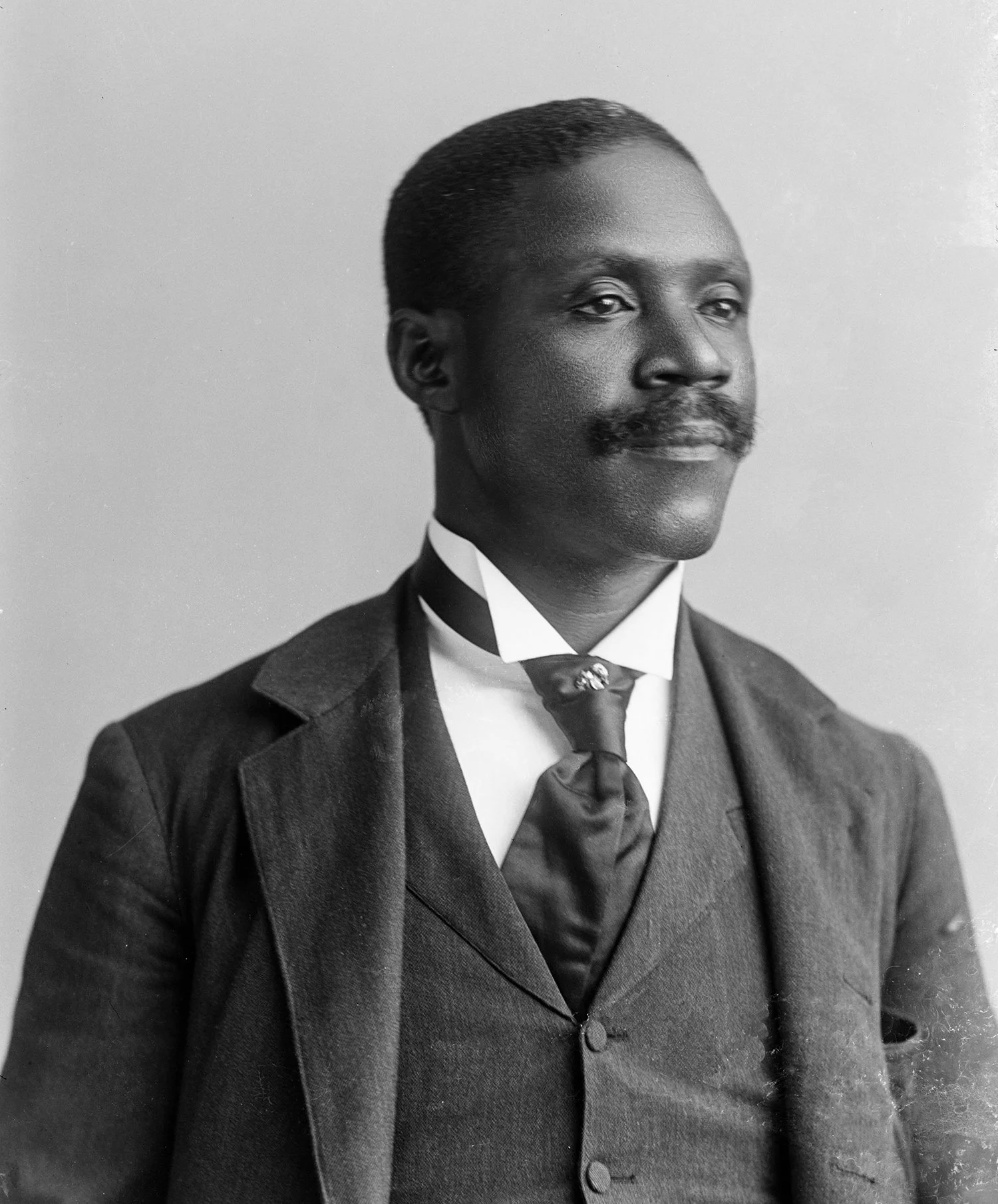
What are the important events in this person’s life? What emotions did this person experience throughout their life?
What did this person invent? What other inventions have been done in this area?
What do we know about the biases this person faced and how they responded? How did their responses compare to other people of their time?
How much—if it all—did the person’s life change after their inventions? Did they receive credit for their invention? Did they profit from it?
In what ways did this person address social issues of their day?
Featured Sources
Source A
“Found on Baker’s List,” United States Patent and Trademark Office, Retrieved 2026
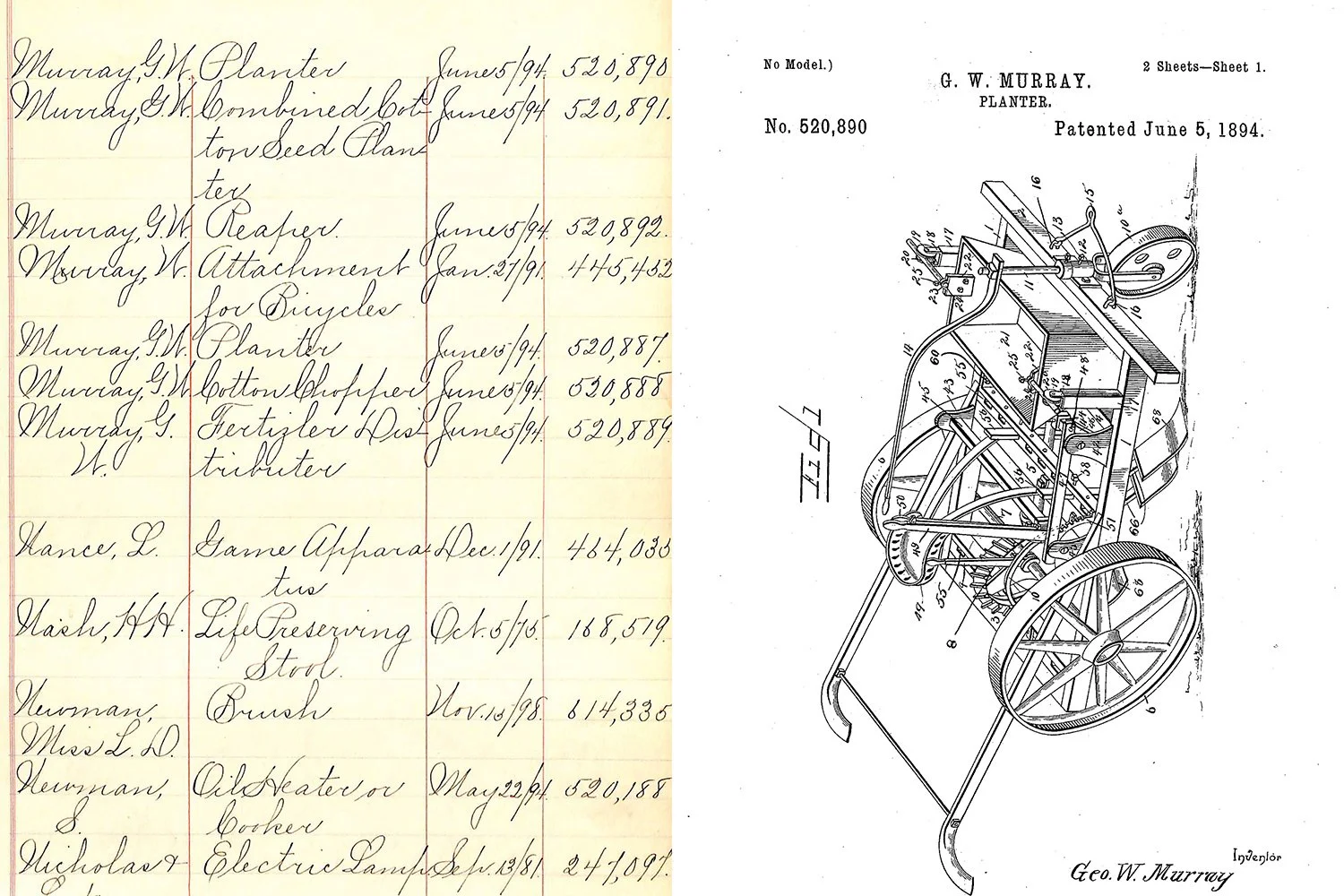
This source shows a list of six patents under Murray’s name.
Patents to view: U.S. Patent 520,890; U.S. Patent 520,891; U.S. Patent 520,892; U.S. Patent 520,887; U.S. Patent 520,888; U.S. Patent 520,889
Source B
“George Washington Murray,” National Inventors Hall of Fame, 2024
In the early 1880s, Murray found inspiration for his inventions when he watched his wife use a sewing machine in their home. As she used different attachments to perform a variety of tasks, he thought he might try equipping one of his farm machines with interchangeable attachments, making it possible for one machine to serve multiple functions at an affordable cost.
Murray earned eight patents for his agricultural machinery inventions in 1894. The patents described a machine with furrow-opening, stalk-knocking, planting, fertilizing, reaping and distributing attachments. It could harvest small grains with the stalks still attached, gather them into sheaves or bundles, and distribute the sheaves in even intervals along the ground, where they could be collected easily.
Source C
“South Carolina Black Congressman George Washington Murray in the Age of Jim Crow,” John F. Marszalek, The University of South Carolina Law Library, Retrieved 2026.
In 1853, George W. Murray was born [enslaved] in Sumter County. Despite a state law against [enslaved] individuals reading and writing, he somehow learned to do both. When slavery was abolished in 1865, Murray became a farmer and, in 1871 at the age of eighteen, he applied for admission to the local all-black school. Amazingly he soon found himself a teacher rather than a student. Three years later in 1874, he began attending the University of South Carolina, during the brief time it was integrated. He studied there until the Wade Hampton-led White Conservatives took political control of the Palmetto State and eliminated all black students from the university.
The white conservatives remained in power until “Pitchfork Ben” Tillman and his farmer forces took the state over in 1890. In these post-Civil War years, anti-Black violence was the order of the day, and the vote was increasingly denied to African Americans. Poverty and the noose became the essence of black life in South Carolina.
It was under these conditions that Murray, now a successful farmer, entered the political arena in 1880. He became an official in the Sumter County Republican Party, worked for the U.S. Census Bureau, and served as a delegate to the Republican state convention. Because of his willingness to speak out, he gained the nickname “Black bold eagle of South Carolina.” In 1890, he was so well-known that he was asked to give the Emancipation Day address in Charleston, the most important city in the state. Soon after, he became an inspector in the U.S. Customs Service.
In 1892, Murray reached the pinnacle of his political success in the most amazing way. He won election to the U.S. House of Representatives when a Tillman dominated Board of Canvassers settled a disputed election in his favor in order to punish the white conservatives.
As a congressman, Murray was a loyal Republican, but he also tried to establish cooperation with the state’s dominant political faction, the Tillmanites. It did not work. It took a congressional committee to overcome Tillman’s Black vote suppression and get Murray re-elected in 1894. When Tillman called a state convention in 1895 to complete the disfranchisement of Blacks, Murray fought the convention’s discrimination in federal court, won a temporary injunction, but was reversed at the Appeals and the Supreme Court levels. He then threatened to stop the presidential electoral vote count unless Congress promised to investigate South Carolina’s discriminatory election laws. He had no success in any of these efforts. South Carolina was not to have another Black congressman until 1993 in the person of James Clyborn, who is believed to be a descendant of Murray’s.
Though he had met defeat politically, the Black eagle continued to demonstrate his boldness. The new state constitution allowed a man to vote if he owned $300 worth of property, so Murray inaugurated a land program for Blacks. He bought blocks of land and established a system to allow impoverished Blacks to purchase farm land and thus gain the right to vote. He also took out patents on farm machinery he planned to sell to the small farmers.
Source D
“Found on Baker’s List,” United States Patent and Trademark Office, Retrieved 2026
Murray turned his attention towards bringing his patented inventions to market, entering into a partnership with a Black lawyer named J. Milton Turner. Murray and Turner opened a manufacturing shop in St. Louis in 1897, planning to develop a prototype for field testing. The partnership fell apart the following year, and Murray’s invention never went into production. He returned to his farm, investing in land and leasing that land out to Black farmers. His success in politics and farming, as well as his work to help others achieve financial independence, made him a target.
In 1903, Murray was charged with the crime of forging names on a lease agreement. His biographer John F. Marszalek cites this as an example of “white capping,” or retaliation against a successful Black person with unjust and sometimes violent means. Convicted by an all-white jury, Murray was sentenced to three years in a chain gang or state penitentiary. He fled to Chicago to avoid this sentence, leaving behind his wife, his farm, and the county he’d called home for most of his life. Although he attempted to enter politics in his new city, Murray would never hold office again.
Source E
Virtual Tour:John Deere ExactEmerge, John Deere, 2012.
Watch this video to see how modern seed planters work.
Source F
“‘M’ is for Murray, George Washington (1853-1926),” South Carolina Public Radio, Retrieved 2026
Use the link to listen to a one minute overview of George Washington Murray’s life.
Source G
“August 10, 1894 Vol. 26, Part 8 — Bound Edition,” 53rd Congress, 2nd Session, 1894
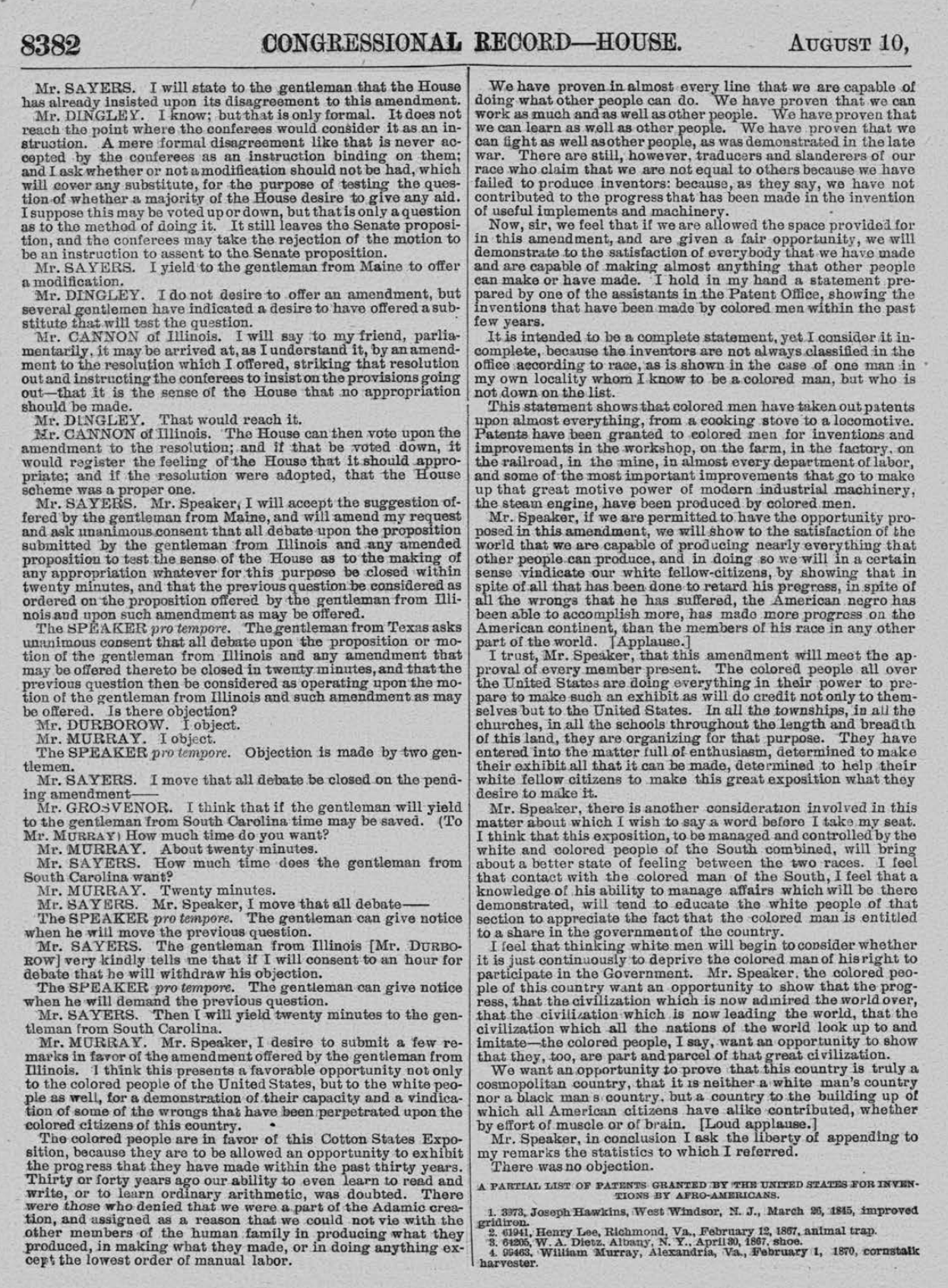
Congressional Record from the day that George Washington Murray read Henry Baker’s compiled list of Black patent holders at the time. The link includes the entire record.