Supporting Question
Why does Benjamin Banneker’s story matter?
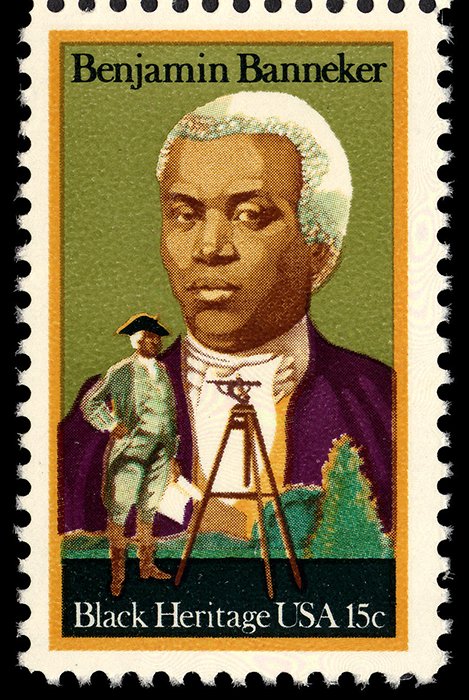
For the formative performance task, use the sources to answer the following questions:
What are the important events in this person’s life? What emotions did this person experience throughout their life?
What did this person invent? What other inventions have been done in this area?
What do we know about the biases this person faced and how they responded? How did their responses compare to other people of their time?
How much—if it all—did the person’s life change after their inventions? Did they receive credit for their invention? Did they profit from it?
In what ways did this person address social issues of their day?
Featured Sources
Source A
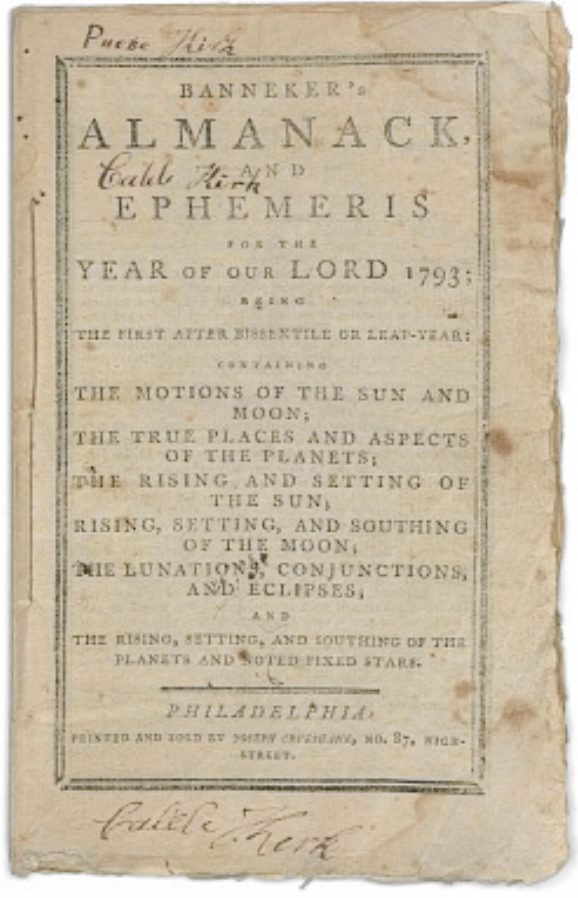
“Benjamin Banneker's 1793 Almanack and Ephemeris,” Smithsonian, 2026
Source B
“The exceptional life of Benjamin Banneker,” Rose-Margaret Ekeng-Itua,Ted-Ed 2017
Historical Note 1: Research does not confirm that Banneker invented the first wooden clock.
Historical Note 2: Though the video portrays Banneker's correspondence with Jefferson as pivotal to Jefferson's thoughts on slavery, it should be noted that Jefferson owned slaves until his death. Additionally, the Emancipation Proclamation, which ended slavery, was signed by President Abraham Lincoln 54 years after Jefferson left the Presidential Office.
Historical Note 3: Though Jefferson wrote Banneker back, he did not truly recognize and reply to Banneker’s stated issues.
Source C
“Benjamin Banneker: The black tobacco farmer who the presidents couldn't ignore,” The White House Historical Association, Louise Keen, 2026
Benjamin Banneker, a free African-American man living in a slave state in the eighteenth century, never knew the weight of iron shackles or the crack of an overseer’s whip. A native of Baltimore County, Maryland, his experience diverged from those of most African Americans living in the early United States. He received a formal education during his youth, maintained his property and farm as an adult, and parlayed his intellectual gifts into national prestige. Despite his many accomplishments, however, Banneker was forced to navigate the same racial prejudices that African Americans often faced in both slave and free states.
In many ways, his story is an historical anomaly. He assisted with the initial survey of Washington, D.C., published abolitionist material south of the Mason-Dixon Line, and engaged with some of the country’s founders in a way no black man had before. However, Banneker’s life also reflects the defining paradox of the early United States—a land of freedom and opportunity with insurmountable racial qualifiers—which the nation’s capital would come to embody.
Note 1: We recommend reading the entire source if appropriate for your students.
Note: Christopher Jackson, part of the cast of Hamilton — a musical about the founding fathers which focuses on Alexander Hamilton in particular, recites one Banneker’s letter to Thomas Jefferson.
Source D
“Benjamin Banneker #WeTellTheirStories,” Hamilton, 2021
Source E
“Thomas Jefferson to Benjamin Banneker,” Thomas Jefferson, The Library of Congress, 1971
Philadelphia Aug. 30. 1791.
Sir,
I thank you sincerely for your letter of the 19th. instant and for the Almanac it contained. no body wishes more than I do to see such proofs as you exhibit, that nature has given to our black brethren, talents equal to those of the other colours of men, & that the appearance of a want of them is owing merely to the degraded condition of their existence both in Africa & America. I can add with truth that no body wishes more ardently to see a good system commenced for raising the condition both of their body & mind to what it ought to be, as fast as the imbecillity of their present existence, and other circumstance which cannot be neglected, will admit. I have taken the liberty of sending your almanac to Monsieur de Condorcet, Secretary of the Academy of sciences at Paris, and member of the Philanthropic society because I considered it as a document to which your whole colour had a right for their justification against the doubts which have been entertained of them. I am with great esteem, Sir, Your most obedt. humble servt. Th. Jefferson
Source F
“How Benjamin Banneker -- who literally helped shape DC -- made impact on Paris,” NBC4 Washington, 2024
Source G
“Tracking Time: Clocks and Watches through History,” The Smithsonian, 2026
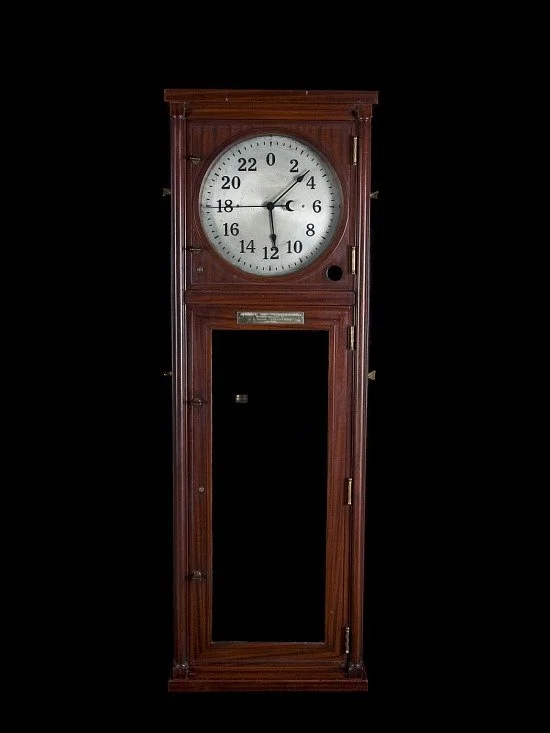
Note: The source link takes you to a collection in which the curator has chosen clocks to represent their evolution. Though Bannerker’s clock cannot be tracked to being the first, it was a phenomenon among those around him. The clocks in this collection both precede and proceed his design.